Head of TPO stated that the free trade agreement with Eurasia expands trade exchange between Iran and Union countries
Read more
Tehran Times
www.tehrantimes.com

Head of TPO stated that the free trade agreement with Eurasia expands trade exchange between Iran and Union countries

The head of the Iranian Organization for Trade Promotion (TPO), during three significant trade and economic events in Belarus, characterized the free trade agreement with the Eurasian Economic Union as an important resource for increasing trade turnover between Iran and the member states of this union.

According to the Public Relations Department of the Iranian Organization for Trade Promotion, Mohammad Ali Dehghan Dehnavi noted that thanks to the Islamic Republic of Iran's observer membership in the Eurasian Economic Union and the signing of a free trade agreement with the Union members, a significant space has been created for the development of economic and trade relations.

During Iran's participation in the international industrial exhibition Innoprom 2026 in Belarus, he emphasized that the national pavilion of the Islamic Republic of Iran is one of the large and prominent participants in the event, receiving one of the largest pavilions after the host country.

The Head of TPO also viewed the holding of the XIX Joint Commission on Economic Cooperation between Iran and Belarus and the participation of the Iranian delegation at the meeting of the heads of government of the Eurasian Economic Union as an opportunity to promote and develop bilateral and multilateral cooperation.

As part of this trip, the Islamic Republic of Iran developed trade and economic interaction with the member states of the Eurasian Economic Union, participating in the meeting of the heads of government of the EEC, at the Innoprom 2026 exhibition, and at the XIX Joint Commission on Economic Cooperation between Iran and Belarus.

The International Exhibition of Industrial Capabilities and Innovations 'Innoprom 2026' took place in Minsk, the capital of Belarus. At this exhibition, 20 Iranian companies, in addition to showcasing their achievements, also paid tribute to the martyrs of Minab.

According to IRNA, citing the Iranian Embassy in Belarus, these Iranian companies operate in various sectors, including petrochemicals, oil and gas, oil refining, metallurgy, mining, and joint investments.

Mohsen Omidzamani, the Iranian ambassador to Belarus, visited this industrial exhibition and the pavilions of Iranian firms. During his visit to Minsk, the Ambassador of the Islamic Republic of Iran met with the leaders and representatives of these companies, receiving information about their latest capabilities, products, as well as export and investment potential.

At the exhibition, which concluded on October 1, companies from Russia, Uzbekistan, Kazakhstan, Kyrgyzstan, and the Republic of Azerbaijan participated, in addition to Iran and Belarus.

Innoprom is an annual international industrial exhibition in Belarus that brings together representatives of various industries, innovative companies, investors, and state structures.

Parallel to the holding of the Innoprom international exhibition and with the participation of the Head of TPO, a memorandum of cooperation was signed between the Iranian and Belarusian automotive testing centers. The purpose of the document is to improve safety standards and develop research infrastructure in the automotive industry.

According to the TPO Public Relations Department, during specialized meetings of the Joint Commission of Iran and the countries of the Eurasian Economic Union, as well as at the Innoprom exhibition venue in Belarus, a memorandum of cooperation was signed between the Iranian (ISQI) and Belarusian (Centromash) automotive testing centers. This agreement aims to improve safety standards and the research base in the automotive industry.

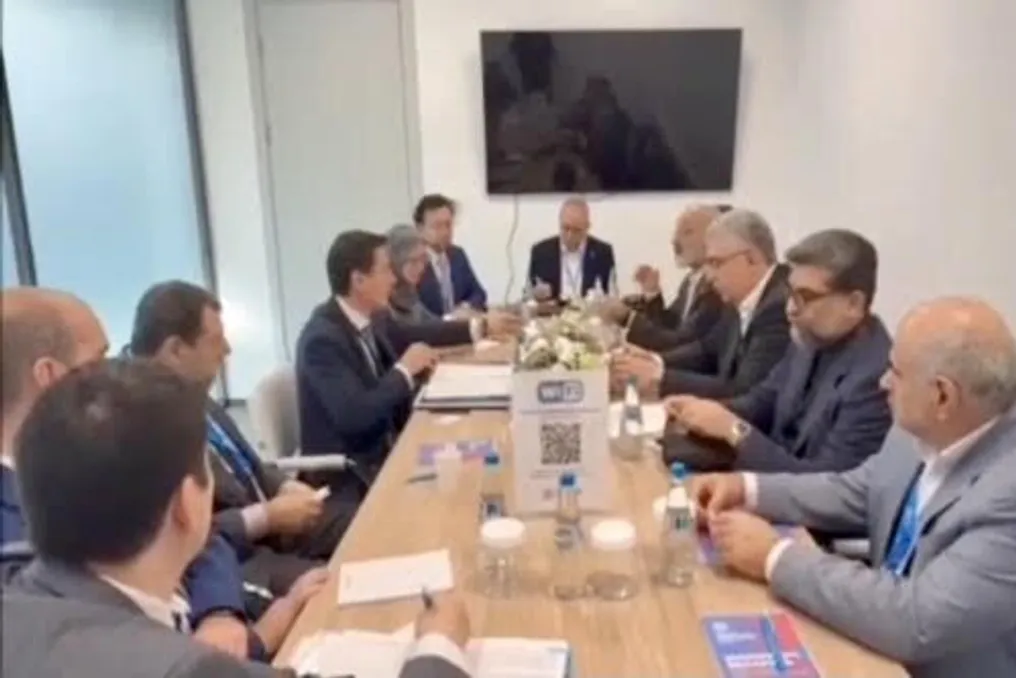
The signing of this memorandum took place at the venue of the Eurasian Joint Commission in the presence of high-ranking officials from both countries, including the Minister of Industry of Belarus, Mohammad Ali Dehghan Dehnavi, the Head of TPO, and Farshad Moghami, Chairman of the Executive Council of the Iranian Organization for Industrial Development and Reconstruction (IDRO).

The conclusion of this document indicates the serious readiness of Tehran and Minsk to go beyond simple trade interaction and move to a phase of technological partnership in the automotive industry value chain.

The main focus of this cooperation is on the interaction between leading vehicle testing and crash testing centers of the two countries. Centromash is recognized as one of the main and authoritative units of Belarus in the field of standardization, technical control, and advanced automotive testing.

The implementation of this memorandum obligates both parties to cooperate closely in areas such as modernization of crash test equipment, joint research, simplification of permit issuance, supply chains, and so on.

The memorandum was signed during the development of economic ties between Iran and Belarus within the framework of Eurasian cooperation. The proximity of Iran's engineering capabilities to Belarus's laboratory and standardization capabilities not only reduces R&D costs for automakers but can also serve as a model for expanding exports to the member states of the Eurasian Economic Union.

The signing of this document against the backdrop of the 'Innoprom' exhibition, recognized as one of the most authoritative industrial exhibitions in Russia and allied countries, demonstrates the strategic vision of both sides in using international platforms to break monopolies in technological fields and achieve self-sufficiency in ensuring automotive safety standards. It is expected that the implementation of the memorandum's provisions will accelerate the process of improving quality, enhancing safety, and expanding the export opportunities of Iranian automotive products using the specialized capabilities of Centromash, paving the way for a stronger presence of the Iranian automotive industry in target markets.
Similar stories

Head of Iran's TPO notes growth in trade turnover between Iran and EAEU
Read more
www.tehrantimes.com

Head of Iran's TPO notes growth in trade turnover between Iran and EAEU

The head of the Iranian Trade Promotion Organization (TPO), during a meeting with the Minister of Trade of the Eurasian Economic Union (EAEU), highlighted the trend of growing trade between Iran and the union's member states. He also emphasized the Islamic Republic of Iran's determination to expand and deepen trade ties, strengthening interaction between the private sectors of both sides.

According to a report by the TPO, Mohammad Ali Dehghan Dehnavi, during his meeting with Slepnsev, stated that despite all existing difficulties and problems, trade statistics between Iran and the EAEU show an upward trend, opening promising prospects for the future development of trade relations.

The Deputy Minister of Industry, Mining, and Trade stressed the Islamic Republic of Iran's readiness to develop trade relations with EAEU members. He added that Iran supports regular cooperation and trade with Russia and other member states, striving to make these ties deeper than before.

Dehghan Dehnavi also expressed hope for the early holding of the second meeting of the joint Iran-EAEU committee in Tehran. He noted that holding this meeting in Tehran could be a favorable opportunity to strengthen communication between the private sector of Iran and the private sectors of the union's member states, as well as to form new economic and trade partnerships.

The Head of TPO also insisted on the need to continue consultations and utilize available opportunities to develop economic and trade cooperation between Iran and the EAEU member states.

It is worth noting that Dehghan Dehnavi visited Minsk to participate in the XIX meeting of the Commission on Economic Cooperation between the Islamic Republic of Iran and the Republic of Belarus.

Furthermore, in mid-September, the Iranian Minister of Economy and Finance gave a positive assessment of the results of his bilateral meetings with EAEU representatives. He proposed initiatives such as establishing a basic currency to accelerate transactions and appointing special representatives to eliminate obstacles in bilateral trade.

According to IRNA, Seyed Ali Madanizadeh reported after separate meetings and negotiations with the Chairman of the Executive Council and Minister of Trade of the Eurasian Economic Commission at the union's headquarters in Moscow that they held 'very good sessions.'

He stated that interest and readiness were expressed on behalf of Iran to expand relations and fully implement the free trade agreement with the EAEU, as well as readiness to cooperate with the union in various fields. In turn, the union's representatives expressed a desire and interest in expanding ties with Iran.

The Minister of Economy and Finance, commenting on the efforts of opponents of the Iranian nation to provoke an economic war and block trade and financial channels, noted that by God's grace, these countries support Iran and its economy, and Iran has managed to maintain production and trade links even under the most difficult conditions. He also emphasized that the EAEU member states equally strive and are ready to develop these relations.

During his visit to Moscow for multilateral consultations, the Minister of Economy and Finance visited the EAEU headquarters and met with the Chairman of the Executive Council and the Minister of Trade to discuss accelerating bilateral trade.

Seyed Ali Madanizadeh and Bakytzhan Sagintayev, Chairman of the Eurasian Economic Commission, emphasized the general determination to expand cooperation during this meeting.

Before this meeting, the Minister of Economy and Finance held a separate session with Andrey Slepnsev, the minister responsible for trade of the Eurasian Economic Commission, and a group of union officials to assess the progress of cooperation after the entry into force of the free trade agreement. Slepnsev noted that the second meeting of the Iran-EAEU working group will be held in Tehran in the coming months and expressed hope for the continuation of the upward trend in bilateral trade.

The trip was accompanied by the Iranian Ambassador to Russia, Kazem Jalali, and Mehdi Heidari, Deputy Minister of Economy and Head of the Iranian Organization for Investment, Economic and Technical Assistance.

The free trade agreement between Iran and the EAEU came into force in May 2025 after completing legal procedures in the signatory countries, leading to the abolition of customs duties on 87% of goods in bilateral trade.

As part of this cooperation, access for Iranian products to the market of more than 180 million people in the union's member states has been simplified, and this mutual opportunity is available to traders from the five signatory countries when trading with Iran.

The EAEU member states are Russia, Belarus, Kazakhstan, Kyrgyzstan, and Armenia, while Iran holds observer status in the union.

The Eurasian Economic Union (EAEU) is a regional integration bloc in the post-Soviet space, created by a treaty signed in 2014 and launched on January 1, 2015. Its five members are Russia, Belarus, Kazakhstan, Kyrgyzstan, and Armenia, while Iran, Cuba, Moldova, and Uzbekistan hold observer status.

Partially modeled after the European Union, the EAEU aims to create a single internal market with the free movement of goods, services, capital, and labor. The main goals of the bloc include improving living standards, ensuring sustainable economic development, and increasing the global competitiveness of member economies.

The bloc is governed by institutions such as the Supreme Eurasian Economic Council and the Eurasian Economic Commission. Although the EAEU is expanding external ties—particularly through the free trade agreement with Iran—internal integration remains uneven, with Russia dominating trade flows according to the 'hub and spoke' model. The bloc has set a long-term goal of becoming a self-sufficient and attractive macro-region by 2045.

Head of Iranian Trade Promotion Organization Stresses Need for Targeted Development of Trade Ties with Kyrgyzstan
Read more
www.tehrantimes.com

Head of Iranian Trade Promotion Organization Stresses Need for Targeted Development of Trade Ties with Kyrgyzstan

The Head of the Iranian Trade Promotion Organization (TPO), during a meeting with the Iranian Ambassador to Kyrgyzstan, emphasized the importance of targeted development of trade relations, identifying the export potential of both countries, and organizing trade delegations for sending and receiving.

According to IRNA, citing the Iranian TPO, Mohammad Ali Dehghan Dehnavi characterized Kyrgyzstan as a country with significant potential for strengthening economic cooperation when meeting with Zahra Sai on Sunday. He noted that despite its small size, Kyrgyzstan possesses characteristics and capabilities that can promote trade development. Dehnavi added that the country is on a path of development, and suitable opportunities exist for interaction in areas such as infrastructure, technical and engineering services, agriculture, and the modernization of oil refineries.

He also expressed the opinion that the economic entities of the two states are insufficiently aware of each other. According to him, conditions must be created for acquaintance and direct communication between traders and companies so that entrepreneurs from both countries can learn about each other's export opportunities and advantages.

According to the head of the Iranian TPO, holding exhibitions and organizing the dispatch and reception of trade delegations are tools for promoting trade. For example, Iran Expo represents a suitable opportunity to demonstrate Iran's export potential, which can be utilized by Kyrgyz trade delegations to establish contacts between companies from the two countries.

Dehghan Dehnavi, mentioning the implementation of the Free Trade Agreement between Iran and the Eurasian Economic Union, stated that this agreement has opened new prospects for economic players. He stressed that the potential arising from the reduction or elimination of tariffs must be accurately identified and presented to traders. Furthermore, he considered events related to Eurasia and Shanghai held in Kyrgyzstan as a suitable venue for the presence of trade delegations and the development of cooperation between the parties.

Continuing this meeting, the Ambassador of the Islamic Republic of Iran to Kyrgyzstan emphasized the importance of identifying the export potential of the country's provinces and establishing a link between this potential and the Kyrgyz market. In Sai's view, goods that meet the needs of the Kyrgyz market should be identified and directed to this market, while conversely, goods needed by Iran must be determined, thereby creating a basis for developing mutual trade.

She also highlighted the utilization of the potential of Iranians residing in Kyrgyzstan and the development of agricultural cooperation. At the end of the meeting, the commitment to strengthen interaction between the Iranian TPO and the Iranian Embassy in Kyrgyzstan was noted, aiming to identify opportunities and increase trade interaction between the two states.

Popular