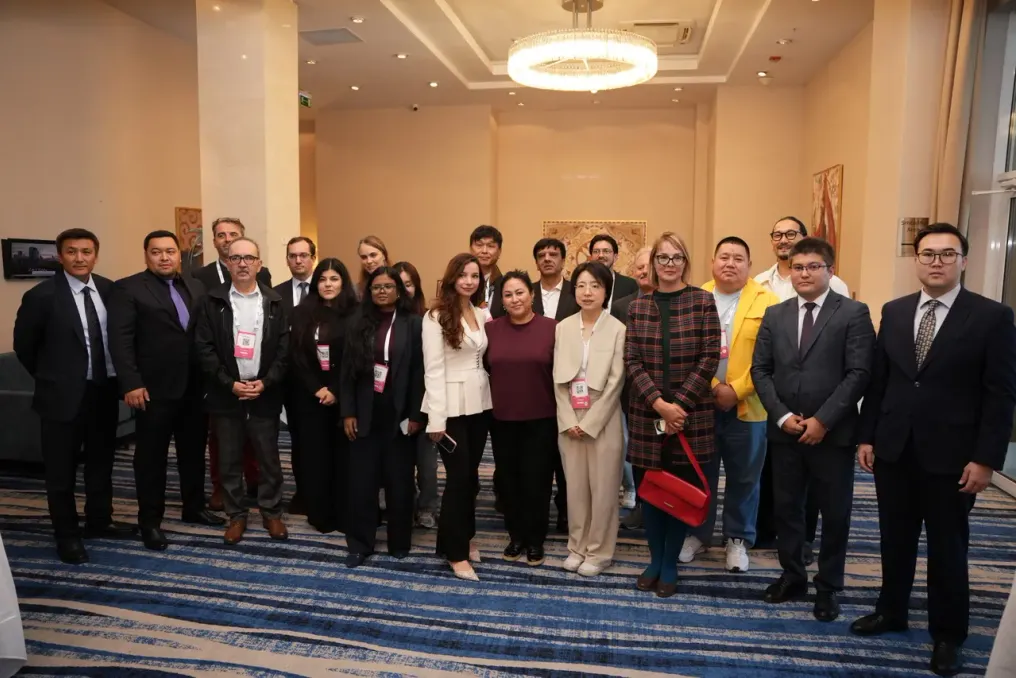
As part of an international press tour organized in Astana during the AI & Digital Bridge 2026 international technology conference, representatives of the Kazakhstani tourism industry demonstrated the potential for tourism in the capital and Almaty to journalists and foreign guests.
The presentations showed how the country's two largest cities are developing complementary models of urban, business, cultural, and natural tourism. This event was part of the AI & Digital Bridge 2026 program, which gathered representatives from technology companies, international corporations, investors, experts, and media.
Participants of the press tour were able not only to familiarize themselves with Kazakhstan's technological agenda but also to assess the country's tourism infrastructure and opportunities for foreign travelers.
Kazakhstan's tourism sector is gradually moving beyond the traditional perception of the country as a destination focused primarily on nature lovers and steppe routes. Astana and Almaty are forming two complementary models of urban tourism, offering international guests a combination of business infrastructure, culture, gastronomy, events, modern urban environment, and natural routes.
This trend is particularly noticeable in tourist flows and infrastructure development in the country's two main tourist centers. In 2025, over 1.6 million tourists visited Astana, including more than 380,000 foreigners; the international flow to the capital increased by 7% compared to the previous year. During the same period, about 2.5 million people visited Almaty, of whom more than 754,000 were international visitors, representing an almost 40% increase in foreign tourists to Almaty compared to 2023.
From administrative capital to independent tourist destination
For Astana, the key task is changing its perception in the international tourism market. The capital aims to position itself not only as Kazakhstan's administrative and business center but also as an independent travel destination.
The presentation of Astana's tourism potential during the press tour revealed a wide range of opportunities: from business and event tourism to gastronomy, culture, medical services, and natural routes. Special attention is paid to the city's ability to host international events and use them as an additional stimulus for tourist visits.
The event economy plays an important role. The city hosts 11 major events annually, such as the Eurasian Book Fair, Comic Con Astana, AI Bridge, Qazaqstan Barysy, and BaiQymyz. This calendar allows for combining business trips and participation in significant events with cultural programs, gastronomy, and urban tourism.
For international journalists and press tour participants, this provides an opportunity to see Astana not just as a venue for a technology conference, but as an independent tourism product that includes museums, theaters, modern architecture, restaurants, and new attractions.
Almaty: the 'City plus Mountains' model
The press tour also presented Almaty's tourism potential. While Astana emphasizes its image as a modern capital and center of international events, Almaty offers a different approach—a combination of a large city and mountain nature.
In 2025, about 2.5 million tourists visited Almaty, including more than 754,000 foreign guests. Tourism already accounts for 4.1% of the city's gross regional product. Almaty has over 400 accommodation facilities, more than 12,500 hotel rooms, over 7,250 cafes and restaurants, 22 museums, 161 historical and cultural monuments, and more than 40 tourist sites.
However, Almaty's main competitive advantage remains the ability to combine urban and natural tourism in one trip. A tourist can go to the mountains in the morning and return to the city in the evening to visit restaurants, museums, and cultural spaces. Therefore, the city is promoted under the concept of 'mountains by day—city by night.'
Thus, the press tour held within the framework of AI & Digital Bridge 2026 presented international media not only the technological capabilities of Kazakhstan but also a broader context of the country's development as a tourist destination.