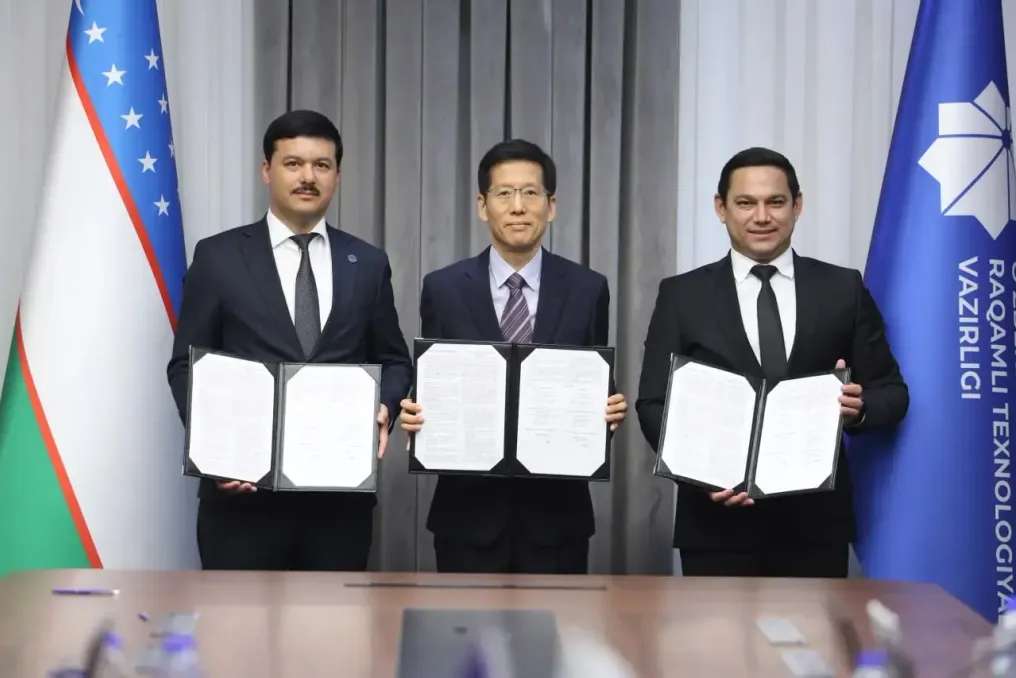
Uzbekistan studies South Korea's digital public procurement system
Read more
UzDaily
uzdaily.uz

Uzbekistan studies South Korea's digital public procurement system

A delegation from Uzbekistan held a series of meetings in the Republic of Korea focused on the digitalization of public procurement, the development of local production, technology transfer, and expanding institutional cooperation.

The delegation included representatives from the Agency for Industrial Cooperation and Public Procurement, as well as relevant state bodies.

Discussion of the electronic public procurement system

At the headquarters of the Korea International Cooperation Agency (KOICA), the parties discussed the further development of Uzbekistan's electronic public procurement system based on the experience of South Korea. Particular attention was paid to the possibilities of attracting technical assistance and utilizing grant programs.

Participants also reviewed the possibility of involving Korean experts and professional development for specialists working in this field.

Cooperation with manufacturers and technologies

In a meeting with the Korea Trade-Investment Promotion Agency (KOTRA), participants discussed establishing contacts with Korean producers of products with potential for localization in Uzbekistan. The parties considered holding bilateral (B2B) meetings with Korean companies, developing technological partnerships, implementing joint projects, and expanding industrial interaction.

Studying public procurement experience

Another part of the visit was dedicated to studying the experience of the Public Procurement Service (PPS) of the Republic of Korea. The Uzbek delegation familiarized itself with practices of centralized procurement management and the operation of the KONEPS electronic procurement system.

Electronic catalogs and framework agreements, price monitoring, supplier evaluation, the application of the Total Cost of Ownership (TCO) approach, electronic contracts and payments, and the integration of public information systems were examined in detail. Furthermore, participants studied risk analysis mechanisms using artificial intelligence technologies.

In addition, the delegation visited the Electronics and Telecommunications Research Institute (ETRI), where it learned about modern achievements in artificial intelligence, digital and telecommunication technologies, high-definition televisions, and autonomous transport.

Overall, the meetings focused on studying the experience of South Korea and identifying practical directions for future cooperation between Uzbekistan and the Republic of Korea in the fields of public procurement, industrial interaction, and advanced technologies.

Similar stories

Uzbekistan and Asian Development Bank Establish Center for Advanced Technologies
Read more
uzdaily.uz

Uzbekistan and Asian Development Bank Establish Center for Advanced Technologies

The Ministry of Digital Technologies of Uzbekistan announced the signing of a memorandum of understanding under the UPGRADE project between Uzbekistan and the Asian Development Bank (ADB). This project involves establishing a digital technology research center in the Tashkent region, specifically in the city of Nurafshan.

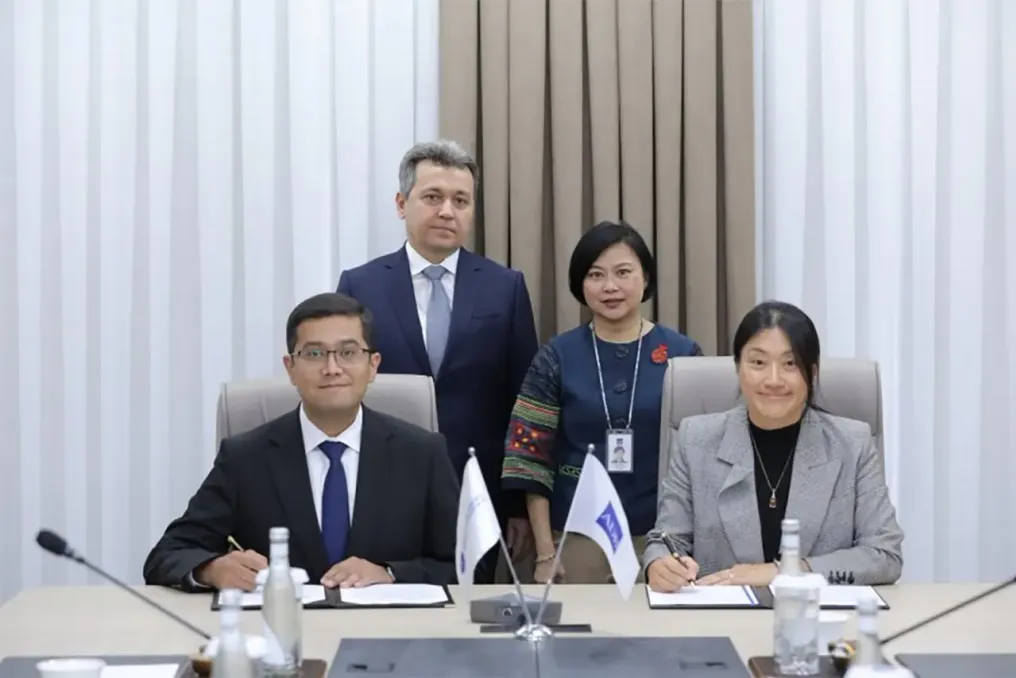
The document was signed on September 21 during a meeting attended by representatives from the Ministry of Digital Technologies, IT Park Uzbekistan, and the ADB. Attendees included Minister of Digital Technologies Sherzod Shermatov, CEO of IT Park Uzbekistan Azamat Karamatov, and ADB's Country Director for Uzbekistan, Kanokpan Lao-Araya.

The memorandum was signed by First Deputy Minister of Digital Technologies Ayubkhon Sultanov and Jun Chong, a Digital Transformation Specialist at the ADB's Digital Sector Department.

The UPGRADE project, which stands for 'Unlocking Growth Potential through Research and Advanced Digital Technologies,' aims to create a research center in Nurafshan. This center will integrate scientific research activities, high-performance computing infrastructure, specialized technological laboratories, personnel training, and mechanisms for commercializing technological solutions.

The Ministry of Digital Technologies serves as the initiator and implementing body of the project, while IT Park Uzbekistan will function as the executive agency. The project is scheduled to commence in the second quarter of 2027 and conclude in the second quarter of 2032.

The total cost of the project is estimated at 200 million US dollars. Financing is planned through an ADB sovereign loan, guaranteed by the State of the Republic of Uzbekistan.

The key objective of UPGRADE is to form a complete ecosystem covering applied research and prototype development, testing, certification, commercialization, and bringing technological solutions to domestic and international markets. The project intends to execute 300 research and experimental design works, incubate 100 technology startups, and create 3,000 jobs in the fields of digital and deep technologies. Supported projects are expected to generate a cumulative annual revenue of no less than 50 million US dollars.

The project concept was developed with the participation of IT Park, universities, research institutions, the startup community, the private sector, and state structures. The memorandum signing took place during the ICT Week Uzbekistan 2026 event.

Uzbekistan implements intelligent customs control system to detect violations
Read more
podrobno.uz

Uzbekistan implements intelligent customs control system to detect violations

Customs services of Uzbekistan are intensifying efforts to expand electronic data exchange with foreign states. The goal of this initiative is to detect discrepancies in customs declarations and prevent attempts to evade relevant payments even before the goods reach the border.

As part of the functioning of the intelligent customs system, an automated exchange of information on export declarations has been organized with a number of foreign countries. This received data is then automatically compared with the information presented in import declarations processed in Uzbekistan.

When the system detects any discrepancies, a risk signal is generated. Consequently, the cargo may be subjected to additional inspection or customs audit. This approach allows potential violations to be identified in advance, directing the resources of customs authorities to operations requiring heightened attention.

Representatives of the Customs Committee emphasize that this system is also designed to prevent the evasion of duties and ensure equal business conditions for all honest entrepreneurs. It should be noted that plans to grant Uzbekistan customs employees official authorization to use unmanned aerial vehicles to combat smuggling have previously been reported.

Uzbekistan and South Korea Discuss Development of Digital Government and AI Data Hub
Read more
uzdaily.uz

Uzbekistan and South Korea Discuss Development of Digital Government and AI Data Hub

Jamol Makhsudov, Deputy Minister of Digital Technologies of Uzbekistan, and Jakhongir Rajabov, Executive Director of IT Park Uzbekistan, held a meeting with representatives of the National Information Society of South Korea (NIA), according to the Ministry of Digital Technologies of Uzbekistan.

The parties discussed cooperation opportunities in the fields of e-government, data infrastructure, and the digital transformation of public services in Uzbekistan. Special attention was paid to creating an Artificial Intelligence Data Hub—a platform designed for AI-based solutions.

The participants reviewed issues regarding the formation of datasets necessary for training artificial intelligence models. Following the discussion, the parties agreed to continue working on potential areas of cooperation within the framework of the AI Data Hub project, including experience exchange and attracting NIA's expertise in creating such platforms, preparing datasets, and building the necessary infrastructure.

Furthermore, the format and scope of expert support that NIA will provide during the implementation of this project in Uzbekistan will be examined in detail.

The National Information Society (NIA) is a South Korean government agency specializing in information and communication technologies and digital transformation. It was established in 1987 and implements projects in the fields of AI, digital government, data, ICT infrastructure, and digital education. In 2025, through its AI Hub platform, NIA provided approximately 1.18 billion units of public data for the development and training of artificial intelligence models.

Popular