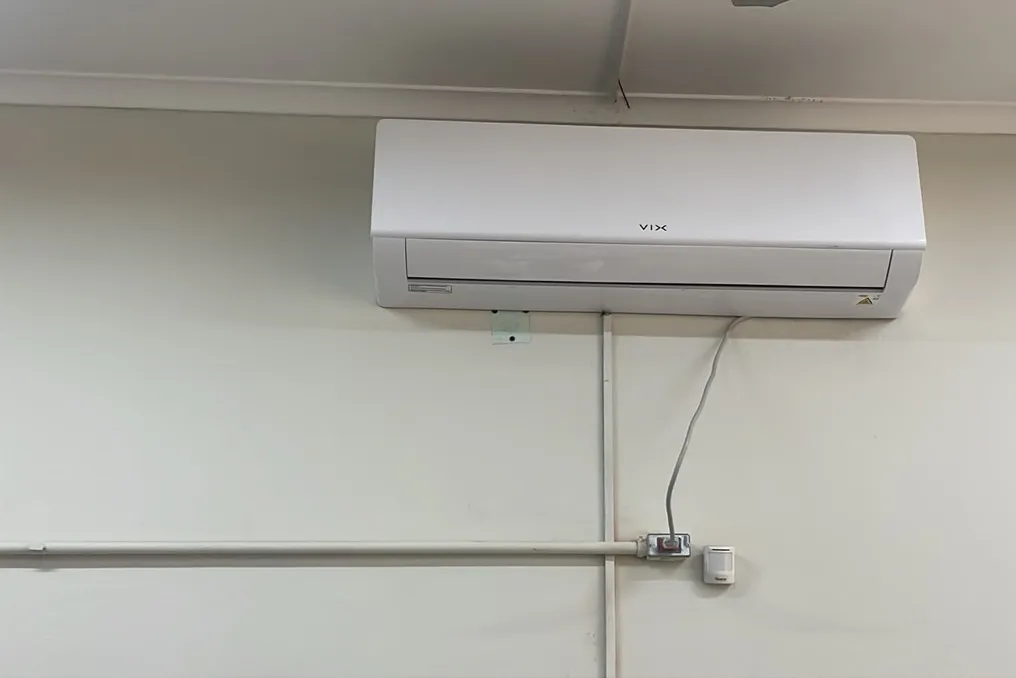
Fifty-nine percent of state schools in the Piracicaba area do not have air conditioning in their classrooms and were excluded from the current phase of the São Paulo government's climate control plan. This information was obtained by g1 through the Freedom of Information Act (LAI).
According to the response provided by the State Secretariat of Education (Seduc), 37 out of 63 state schools in the region still lack climate control. However, another 26 units already have the system installed or are in the finalization process by the start of the 2027 school year. The stated objective of Seduc is to improve both thermal comfort conditions and the quality of teaching and learning in the institutions.
The data presented dates back to September 14, 2026. The Piracicaba Regional Education Unit covers municipalities such as Águas de São Pedro (SP), Charqueada (SP), Piracicaba (SP), Saltinho (SP), Santa Maria da Serra (SP), and São Pedro (SP). In this network, Seduc registers a total of 29,322 students and 2,100 teachers.
School Selection Criteria
Seduc communicated in a note that the climate control program focuses primarily on areas of the state that present higher temperatures and greater demand for refrigeration. The program, according to the secretariat, aims to climate control 1,500 schools out of the 5,000 units distributed across the state.
When questioned by g1 about the criteria used to select the 26 schools in the Piracicaba region, the secretariat responded with a note that did not directly address the issue but mentioned that 30 schools will be climate controlled from a total list of 68 units in the region.
Additionally, the secretariat detailed that the system implementation occurs in three distinct phases: first, the adaptation of the schools' electrical infrastructure; second, the installation of the equipment; and finally, the energy connection carried out by the concessionaires.
Climate Control Alternatives
To help schools adjust to continuously rising temperatures and reduce the impact of heat on the development of children and adolescents, researchers Letícia Neves and Eduarda Chaga, both specialists in bioclimatic architecture at Unicamp, pointed out that solutions must go beyond mere air conditioner installation.
They recommended prioritizing architectural methods of 'passive climate control'—those that do not require electrical energy—from the initial design phase. This includes using high and thick walls, buildings that facilitate cross-ventilation, and choosing an appropriate construction orientation relative to the sun and wind.
For existing schools, the specialists suggested applying thermal insulation to roofs and coverings, painting facades with light colors (as these absorb less radiation), implementing shading through vegetation, and optimizing natural ventilation to keep indoor environments cool.
Active climate control, which uses electricity (such as air conditioning or fans), should only be used as support during periods of extreme heat, aiming to reduce energy consumption and dependence on the electrical grid.
Risks of Unplanned Installation
Letícia Neves warned that simply placing split-type units in closed rooms only results in the recirculation of 'stale' air, which causes an increase in carbon dioxide ($ ext{CO}_2$) levels and deteriorates local air quality.
The specialist classified this situation as 'totally unhealthy,' as it contributes to the spread of diseases and generates feelings of tiredness and fatigue, potentially causing drowsiness when $ ext{CO}_2$ concentration is very high.
To solve this problem, Neves presented two options: if a conventional split unit is used, it is mandatory to add a separate fan to promote air renewal. In more advanced and powerful systems (such as multi-split or central), this renewal is managed by the equipment itself.
In both scenarios, the specialist emphasized the importance of hiring a designer specialized in air conditioning. She explained that the environment's design requires technical reasoning according to the standard, citing that NBR 16401 defines a minimum air renewal rate based on various factors, such as space occupancy density.
g1 inquired whether the installation across the entire network follows NBR 16401, but the responsible department did not provide an answer up to the latest date of the report.
Guidelines for Facing Heat
Regarding the schools that were left out of this project stage, Seduc-SP informed that these units have, on average, three fans per classroom.
During periods of intense heat, the state government's guideline is for schools to adjust their schedule to protect students. Recommendations include conducting Physical Education classes with lower intensity, providing regular breaks for hydration, and preventing students from being exposed to the sun, especially between 10 am and 4 pm, the period of highest heat.
The secretariat also clarified that school principals have autonomy to implement such adjustments according to local needs.