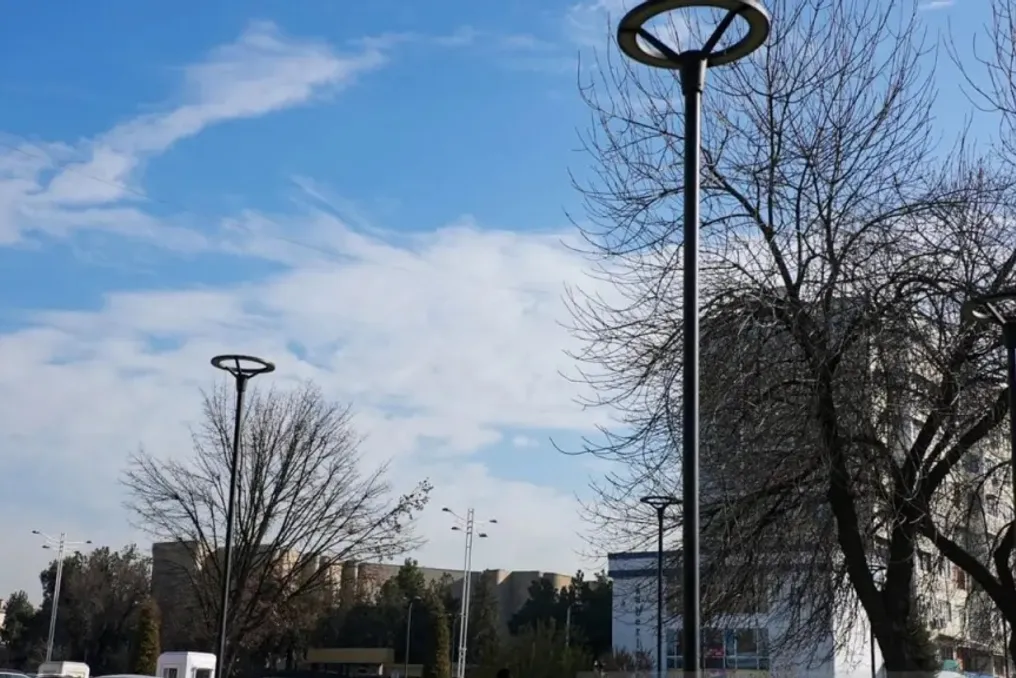
PM2.5 particle concentration in Tashkent decreased by 25% since the beginning of the year thanks to the 'Clean Air' program
Read more
Podrobno.uz [uz]
podrobno.uz

PM2.5 particle concentration in Tashkent decreased by 25% since the beginning of the year thanks to the 'Clean Air' program

A 25% decrease in the concentration of fine particulate matter PM2.5 has been noted in Tashkent compared to the previous year, recorded since the beginning of 2026. According to information provided by the Committee on Ecology, this improvement is linked to the implementation of the 'Clean Air' program.

According to the agency, the number of days with good air quality increased from 81 to 147. Furthermore, during the spring in the capital, there was a period lasting about a month when the atmospheric air quality was classified as good.

Forty-five hundred and ninety automatic monitoring stations were installed to minimize emissions at industrial facilities. The inspection covered over 550 production enterprises, and 186 dust and gas cleaning units were modernized. It is planned that another 30% of enterprises will be updated by the end of the current year.

More than 280 thousand vehicles were inspected as part of the environmental control. These measures prevented the emission of 2.5 thousand tons of harmful substances, and over 2.2 million eco-stickers were issued to drivers. The 'Car-Free Day' campaign can reduce emissions by almost 50 tons in just one day.

Ten automatic PM2.5 monitoring points operate in Tashkent, and the online platform 'Eco-control' is also used. Requirements for large construction sites include greening at least 30% of the occupied area.

The project to create a 'green belt' covering an area of 330 hectares is being implemented in Tashkent and Syrdarya regions, and a 'green corridor' measuring 33 kilometers will be laid along the Small Ring Road.

The Committee on Ecology intends to further reduce emissions by 2%, decrease the number of days exceeding the PM2.5 norm by 7%, and ensure that 40% of construction sites are equipped with dust suppression and monitoring systems. As of the report date, the air in Tashkent at 10 AM was rated as 'moderately polluted,' corresponding to the yellow zone.
Similar stories

New tariffs for drinking water and sewage approved in Tashkent region
Read more
gazeta.uz

New tariffs for drinking water and sewage approved in Tashkent region

The Kengash of People's Deputies of the Tashkent region has decided to change the tariffs for water supply and sewage services. According to the resolution, for most residents, the cost per cubic meter of water will increase by 19%, rising from 2600 to 3100 soms excluding VAT, and the wastewater disposal fee will increase by 15%, reaching 1500 soms instead of the previous 1300 soms.

The new rates came into effect on October 1st, which was 15 days after the official publication of the document adopted on September 16th.

For those served by 'Tashkent Region Water Supply,' the increase in the cost per cubic meter of water including VAT will be 19.2%, rising from 2912 to 3472 soms. Meanwhile, the wastewater disposal fee will increase by 15.4%, reaching 1680 soms from the previous 1456 soms.

For legal entities and budgetary institutions, the tariff for drinking water will increase from 16,800 to 17,920 soms with VAT (corresponding to a 6.7% increase). The wastewater disposal cost for these organizations will rise significantly—from 3360 to 4480 soms (an increase of 33.3%).

Separate tariff conditions have been established for districts served by the 'Chimgan-Charkvak Main Water Supply.' Here, for the population, the price of drinking water will rise from 1680 to 1904 soms with VAT (an increase of 13.3%), and the wastewater disposal fee will increase from 1288 to 1512 soms (an increase of 17.4%).

Previously, in the Tashkent region, tariffs were raised on July 1, 2025. At that time, the average increase in water supply tariffs for the population ranged from 26.7% to 36.4%, and the sewage service fee increased by 30% depending on the type of servicing structure, and in some cases, increased almost 3.8 times.

It is planned that starting January 1, 2027, the authority to determine tariffs for drinking water supply and sewage services in Uzbekistan will be transferred to the Interdepartmental Tariff Commission under the Cabinet of Ministers.

Popular