Despite the influence of the elements, Pakistan's dream of a gold medal remained unfulfilled in the match against India
Read more
Aaj Tak
www.aajtak.in

Despite the influence of the elements, Pakistan's dream of a gold medal remained unfulfilled in the match against India

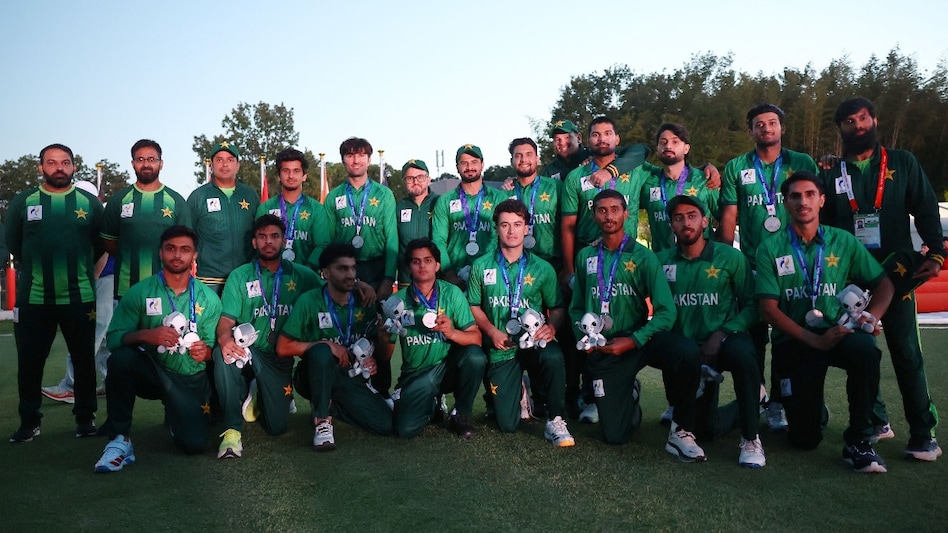
Before the Asian Games 2026 match against India, the phenomenon of 'Qudrat ka Nizam' (the law of nature) was discussed among the Pakistani team due to rain forecasts. If the final between India and Pakistan had been cancelled due to rain, both teams would have shared the gold medal. However, this did not happen.

The match was played entirely at the Korghi Sports Park in Nishine on Saturday (October 3), and Pakistan lost to the Indian team by a score of 19 wickets. The Indian team scored an impressive total in the final, which the Pakistani team could not chase. The Indian men's cricket team won the gold medal at the Asian Games for the second consecutive time.

It is interesting that in Pakistani cricket, 'Qudrat ka Nizam' became more than just a phrase. In recent years, this term has often been raised in the context of Pakistan's fate and cricket scenarios related to rain. This time, it was expected that history would be similar, but the weather did not allow it to happen in the final.

The story of 'Qudrat ka Nizam' is linked to 2022. At that time, Pakistan's head coach, Saklan Mushtaq, used this phrase after Pakistan's loss to England in the T20 series. He stated that everything is subject to 'Qudrat ka Nizam,' meaning what is meant to happen happens. After this, the term became closely associated with Pakistani cricket during the ICC Men's T20 World Cup 2022 and was actively used on social media.

In that tournament, Pakistan's hopes of reaching the semi-finals were considered almost exhausted. To advance further, the team needed to rely on the result of another match. At that moment, the Netherlands made a big surprise by defeating South Africa. South Africa's loss was extremely important for Pakistan; if South Africa had won, Pakistan would have been eliminated from the tournament. However, the Netherlands' victory changed the entire situation, giving Pakistan a chance to reach the semi-finals.

After South Africa's defeat, Pakistan secured its place in the semi-finals by beating Bangladesh. Then, by defeating New Zealand in the semi-finals, the team reached the final. It was then that 'Qudrat ka Nizam' became a popular slogan on social media in connection with Pakistani cricket. Pakistani fans began viewing the team's journey in the tournament from this perspective. Now, this slogan was being discussed again before the Asian Games 2026 final.

Even before the India-Pakistan final, the weather eased Pakistan's path. Pakistan's quarter-final match against Hong Kong did not take place due to rain. After the cancellation of the match, Pakistan received a spot in the semi-finals based on the best T20I ranking. There, Pakistan beat Bangladesh and advanced to the gold medal match. Thus, the rain indirectly helped Pakistan reach the final. The question arose: what would happen if the gold medal match against India was also cancelled due to rain?

After India and Pakistan reached the final, an important scenario related to rain emerged. If the match had not taken place due to bad weather, and even a super over would have been impossible, both teams would have shared the gold medal. Such a situation could have opened a path for Pakistan to win gold without winning the match. However, this time, the story related to 'Qudrat ka Nizam' did not materialize. The rain did not stop the final, and both teams had the full opportunity to play on the field.

In the match, India started the game, scoring 211 runs in 20 overs, losing 6 batsmen. Tilak Verma played a decisive role in the Indian innings. He hit a half-century in just 21 balls and put pressure on the Pakistani bowlers in the last overs. Tilak, along with Shiv Dubey, scored 62 runs for the sixth wicket. Thanks to this partnership, India set a target of 212 runs for Pakistan. In response, the Pakistani team could only score 192 runs, losing 9 batsmen.
Similar stories

Tradition of Refusing Handshakes Between India and Pakistan Continues in Asian Games Final
Read more
www.aajtak.in

Tradition of Refusing Handshakes Between India and Pakistan Continues in Asian Games Final

In the final cricket match of the 2026 Asian Games, held on Saturday, October 3rd, the teams of India and Pakistan faced each other. The captain of the Indian team, Shreyas Iyer, decided to start the game with batting after winning the toss.

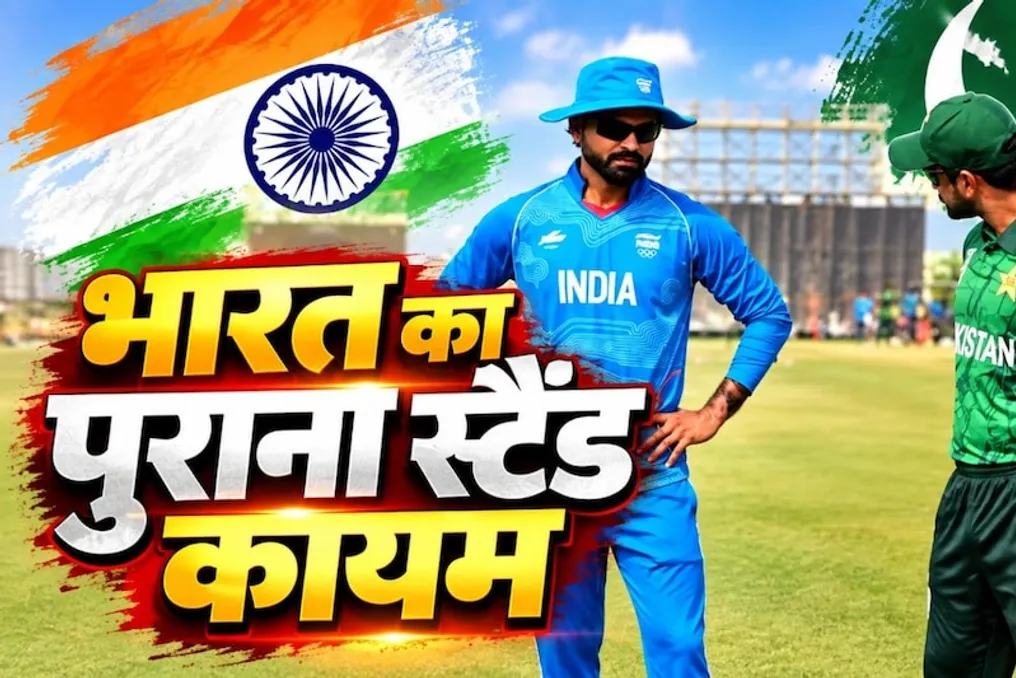
During the toss procedure between the captains of India and Pakistan, there was no handshake, continuing the trend of avoiding handshakes in Indo-Pakistani cricket, even in the Asian Games gold medal match.

India reached the final by defeating Sri Lanka 124 in the semi-final, while Pakistan qualified for the decisive match by beating Bangladesh. It is worth noting that previously, in matches between India and Pakistan at the Asia Cup and ICC tournaments, players also avoided handshakes. Even during the toss in the Asian Games final, both captains kept their distance and did not shake hands.

During the toss between Shreyas and Sahibzada, there was some exchange of words, but they maintained distance and did not shake hands.

Meanwhile, in other sports at the Asian Games, players from India and Pakistan greeted each other in the usual manner; for example, table tennis and hockey players exchanged handshakes after the match. However, in cricket, the policy of refusing handshakes is a separate case. Although OCA or IOC rules do not make shaking hands mandatory for players, it is considered a widely accepted tradition in the spirit of sportsmanship.

The situation at the Asian Games gains additional context: the Indian women's cricket team won gold, while Pakistan received bronze. Both teams did not meet each other in the tournament, but players from both countries were present at the same award ceremony. Now, the men's cricket final has brought up this topic of 'no handshake' in Indo-Pakistani cricket to the level of the Asian Games.

The Indian team squad for the Asian Games final included: Vaibhav Suryavanshi, Abhishek Sharma, Sanju Samson (wicketkeeper), Shreyas Iyer (captain), Ishan Kishan, Tilak Verma, Shivam Dube, Axar Patel, Washington Sundar, Ravi Bishnoi, and Jasprit Bumrah.

The Pakistani team squad for the Asian Games final consisted of: Farhan Sahibzada (captain), Sam Ayub, Usman Khan (wicketkeeper), Majed Sadakat, Hasan Nawaz, Abdul Samad, Arafat Minhaj, Ahmed Daniyal, Mohammad Wasim Jr., Abrar Ahmed, and Sufian Mukim.

Asian Games 2026 Final: India and Pakistan to Clash for Gold
Read more
www.aajtak.in

Asian Games 2026 Final: India and Pakistan to Clash for Gold

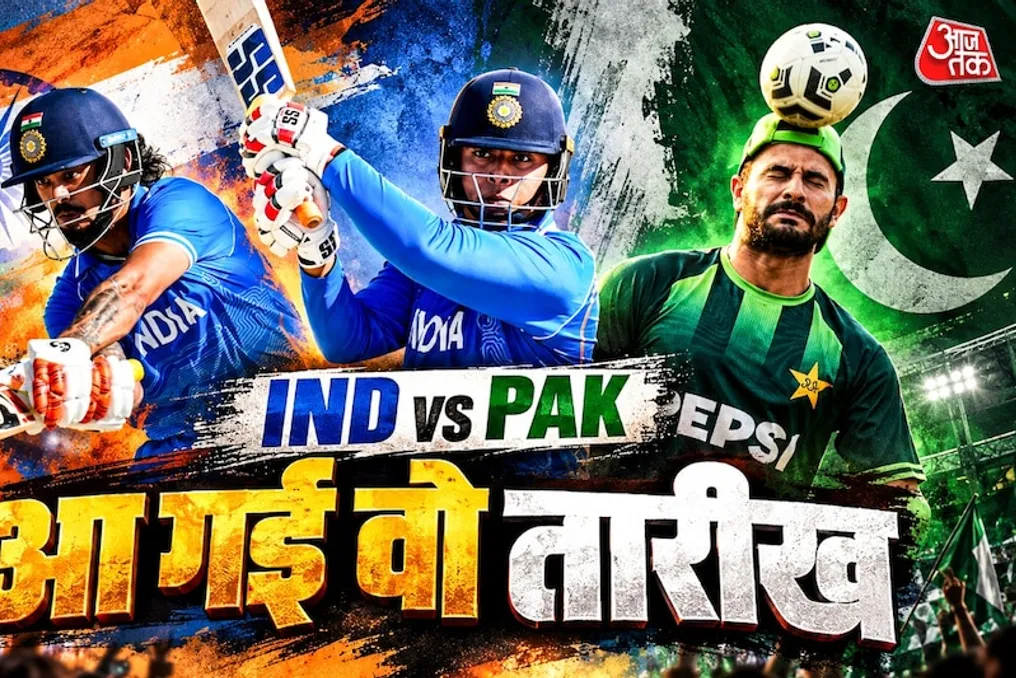
In the men's final match of the Asian Games 2026, India and Pakistan will face each other. India advanced to the final by defeating Sri Lanka with a score of 124 runs, while Pakistan secured its spot in the final by overcoming Bangladesh by six wickets.

The main question being discussed is whether the competing teams will change their player lineups for this decisive match. However, the probability of changes to the squad for the gold medal game is considered extremely low, and it is expected that the teams will take the field with the same lineups they used in the semi-finals.

This match is scheduled for Saturday, October 3rd, and will be held at the Korogi Stadium in Nishin. The major cricket battle between the two nations will begin at 10:00 AM local time, with the toss taking place half an hour earlier, at 9:30 AM.

India aims to defend its championship title, while Pakistan hopes to win its first gold medal in men's cricket at the Asian Games.

In the semi-final, India achieved a convincing victory over Sri Lanka. The match, which started with the Indian team batting, concluded with a score of 169/7 in 20 overs. Vaibhav Suryavanshi set the pace for the team, playing a quick innings with 38 runs in 21 overs, and Ishan Kishan, batting at number five, played without getting out, scoring 80 runs. In his innings, he registered 4 fours and 5 sixes.

In response, the Sri Lankan team was defeated by Indian bowlers for only 45 runs. Jasprit Bumrah created early threat, taking two wickets in the very first over. Another wicket was taken by Ravi Bishnoi through direct bowling, and Axar Patel worsened the situation for Sri Lanka by taking two wickets. The remaining batsmen were neutralized by Washington Sundar and Abhishek Sharma.

Since both teams won their semi-finals, it is unlikely that they will change the squads used in the semi-finals. It is expected that the players who participated in the semi-finals will feature in the final.

The projected lineup for the Indian team at the Asian Games includes: Vaibhav Suryavanshi, Abhishek Sharma, Sanju Samson (as wicketkeeper), Shreyas Iyer (captain), Ishan Kishan, Tilak Verma, Shivam Dube, Axar Patel, Washington Sundar, Ravi Bishnoi, and Jasprit Bumrah.

The projected lineup for the Pakistani team at the Asian Games includes: Sahibzada Farhan (captain), Sam Ayub, Usman Khan (as wicketkeeper), Maj Sadakat, Hasan Nawaz, Abdul Samad, Arafat Minhaj, Ahmed Daniyal, Mohammed Wasim Junior, Abrar Ahmed, and Sufian Mukim.

In the last five encounters between these teams, the advantage has clearly been on the side of India. India's last victory over Pakistan was achieved on February 15, 2026, by a margin of 61 runs. Prior to that, India beat Pakistan on September 28, 2025, by 5 wickets, on September 21 by 6 wickets, on September 14 by 7 wickets, and on June 9, 2024, by 6 runs.

India was originally scheduled to play Afghanistan in the quarter-finals on September 28, but the match was cancelled due to rain, and no balls were bowled. Due to a higher ranking, India advanced to the semi-finals and defeated Sri Lanka. Pakistan's quarter-final against Hong Kong was also cancelled due to precipitation, and Pakistan advanced to the semi-finals based on its ranking, where it subsequently defeated Bangladesh, securing its place in the final.

In the second semi-final, Pakistan defeated Bangladesh. Due to rain, the match lasted 13 overs. Bangladesh scored 111/7 in 13 overs. Sufian Mukim took three wickets. Pursuing its goal, Pakistan was in a difficult situation with a score of 53/4, but Abdul Samad played without getting out, scoring 30 runs in 15 overs, and Hasan Nawaz added 27 runs without getting out, forming a crucial partnership of 59 runs. Pakistan reached its target in the 11.3th over.

The gold medal match between India and Pakistan will take place on October 3rd at the Korogi Stadium in Nishin. The match will start at 10:00 AM Indian time. The broadcast will be available on Sony LIV, and the live stream on Sony Sports 1.

Recently, bad weather has been observed in Japan, leading to the cancellation of many matches due to rain. Nevertheless, good weather is expected on the day of the final. The probability of rain on Saturday is extremely low, and the temperature is forecast to be between 16 and 27 degrees Celsius.

If the final between India and Pakistan is cancelled due to rain, the ranking rule, as applied in previous Asian Games, will not be used. The last time the final against Afghanistan was cancelled due to rain, India received gold based on the best ranking. In case of cancellation of the final in Aichi-Nagoya 2026, the gold medal will be shared between both teams.

Cricket has been part of the Asian Games since 2010, with the exception of 2018. India became the men's cricket world champion in 2022, defeating Afghanistan, and is the reigning champion. Bangladesh became the first Asian Games champion in men's cricket, and Sri Lanka won gold in 2014. Afghanistan has finished as runner-up three times. India did not participate in the games in 2010 and 2014.

In women's cricket, Pakistan won the first two titles, while India won gold in 2022 and 2026. Due to bad weather, six tournament matches were canceled consecutively, and attention is now focused on the weather and the final.

India achieves historic victory over Pakistan in the final of the first ICC World Twenty20
Read more
www.aajtak.in

India achieves historic victory over Pakistan in the final of the first ICC World Twenty20

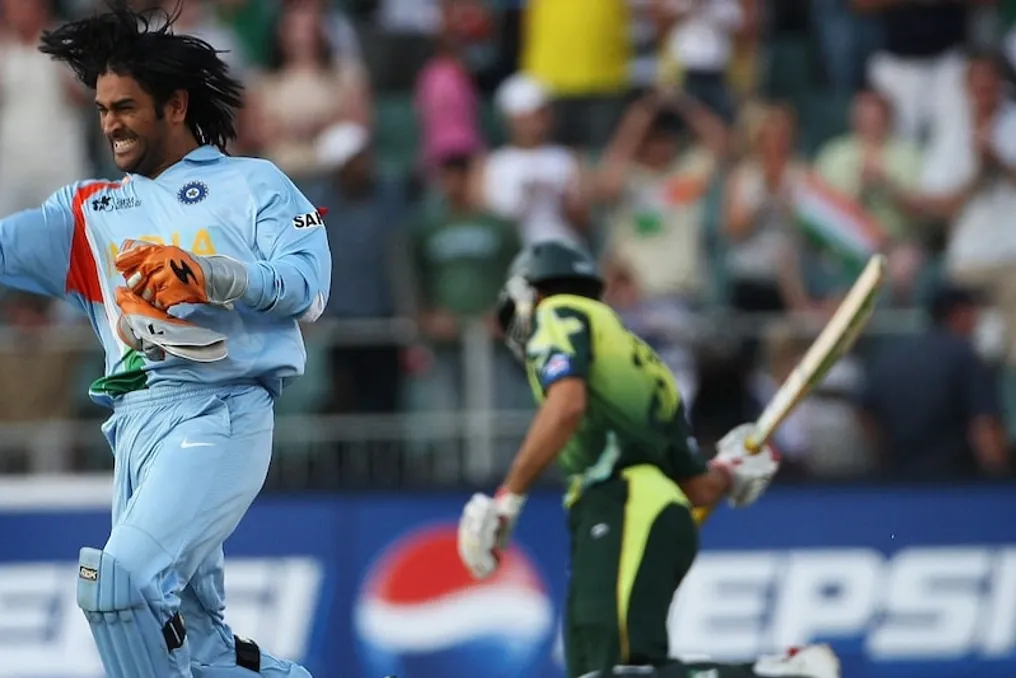
September 24, 2007, became an unforgettable day in the history of Indian cricket. It was on this day, 19 years ago, that India and Pakistan met face to face in the final of the first ICC World Twenty20, held in South Africa. The match was extremely tense, and ultimately India defeated Pakistan, winning the T20 World Cup title for the first time.

At the Wanderers Stadium in Johannesburg, the Indian team, having won the toss, started the game. Although the beginning was not the most successful, Gautam Gambhir demonstrated brilliant play, scoring 75 runs off 54 balls. Rohit Sharma also played quietly, scoring 30* runs without getting out. India scored a total of 157/5 runs in 20 overs, setting a target of 158 runs for Pakistan. On the Pakistani side, Umar Gul took the most wickets, claiming 3 wickets.

When Pakistan came out to chase the victory, they began losing batsmen against the Indian bowling. Pakistan's first wicket fell at 2 runs when Mohammad Hafeez was dismissed, having scored only 1 run. Imran Nazir showed powerful batting, scoring 33 runs off 14 balls. After Nazir's innings, Pakistan's game faltered; at one point, the team's score was 77 runs with 6 wickets down, and India's victory seemed almost inevitable. However, Misbah-ul-Haq did not give up and managed to boost Pakistan's hopes by hitting 3 sixes off Harbhajan Singh's over.

The situation changed drastically in the last over of the match. Pakistan needed only 13 runs to win. Joginder Sharma was given the responsibility for bowling. Joginder's first delivery was a wide. Misbah played defensively to the second delivery. But on the very next ball, Misbah hit a six off a full toss. Now Pakistan needed to score 6 runs from 4 balls. Then Misbah decided to play a scoop shot. The ball went into the air, and Shrisant caught it. The Indian team rejoiced, and Pakistan's innings ended at 152 runs.

India defeated Pakistan by a margin of 5 runs, starting a new era for Indian cricket. The young team, led by captain Mahendra Singh Dhoni, made history in their first T20 World Cup. The last ball and Shrisant's catch are still considered one of the most memorable moments in Indian cricket. For India, Ar P Singh and Irfan Pathan took 3 wickets each, and Joginder Sharma took 2 wickets. Irfan Pathan was named 'Player of the Match' for his performance, and Shahid Afridi was awarded 'Player of the Tournament'. After winning the 1983 World Cup under Kapil Dev, India won its second World Cup 24 years later under Dhoni.

Popular