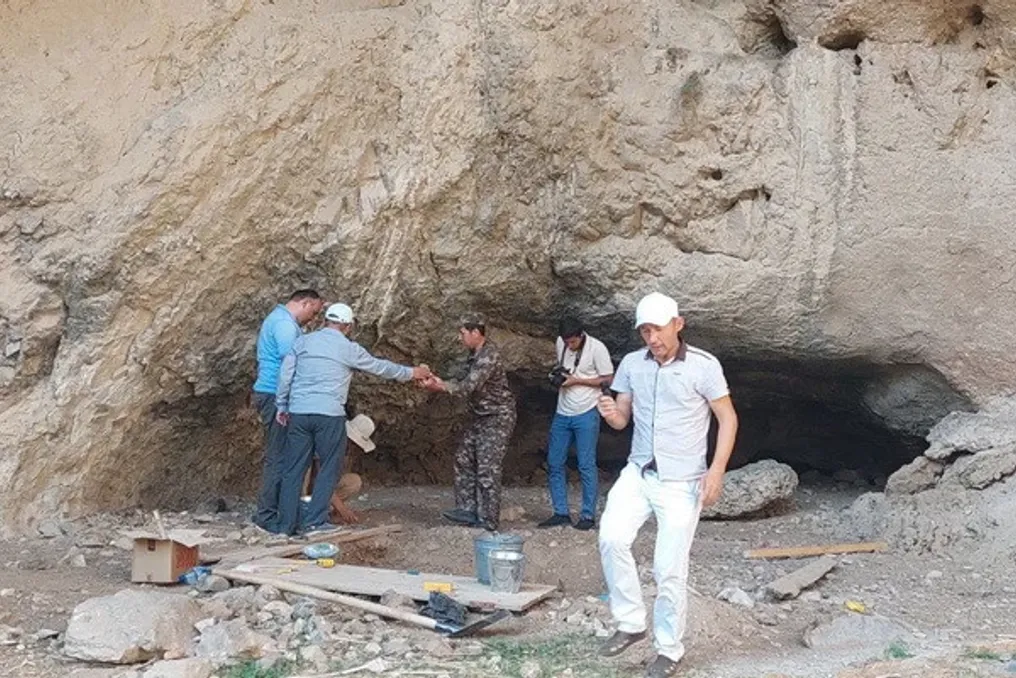
The Cabinet of Ministers of Uzbekistan has approved a roadmap for the development of speleotourism and compiled a list of ten high-potential sites, which includes nine caves and one salt mine. This was reported by the National Legal Database.
These locations are situated in the regions of Jizzakh, Samarkand, Surkhandarya, and Kashkadarya. Work to improve tourist infrastructure and increase visitor flow will be carried out in phases between 2026 and 2028.
The document was adopted in accordance with Presidential Decree No. PP-348 dated November 21, 2025, concerning the organization of the activities of the Tourism Committee and the acceleration of sector development.
The government approved a proposal prepared by the Tourism Committee, the National Committee on Ecology and Climate Change, the Agency for Cultural Heritage, and the khokimiyats of the four regions, aimed at organizing speleotourism on an experimental basis in areas with the highest potential.
In the Jizzakh region, the list includes the Peshagor Cave in Zaamin district, located in the Morguzar mountains on the northwestern spur of the Turkestan Range.
The largest number of sites is concentrated in the Samarkand region. In Urgut district, Yakdon Cave in Chorchinor mahalla, located 7 km from the district center, Amankutan Cave in the southeastern part of the district in the Zarafshan Range, and Kiev Cave near the village of Kamangaran in the Kirkdag massif are included. In Nurobod district, Khazrati Davud Cave is located near the village of Aksay, 30 km southeast of the district center.
Three caves in the Baysun district of Surkhandarya region, near the village of Darband in the Ghissar Range—Korongu Ulduz, Boibulok, and Teshiktash—as well as the Khojaykan salt mine in Sherabad district, have been selected. In Kashkadarya region, the list includes Amir Temur Cave in Yakkabag district, which is located at the foot of the Ghissar Range within the Ghissar State Reserve.
The Tourism Committee reserves the right to make changes to this list.
According to the roadmap, the sites will undergo inventory by the end of 2026, and a unified electronic registry integrated with the National Tourism Platform will be created by March 2027. An electronic passport will be prepared for each location, containing its geographical coordinates, tourism potential, technical condition, and legal status.
It is planned that the sites will be photographed and filmed in 2027. The development of their three-dimensional models and virtual tours should be completed by June, and the implementation of an information system using QR codes is scheduled for August. By the end of 2027, management plans for priority sites will be developed and implemented.
The approval of speleotourism routes is set for April 2027, with the installation of navigation and directional signs by July, and the integration of electronic maps with the National Tourism Platform by September. Online booking, e-guides, and information services via QR codes are planned to launch by July 2027.
The khokimiyats of the four regions have been tasked with creating engineering, communal, and tourist infrastructure at the sites during 2027–2028. This includes setting up parking areas, recreational grounds, and sanitary facilities, while strictly adhering to environmental and sanitary standards. The commissioning of these sites is planned for January 2029.
Together with the Tourism Committee, the khokimiyats will support local residents in opening family guesthouses and developing local guide services.
Land plots for tourist infrastructure will be provided for lease or permanent use according to legislation. On sites classified as cultural heritage, construction, reconstruction, and improvement are permitted only after obtaining approval from the Agency for Cultural Heritage. In areas located in protected natural zones, such work must be coordinated with the National Committee on Ecology and Climate Change and performed only after obtaining the necessary permits.
The Ministry of Emergency Situations, together with the Tourism Committee and the Inspection for Mining and Geology Supervision, must prepare a draft set of rules for ensuring tourist safety when visiting the sites within three months.
Starting in 2027, the Ministry of Emergency Situations will conduct practical training exercises at the sites twice a year. The installation of warning signs, evacuation plans, and information stands is scheduled for March 2027.
The National Committee on Ecology and Climate Change is recommended to carry out state ecological control in speleotourism development zones. In 2027, criteria for assessing the state of the environment and anthropogenic impact on the sites will be developed, and ecological monitoring will be organized.
Training for specialists and guides for this sector will be conducted. Training programs will be introduced in February 2027, courses for guides and instructors in April, and the qualification certification and accreditation system in June.
The Ministry of Higher Education, Science, and Innovation will hold an international scientific and practical conference on the development of speleotourism in May-June 2027. Experts from the International Union of Speleology, regional unions and associations, leading scientists and researchers, as well as representatives of organizations managing tourist caves in the European Union, Georgia, Russia, China, and Vietnam, will participate.
Starting in 2027, the ministry will annually attract international grants for research in speleology, geology, hydrology, and biospeleology.
The Tourism Committee is obliged to prepare media content about the sites by the end of 2026 and place it on the National Tourism Platform. From 2027, the committee will organize international scientific expeditions annually. Together with the National Television and Radio Company and the Film Committee, the committee will produce documentaries about speleotourism in Uzbekistan for foreign television channels, financed by the Tourism Support Fund, sponsorships, and entrepreneurs' funds.
The Ministry of Investment, Industry, and Trade will work in 2026–2027 on attracting the private sector and investments for site development. From 2027, it will hold annual investment forums, presentations, and business meetings with the participation of foreign and local investors.
The Ministry of Economy and Finance will include the projects of selected sites in social and production infrastructure development programs starting in 2027. Financing may be provided through international grants, private investments, state budget funds, and other legally permissible sources.