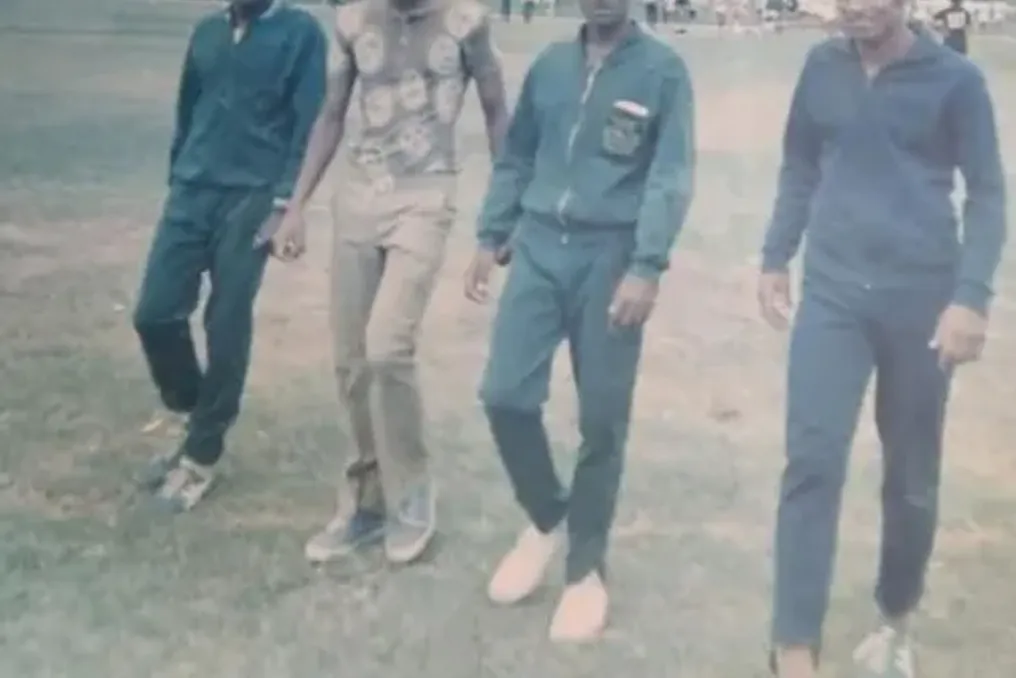
Anand Pillay, who previously taught in KwaDukuza, dedicated over four decades to shaping the younger generation, promoting sports, and fighting the inequality that once prevented many South African athletes from succeeding. At 74, Pillay looks back on a life marked by determination, sport, education, and service.
As the youngest of thirteen children—eight boys and five girls—Pillay grew up in a large family in Greenview Park, Durban. His early years were shaped by the harsh reality of apartheid. He attended Greenwood Park State-Aided School, but his family, like many others, suffered from the Group Areas Act and was forced to move to Chatsworth.
Pillay recounted that they lived in a ten-bedroom house with a large yard in Greenview Park, but because the area was considered 'coloured,' they were relocated to Unit 9 in Thornton, Chatsworth, where they received a two-bedroom, two-story house with a small yard. He added that life was difficult at the time, and he had to work after school to help support the family income.
It was during these formative years that sport began to change the trajectory of his life. Along with his family and friends, Pillay started practicing karate. These preparatory 3km barefoot runs on a gravel road before karate sessions helped him develop the discipline that later became central to his sporting and professional career.
Pillay's journey as an athlete began almost accidentally. At an inter-school sports event at Greenwood Park State-Aided School, he was asked to substitute in an 880-yard (800m) race. He was inspired by the support of his housemates and his teacher, Mr C Chitty. On the last lap, he sprinted to the finish line to overtake Bobby, the Natal champion, and was hailed as a hero at the school.
Later, Pillay enrolled at Sastri College, where he served as a senior student and captain of the athletics and social events team. His track achievements continued: in 1971, he won the Natal High School cross championship. In the same year, he set a South African record in the 800-meter distance, running 1:59, and subsequently won the 1500 meters in Cape Town. He noted that this pushed him to confront the challenges of apartheid.
He reflects that 'many flowers were wasted' due to the injustice and restrictions of the apartheid regime. Pillay was not limited to one sport; he participated in athletics, football, tennis, squash, and basketball. He attended basketball training courses, but suitable facilities were unavailable at schools.
Seeking to improve conditions, he served for five years in the Durban Sports Grounds Association. This association was established during apartheid to improve sporting opportunities for marginalized communities. Later, he became chairman of the Stanger Manor Sports Grounds Association, where efforts to improve sports infrastructure eventually gained recognition from the city council. One significant achievement was the installation of high floodlights, which allowed for sporting and community events at night.
Pillay also recalled the discrimination faced by talented athletes who were denied access to the Kings Park tartan track. Among those affected were athletes such as Joe Mahalingam, Ismail Kolia, G.T. Mudli, and Vivian Reddy. Under the guidance of Mun Govender, the athletes themselves used roller skates to prepare the track for competitions. Pillay remembered that they were determined to hold events despite opposition from the City Council.
Pillay's determination extended beyond the local community. Once, the owner of Victory Lounge (a restaurant in downtown Durban) sponsored three athletes with flights to Cape Town so they could participate in an inter-athletics tournament. Pillay also mentioned that his interest in long-distance running began in high school and continued as a way to stay fit. He thanks Rajendra Chitty from D'Alberton Callies, who founded the Natal Long Distance Running Association, for helping to develop the sport in the province.
Soon, Pillay established himself as a strong long-distance runner. His achievements included victories in the Chatsworth 20km marathon and the Chatsworth Milk Walk 42km. He also participated in the grueling 30-mile John Trant marathon, which ran from Curries Fountain to Ottawa and back. However, perhaps his most memorable achievement was his victory in the Gold Top Stanger-to-Durban race in 1972 with a time of 5 hours and 43 minutes. It was an open race, and his win was greeted by approximately 25,000 spectators at Curries Fountain. This event coincided with the final of the cup between Berea and Manning Rangers in the Professional League Federation (PLF), adding atmosphere to the famous Durban sports ground. For Pillay, the ovation after the victory remains one of the most cherished memories of his athletic career.
Pillay's contribution to sport eventually transitioned from competition to administration. He served as president of the KwaZulu-Natal Amateur Athletics Association and vice-president of the South African Amateur Athletics Council. In 1992, at the invitation of the late Harold Paul, he participated in International Amateur Athletics Federation meetings in Cape Town and Johannesburg regarding the possible readmission of South Africa to the Olympic Games.
His commitment to youth development continued throughout his life. He estimated that he worked with thousands of young people across South Africa and urged athletes and council members to establish clubs in areas like Phoenix and Chatsworth to nurture future athletes. His message to the youth is: 'Obey your mother, father, and teachers, as well as our divine Creator. Explore yourself, and you will find the talent in which you can succeed in life.'
While sport provided one path of service, education became Pillay's life's mission. He spent 40 years as a teacher in several schools, including Settlers Primary, Clairwood Secondary, Shakaskraal Primary, Stanger ML Sultan Secondary, and Newlands East Secondary. Pillay was also a member of the executive committee of the National Teachers' Professional Organization. His contribution to education and school sports was recognized with the National Teacher Award and the Premier Sports Prize for outstanding contribution to school sports.
The father of four children remains concerned about the changing role of physical education in schools. He noted that 'it was a sad day when life orientation replaced physical education. The Department of Education expects untrained teachers to teach the practical side of sport.'
Despite these concerns, his own contributions to education were recognized. He received a letter of congratulations from Umalusi, the South African quality assurance body for general and further education and training, acknowledging his contribution to excellence in teaching and learning. After retirement, he founded the Great Destiny Pre-School in the AFM church in KwaDukuza. His goal was to influence children from an early age and help steer them away from negative societal influences.
Pillay continues to act as a mentor for various sports clubs in the northern region. He also pays tribute to many individuals who tirelessly worked to challenge the injustices of apartheid through sport and education. Among them, he remembers Roy Salik from the KwaZulu-Natal School Sports Association, MN Pazer from SACOS, Mun Govender, and athletics administrator Narain Naidu.
Reflecting on his life and the trophies and medals collected, he said they evoked waves of memories of hard work, perseverance, selflessness, and a sense of accomplishment. He values these awards and thanks everyone who contributed to his success. These awards remind him that when things get tough, the strong keep moving forward. He also believes that his awards serve as inspiration, teaching him that practice leads to perfection, and training schedules and race-day strategies matter. He applied the same principle of determination in his academic career, and these qualities can follow anyone in our community.