The Role of the Woman Behind the Mahabharata War: Unveiling Ancient History
Read more
Aaj Tak
www.aajtak.in

The Role of the Woman Behind the Mahabharata War: Unveiling Ancient History

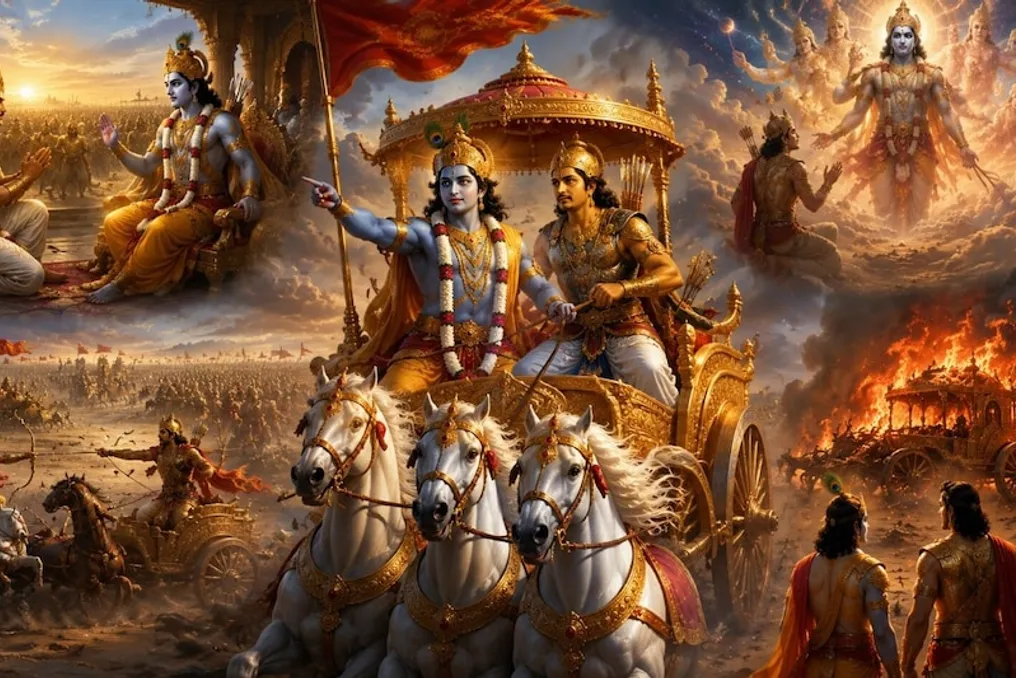
Since childhood, we have heard many fascinating and mysterious stories from the epic Mahabharata. This epic is full of narratives about war, politics, relationships, vows, love, sacrifice, and ambition that influenced subsequent events. Usually, when speaking of the Mahabharata war, the main causes cited are the humiliation of Draupadi, disputes over the throne of Hastinapura, and the arrogance of Duryodhana. However, did you know that the roots of this great war run much deeper?

Various explanations for the causes of the Mahabharata war are presented in mythological tales. One such story connects the entire course of these events to King Shantanu, the goddess Ganga, and Satyavati. So, what was Satyavati's connection to the Mahabharata war? How did one vow change the entire history of the succession of Hastinapura? Let's find out the details.

King Mahabhisheka Received a Curse from Brahma

According to ancient legends, King Mahabhisheka is an important link in the history of the Mahabharata. It is said that Mahabhisheka was a righteous and ascetic ruler. Once, pleased with his asceticism and piety, Brahma gave him the opportunity to visit Brahloka. During this visit, the goddess Ganga was also present in Brahma's assembly. Due to a strong wind, part of Ganga's garment slipped off. All the deities in the assembly lowered their eyes, but Mahabhisheka's gaze was fixed only on Ganga. This angered Brahma, who cursed Mahabhisheka, condemning him to be born in a human body. According to legend, the goddess Ganga also received a curse to be born in human form on Earth. This curse later became a turning point in the history of the Mahabharata.

Mahabhisheka Became King Shantanu

Under the influence of the curse, Mahabhisheka was born on Earth as King Shantanu, who became a powerful ruler of Hastinapura. One day during a hunt, his attention was drawn to an extremely beautiful woman—it was the goddess Ganga. Shantanu was captivated by Ganga's beauty and proposed marriage to her. Ganga set a condition for the marriage: Shantanu must never ask her questions or interfere with her affairs. On the day he broke this promise, Ganga would leave him. Shantanu agreed to this condition, and they married.

After this, Ganga gave birth to seven children, whom she then abandoned in the river. Shantanu's heart broke at this sight, but due to the promise made, he could not ask Ganga anything. Then another seven sons were born to them, and Ganga abandoned all of them in the river. It was unbearable for Shantanu to see this, but he was bound by his word.

Breaking the Vow to Save the Eighth Son

When Ganga gave birth to the eighth son and was about to take him to the river, Shantanu could no longer restrain himself. He asked Ganga why she was throwing her own children into the water. His promise was broken. Ganga then told him that she was taking their eighth son with her. This son later became known as Devavrata. Ganga raised Devavrata, teaching him warfare, politics, sacred scriptures, and dharma. After many years, Ganga returned her son Devavrata to Shantanu. Devavrata grew into a great warrior and scholar, and it was he who later received the name Bhishma-patima.

Bhishma Took a Vow for Satyavati

Time passed, and one day King Shantanu met Satyavati. In various tales, Satyavati is also known as Matsyaganda. This name was given to her because of the fishy smell emanating from her body. According to mythology, later, thanks to the blessing of the sage Parashara, the smell of her body disappeared, and a pleasant fragrance emanated from her. This situation is connected to another important event in her life. Satyavati and her son gave birth to the sage Vedavyasa. Later, Satyavati appeared in King Shantanu's life, and he wished to marry her. However, Satyavati's father wanted the heir to the throne of Hastinapura to be the son born from his daughter. This situation was difficult for Shantanu, as his eldest son Devavrata was already the crown prince. Understanding his father's wish and love, Devavrata made a decision that changed history. He vowed eternal celibacy and promised never to claim the throne of Hastinapura. Because of this terrible vow, Devavrata received the name Bhishma.

The Lineage of Hastinapura Continues Through Satyavati's Sons

Shantanu and Satyavati had two sons—Chitrangada and Vichitravirya. Chitrangada died in battle. After this, Vichitravirya became the king of Hastinapura. He married Ambika and Ambalika, but they had no children. Some time later, Vichitravirya also passed away. Now, Hastinapura faced its biggest problem—lineage and succession. Satyavati called her first son, the sage Vedavyasa. According to mythology, conception occurred through the tradition of Niyoga from Ambika and Ambalika.

Similar stories

New NCERT book claims Indian kings received swords from goddesses to counter religious invasions
Read more
timesofindia.indiatimes.com

New NCERT book claims Indian kings received swords from goddesses to counter religious invasions

According to the new ninth-grade social studies textbook released by NCERT on Tuesday, many kings and princes received swords from goddesses such as Kali, Durga, and Bhavani. These swords were used to resist religiously motivated invasions starting from the seventh century.

The first part of this textbook was published in June.

The Mahabharata: Five Unsolved Mysteries Described in Sacred Scriptures
Read more
www.aajtak.in

The Mahabharata: Five Unsolved Mysteries Described in Sacred Scriptures

We all hear many fascinating stories from the Mahabharata since childhood. These tales contain important lessons concerning humanity, religion, relationships, and life. However, many wonder why the war in the Mahabharata occurred and what events turned the growing conflict between the Kauravas and the Pandavas into a devastating war.

Below is the complete story of the war in the Mahabharata. It recounts how Duryodhana's jealousy of Indraprastha's splendor, how a game of dice led the Pandavas into exile, and how ultimately Duryodhana's stubbornness pushed all of Kuruvandha toward war.

Duryodhana's Envy of Indraprastha's Splendor

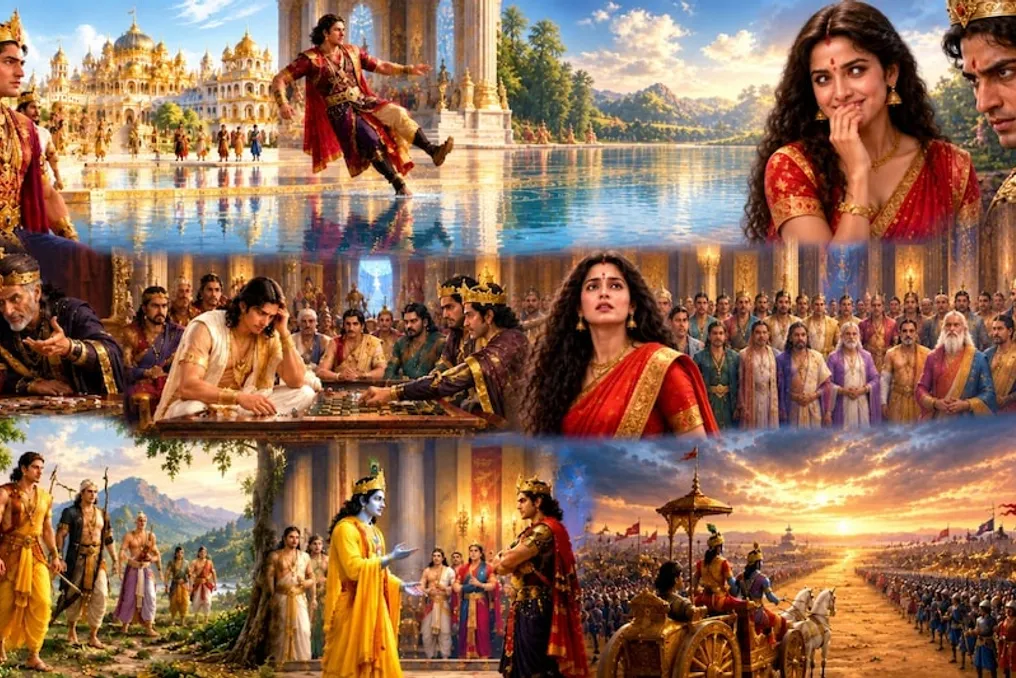
The story unfolds during the time when the Pandavas organized the Rajasuya sacrifice in Indraprastha and invited many to it, including Duryodhana from Hastinapura. Duryodhana arrived in Indraprastha and was struck by its luxury and grandeur. The royal palace of Indraprastha was incredible; its construction was such that in some places where water was visible, there was actually a transparent floor, and where the floor was visible, there was a pond with water.

It is said that while walking through the palace, Duryodhana reached a place where he saw a floor resembling water. He tried to walk through it, mistaking it for a floor, and moved forward. Then a real body of water appeared on the path, but Duryodhana again mistook it for a floor and fell into the water as soon as he stepped forward.

Seeing this, Draupadi and some other people present laughed. This situation caused Duryodhana intense feelings of humiliation. His existing envy towards the Pandavas intensified. Seeing the prosperity of Indraprastha and the growing fame of the Pandavas, the thought solidified in Duryodhana's mind that the Pandavas had surpassed him. He could not accept this situation.

Duryodhana's Plan for Revenge Against the Pandavas

Returning from Indraprastha to Hastinapura, Duryodhana began to devise a plan for revenge against the Pandavas. Duryodhana understood that defeating the Pandavas in open warfare would be difficult. Therefore, he enlisted the help of his uncle Shakuni.

Shakuni devised a plan to gather the Pandavas for a game of dice. At that time, an invitation to a game of dice among kings and Kshatriyas was considered a common tradition. Furthermore, Yudhisthira was particularly drawn to the game of dice, while Shakuni was considered very skilled at it. The goal of Duryodhana and Shakuni was to dispossess the Pandavas of their kingdom and property through the game of dice.

Yudhisthira Loses at the Game of Dice

The Pandavas arrived in Hastinapura at Duryodhana's invitation. After this, a game of dice began between Yudhisthira and Shakuni. During the game, Yudhisthira successively lost his possessions, money, and jewelry. Then he bet his kingdom and lost it. Shakuni and Duryodhana constantly pushed him to increase the stakes. Yudhisthira then bet his brothers, and they also lost one by one. Then he bet himself and lost that too.

But the game of dice did not end there. Then it was proposed to bet Draupadi. Yudhisthira bet Draupadi and lost her. After this, the Kauravas declared that the Pandavas and Draupadi were now their slaves.

Draupadi's Humiliation in the Assembly

Duryodhana ordered Draupadi to be brought to the assembly. A messenger delivered the message to Draupadi, informing her that Yudhisthira had lost her in the game. Hearing this, Draupadi asked: by what right could they bet Draupadi if Yudhisthira had already bet himself? Draupadi refused to come to the assembly.

After this, the Kaurava brothers, Dushasana, forcibly brought Draupadi to the assembly. In the assembly, Draupadi spoke out against the injustice done to her and demanded an answer from all the elders and kings present based on Dharma. A serious debate arose in the assembly regarding this matter. The situation of Draupadi's humiliation became even more terrible when attempts were made to strip her.

Feeling helpless, Draupadi remembered Lord Krishna. According to religious narrative, after this, when Dushasana pulled Draupadi's sari, the sari continued to grow. He could not finish dressing Draupadi and eventually tired and sat down. After this incident in the assembly, a strong tension arose.

Exile of the Pandavas

Finally, Dhritarashtra restored the situation, returning the rights to the Pandavas and Draupadi. But then a game of dice took place again. This time, the condition was that the losing side must spend 12 years in exile, followed by one year in obscurity. If their location was revealed during the period of obscurity, they would have to spend another 12 years in exile.

Yudhisthira lost in this game as well. After this, the Pandavas had to go into 12 years of exile and one year of obscurity. The Pandavas served the prescribed time.

Popular