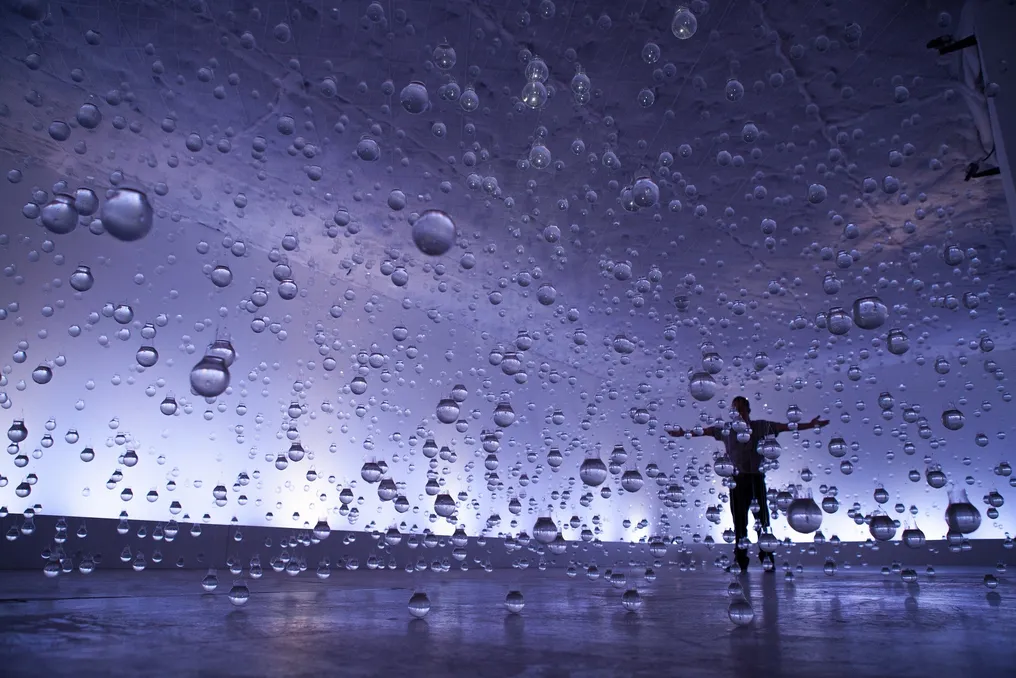
In Belém, a city marked by the constant presence of rain, the exhibition titled 'Tears of Saint Peter' invites the public to walk through approximately 7 thousand drops suspended in the air, creating the sensation that time has been interrupted. This show represents one of the largest assemblies of the project in twenty years and will premiere on October 6th at 7 pm at CAIXA Cultural Belém, including a guided tour by the creator.
The installation was conceived by the Bahian visual artist Vinícius S.A. and is free to enter. The inauguration in Belém completes the work's itinerary across all CAIXA Cultural units in Brazil, with this stage being the last in its tour. The project, supported by the network, has already taken the installation to various regions since its initial presentation in Salvador in 2008, in addition to having passed through Las Vegas, in the United States, and Frankfurt, in Germany.
Upon arriving in the capital of Pará, Vinícius noted the particularity of the relationship between the inhabitants of Belém and precipitation. He stated that it was the first time he had exhibited in a metropolis with such an intimate or affective connection to rain.
The thousands of 'tears' are constructed using light bulbs filled with water, kept suspended by nylon threads at different levels. The scenic lighting serves to highlight the transparency of these elements, transforming the gallery into a landscape that the visitor traverses, feeling immersed in the installation.
The artist explains that the work simulates the ability to pause the rain, allowing for the contemplation of the beauty, power, and symbolism of these large, clean, and transparent drops. He adds that although it is a work about rain, it also addresses drought, characterizing itself as a 'poetic rain.'
Memory, science, and experimentation
'Tears of Saint Peter' results from a fusion of personal experiences and in-depth research. Childhood memories in the sertão of Bahia, where rain was awaited and celebrated, combine with Vinícius' curiosity about materials, his interest in exact sciences, and his manual experimental practice. The apparent lightness of the drops depends on precise calculations of weight, volume, and support.
An experience in Chapada Diamantina also influenced the creation of the work. Vinícius reported walking inside a cloud for about three hours in intense fog, being at the top of the mountain when the cloud descended upon him. This memory of being enveloped in moisture became part of the research that shaped the installation.
Vinícius, a Bahian artist whose works are in the collection of the Museum of Contemporary Art of Bahia and who has artistic residencies in the Netherlands and Germany, uses common materials to create installations that encourage the public's spatial experience. In the work 'Tears of Saint Peter', the intersection between water, faith, and hope is visible in the spectators' reactions; in Salvador, he observed people praying before the drops.
The installation, created by Vinícius S.A., remains free to enter and will be available until January 24, 2027.
Rain, poetry, and environmental preservation
Throughout the work's journey, Vinícius expanded his perspective to include the issue of water scarcity. Although the memories of the sertão remain a reference, his reflection now focuses on a poetics of drought affecting various territories. For the artist, the water crisis demands a debate that transcends regional borders.
The work's passage through the Amazon intensifies this reflection, connecting it to the impacts of droughts on fauna, flora, and riverside communities. Through the experience with water, the installation promotes a dialogue about the urgency of conserving natural resources and forests.
Vinícius defines art as a political instrument, a means of communication with people. His purpose is to use poetry to develop a visual language that can sensitize the viewer to these environmental issues.