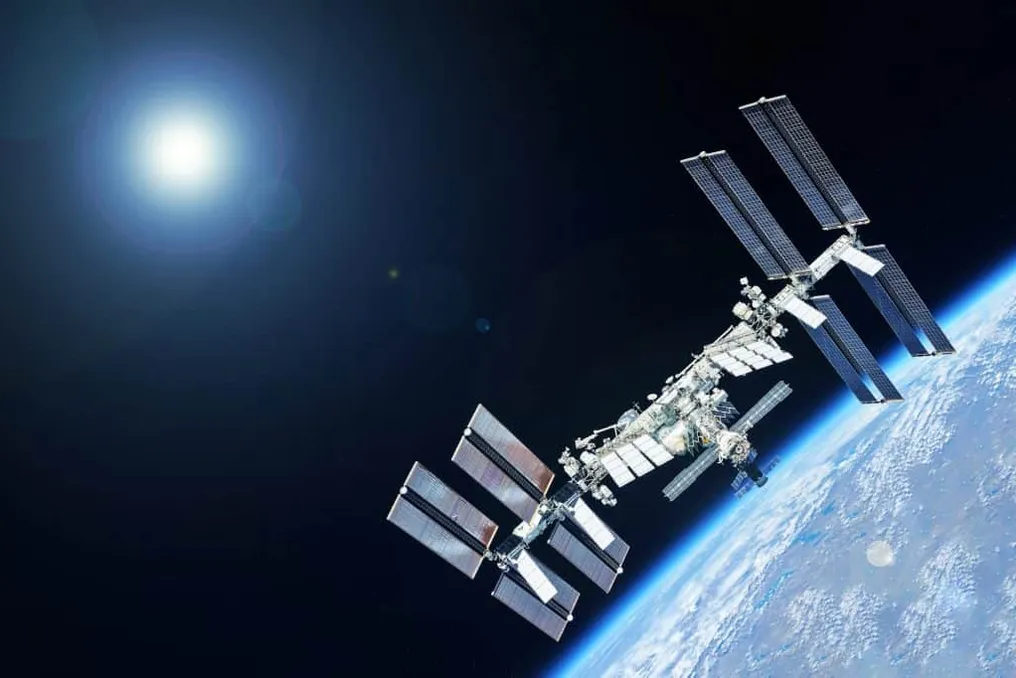
SpaceX's Dragon Capsule Sets Time Record on Journey to the International Space Station
Read more
Olhar Digital
olhardigital.com.br

SpaceX's Dragon Capsule Sets Time Record on Journey to the International Space Station

The Dragon capsule, developed by SpaceX, achieved a new milestone by completing the fastest journey made by an American spacecraft to the International Space Station (ISS). The spacecraft took a total of 7 hours and 55 minutes from launch until docking with the orbital laboratory.

The Dragon, named Grace, was launched on Thursday, the 1st, at 12:10 PM (Brasília time), using a Falcon 9 rocket. The docking process was completed at 8:05 PM, specifically at the Harmony module of the ISS.

The Crew-13 mission transported four crew members: Jessica Watkins and Luke Delaney, both American; Joshua Kutryk, Canadian; and Sergei Teteriatnikov, Russian. This group will remain at the station for about six months, during which they will conduct scientific research, perform maintenance, and demonstrate new technologies.

Jessica Watkins, who serves as the mission commander, is a NASA astronaut and was making her second visit to the space station. In her previous mission, Crew-4, in 2022, she spent 170 days in orbit. With Crew-13, Watkins becomes the first NASA astronaut to complete two flights to the ISS aboard a SpaceX Dragon spacecraft. Previously, she studied geology and was part of the scientific team of the Curiosity rover, which explores Mars.

Luke Delaney, who serves as the pilot for this mission, is making his first space flight. He has prior experience as a naval aviator and test pilot, in addition to having worked as a research pilot at NASA's Langley Research Center.

Other members beginning their space journeys are Joshua Kutryk, representing the Canadian Space Agency, and Sergei Teteriatnikov, belonging to the Russian space agency Roscosmos. Kutryk was a CF-18 fighter pilot and test pilot before being chosen as a Canadian astronaut. Teteriatnikov, meanwhile, has a background in naval engineering and has performed various roles related to propulsion system engineering for vessels.

Research and Maintenance on the ISS

During their stay on the ISS, Crew-13 will be involved in various scientific experiments and station maintenance tasks. Objectives include studies on astronaut health, the impacts of microgravity, and the development of technologies applicable to future space expeditions.

The arrival of these four astronauts also marks the start of the command transition with the Crew-12 mission, which is already at the station. Crew-12 consists of Jessica Meir and Jack Hathaway, American astronauts; Sophie Adenot, a French astronaut from the European Space Agency (ESA); and Andrei Fediaiev, a Russian cosmonaut. This group is scheduled to return to Earth starting Monday, the 5th, after a period dedicated to transferring responsibilities between the teams.

Originally, Crew-13 had a different arrival schedule, but the mission had to be postponed due to a technical issue detected in the capsule. The launch could only take place on October 1st, after resolving this setback. With the success of the mission, the Dragon established a new record for the transit route between Earth and the ISS in under eight hours.

The ISS continues to receive crews from various nations. The combined presence of astronauts from NASA, the Canadian Space Agency, the ESA, and Roscosmos consolidates the station as a crucial international platform for microgravity research and long-duration space operations.
Similar stories

To advance in space travel, it is necessary to develop propulsion systems with greater thrust
Read more
olhardigital.com.br

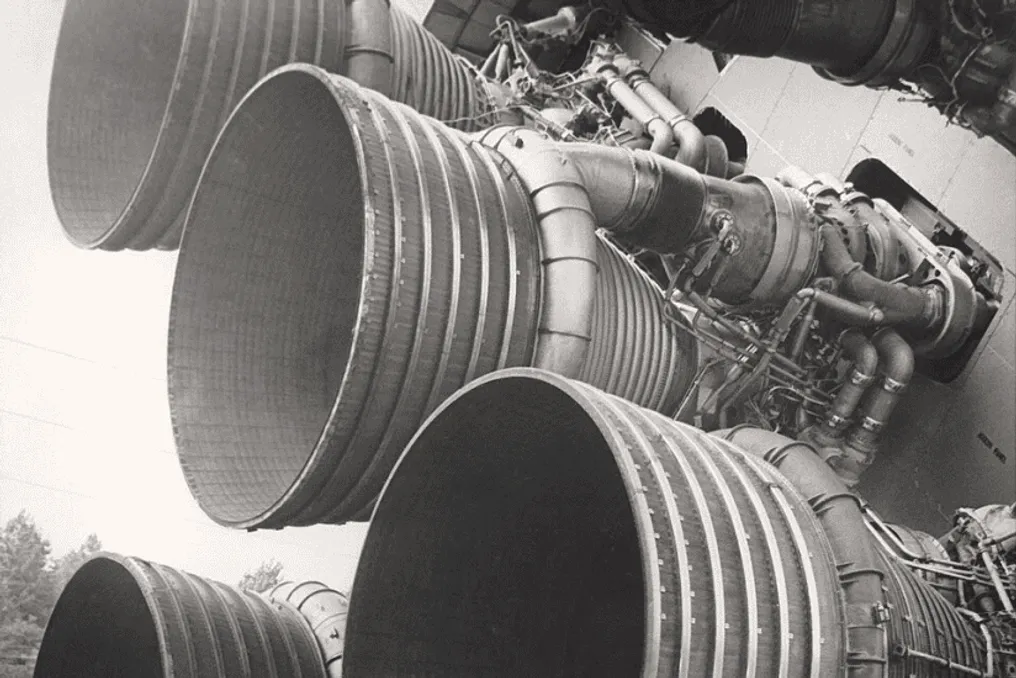
To advance in space travel, it is necessary to develop propulsion systems with greater thrust

As discussed in a previous series on space exploration, humanity is close to returning to the lunar surface, possibly establishing a lunar base in the coming years. However, reaching Mars could still take decades, given that a crewed mission to the Red Planet presents high risks with current technologies.

To reach more distant destinations, generating superior thrust is essential. In the context of space travel, this thrust comes from engines capable of taking humanity into deep space.

Although technologies already exist to send probes to distant planets or even beyond the Solar System, such as the Voyagers, which reached interstellar space after almost fifty years, transporting humans to deep space is a distinct challenge. Manned missions require more than just reaching the destination; they need to supply food, water, equipment, and all vital resources for the duration of the journey.

The farther the destination, the longer the travel time, and consequently, the greater the need for resources. Therefore, for long manned journeys to become viable, they must be completed more quickly, demanding the development of new propulsion methods.

Conventional rockets still rely on engines with technology from seven decades ago. They work by burning fuel to expel hot gases at high speed. According to Newton's third law, the ejection force generates a reaction force that propels the rocket forward. This principle, although simple, was crucial for escaping Earth's gravity, orbiting Earth, reaching the Moon, and exploring the Solar System.

However, these engines are extremely fuel-intensive. While effective for takeoff, their range is limited on long routes. The need to carry more fuel implies larger rockets, which in turn require even more fuel, creating a recursive cycle that points to the urgency of revolutionary propulsion.

An existing alternative is ion propulsion, which also follows Newton's third law but with greater propellant efficiency. While chemical engines release large volumes of fast gas, ion engines accelerate electrically charged particles to much higher speeds. This results in a low-power engine, but one that can operate for months or years with very little propellant, similar to the efficiency of a Honda Biz.

This technology is used in probes like Dawn and DART, as well as satellites like Starlink for orbital corrections. However, the low power of the thrust requires a long acceleration time, which represents the main obstacle for manned missions.

To accelerate faster towards Mars or other locations, an engine is needed that combines the power of an Opala with the autonomy of a Honda Biz. Thermonuclear propulsion emerges as a possible solution. It uses a nuclear reactor to heat a liquid propellant, such as hydrogen. The heated propellant is expelled, generating a thrust two to three times greater than that of a conventional chemical rocket. Although it does not offer the full power of the Opala nor the autonomy of the Biz, it could reduce the trip to Mars from eight and a half months to only three to four months, and it is a technology under testing.

Another option is electronuclear propulsion, where the reactor does not directly heat the propellant but instead generates electricity to power an ion propulsion system. This would provide a more efficient energy source than current solar panels, enabling more robust engines.

Magnetoplasma propulsion is another promising technology. Similar to ion engines, the propellant is ionized and accelerated by electromagnetic fields, but in this case, the ionized gas is superheated to about one million degrees Celsius. This process accelerates the gas to tens of kilometers per second, generating a thrust twenty to thirty times greater than current chemical thrusters.

Magnetoplasma engines can have their thrust adjusted dynamically, allowing for greater power during launch or greater autonomy on long journeys. However, due to high electrical energy consumption, they would only be viable with a nuclear reactor, and the high temperatures represent a significant engineering challenge. Despite this, they are considered a strong possibility for deep space.

It is not yet known when humanity will expand its frontiers to Mars or more distant worlds, nor what technology will be used at that time. However, it is certain that, to progress, greater thrust is needed, and it is human aspirations for knowledge of the Universe that drive the search for more advanced solutions.

New propulsion technologies are crucial, but they are not the only barrier to reaching deep space, as there are other challenges to overcome.

Popular