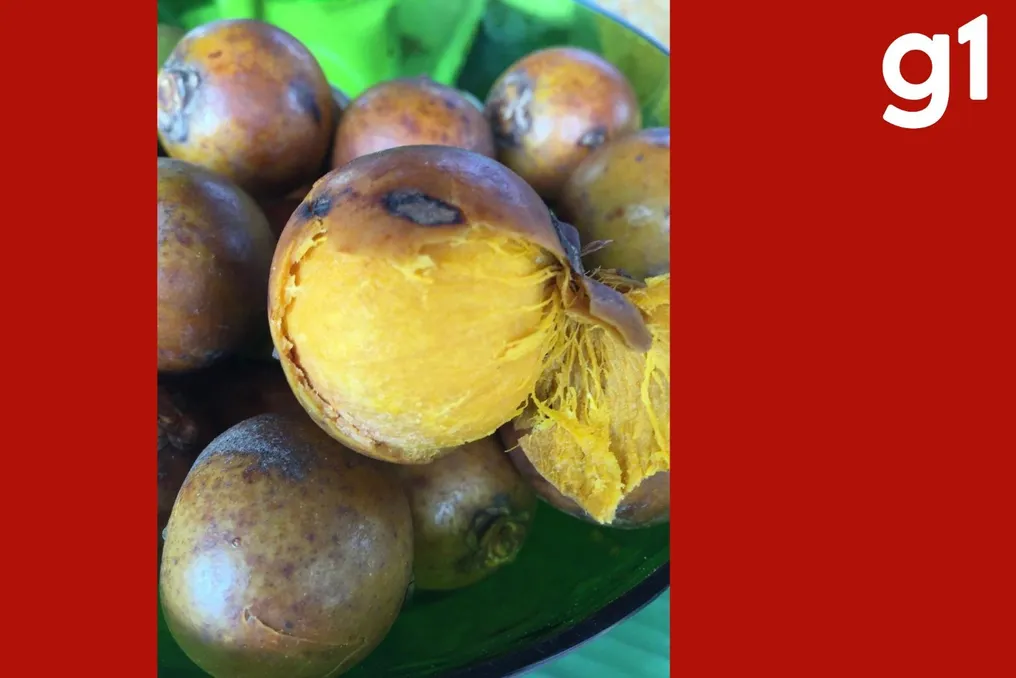
A couple residing in Cuiabá, accustomed to observing Canindé macaws flying through the city, was surprised to find approximately nine of these birds gathered and feeding on bocaiúva, locally known as "chiclete cuiabano," inside a luxury condominium.
Márcia Yamamoto, 43, and Rodrigo Nichioka, 45, filmed the occurrence from inside their vehicle. In the video recording, the macaws were seen scattered along the road and close to each other while consuming the fruit of a palm tree. Some passed in front of the couple's car, but the birds continued eating without showing discomfort with the human presence.
Rodrigo reported that he initially thought the birds would fly away upon approach, but they remained in place, as if accustomed to it. The event drew attention due to its proximity; although the couple is used to seeing macaws in Cuiabá, especially in trees or flying, they had never witnessed such a large group feeding on the ground after more than four decades in the city.
Márcia commented that it was the first and last time they witnessed such a scene. Rodrigo, who has worked at the condominium for about twenty years and frequently travels through the streets, stated that although macaws appear in the area, the quantity seen that day was unusual. He added that despite there being palm trees frequented by the birds, he had never seen such a concentration, confirming that they were consuming the bocaiúva, the "Cuiabá chewing gum.".
How bocaiúva became the 'Cuiabá chewing gum'
Bocaiúva, the fruit of a palm common in both the Cerrado and the Pantanal, received the nickname "chiclete cuiabano" due to a combination of local consumption habits and Cuiabá's history of isolation. Before becoming a common item in the city, the fruit was used as a substitute during film screenings. According to Paulo Boute, in the 1950s and 1960s, it was common for people to carry bags of the fruit to consume while watching movies.
After chewing the fibrous and yellowish part of the bocaiúva, the seeds were thrown on the cinema floor. This practice, according to Paulo, contributed to the popularization of the nickname. He observed that the act of chewing the fruit gave the sensation of chewing gum.
The name is also linked to Cuiabá's historical isolation, which remained restricted from other regions of the country for over 250 years. At that time, items like chewing gum were considered luxury goods and arrived in the Mato Grosso capital with great difficulty and high costs. The guide mentioned that because of this, the idea arose that "We need chewing gum from Rio. We have our own Cuiabá chewing gum.".
The routine of the macaws
Canindé macaws are social birds and tend to move and feed in groups. Paulo Boute, an agronomist and tourism guide from the Pantanal, informed that this behavior is usual in various parts of Mato Grosso. He cited, as examples, the regions of Campo Novo do Parecis and Primavera do Leste, where flocks of macaws can be found in corn and sunflower plantations.
Furthermore, these birds seek urban areas to spend the night, preferably in locations that offer protection against predators. According to the guide, they seek the city because they find safety while sleeping there. He specified that at least six macaws usually sleep every night in palms near their residence. Although it is common to see the birds in groups, the approach of vehicles and people during feeding time is not a usual behavior.