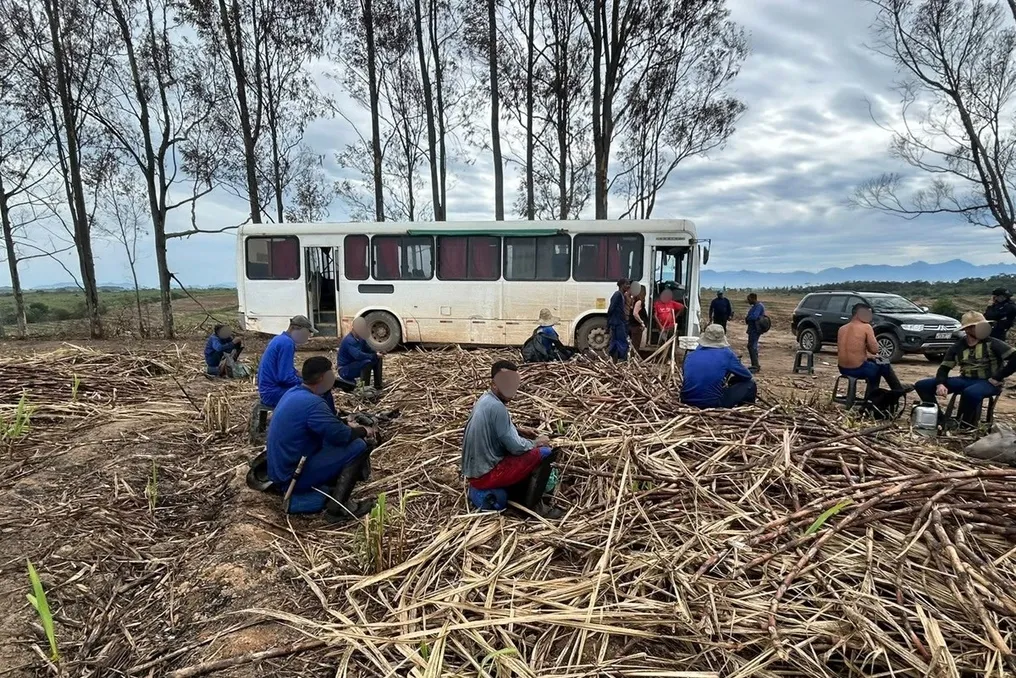
The Labor Public Ministry (MPT) formalized an agreement with the Lagos Bioenergia mill this Thursday (1) in Cabo Frio. The term aims to ensure that the company complies with various obligations related to hiring, service provision, working conditions, and workers' accommodation.
One worker reported constantly asking for help, stating: 'We were calling for help every moment so someone could assist us.' In September, inspectors visited the site after receiving reports and found that employees lived in exhausting shifts and degrading conditions, comparable to slavery.
The inspection ordered the immediate halt of sugarcane cutting. The 67 workers were heard, and their return costs were covered by the company itself; they originated from states in the Northeast and Minas Gerais. One rescued worker, from Pernambuco, described that the reality was very different from what was presented during recruitment; instead of housing in the city, the group was installed in an isolated area.
This worker commented: 'The situation was very bad, complicated, we were in danger there. There were elderly men, 59 years old, 58 years old with us, they couldn't take it anymore. And thank God, we are going home, right?'
Furthermore, the inspection verified that payments were made late and that the amounts, defined daily by intermediaries, were often lower than promised, and the workers did not understand the applied calculations. Contracts were registered in the name of 'gatos' (informal contractors), presented by the mill as employers, but the auditors concluded that these entities lacked financial capacity and only acted as labor intermediaries.
Reports indicated that workers were attracted by the promise of housing near the city and remuneration higher than R$ 1 per meter of cane harvested. However, the isolation of the accommodations prevented easy access to the city for shopping, leisure, medical care, or withdrawing money. Interviewed workers confirmed the absence of regular public transport or vehicles provided by the employer.
One sugarcane cutter declared: 'We gathered, I started looking for help, trying to call people to see if they could help us.' In the cutting areas, auditors discovered other irregularities not mentioned in the complaint, such as the lack of sanitary facilities, basic first aid material, or adequate structure for meals. A monitoring representative observed that workers often supported their meals on their legs or hands, often under strong sun, normalizing this structural deficiency at the workplace.
The Pernambuco worker, when sending his report, was still on his way home, having left on Monday and waiting late at the bus station to reunite with his family. He expressed satisfaction: 'We are happy to be going home. It wasn't what they told us they would, it was different.'
The Company Signed a Conduct Adjustment Term
As communicated by the MPT, the company accepted the commitment established in the Conduct Adjustment Term (TAC). This agreement obliges the company to establish service contracts strictly according to legislation and to avoid keeping workers, directly or indirectly, in conditions analogous to slavery, including forced labor, exhaustive hours, degrading conditions, or restriction of freedom due to debt.
Additionally, the company committed not to engage in the solicitation, recruitment, transportation, transfer, purchase, accommodation, or reception of workers using threats, violence, coercion, fraud, or abuse with the aim of subjecting them to servitude or conditions similar to slavery. The TAC also stipulates that the company must not hire third parties who recruit workers outside the workplace through fraud or undue charges, or who do not guarantee the return of these workers to their origin.
Contracts Rescinded
The MPT informed that the contracts were terminated under the supervision of the auditors, and the mill paid approximately R$ 335 thousand referring to salary and severance payments. The company also covered the costs of the group's return to their places of origin. The inspection also arranged for the issuance of unemployment insurance guides for the rescued individuals, guaranteeing each worker the right to six minimum wage installments.
The group began to be assisted by Cáritas Arquidiocesana do Rio de Janeiro, which offers psychosocial support and social assistance within the Integrated Action Project, maintained by the MPT. In a note, Lagos Bioenergia – Agrisa clarified that the workers were employed by third-party contractors and were not part of its direct staff. The company stated that upon becoming aware of the suspicions, it collaborated with the authorities, terminated contracts with the involved providers, settled the due charges, and arranged for the workers' return.
Agrisa added that it is reviewing its contracting and service provider auditing processes, reiterating its repudiation of any practice that violates the dignity and rights of workers, and remains available to the authorities. Reports of slavery-like labor can be made anonymously through the Ipê System, of the Secretariat of Labor Inspection, in partnership with the International Labour Organization.