Pitru Paksha 2026: Sharaddha Ritual on Ashtami Tithi, Time and Tarpana-Pindadana Ceremony
Read more
Aaj Tak
www.aajtak.in

Pitru Paksha 2026: Sharaddha Ritual on Ashtami Tithi, Time and Tarpana-Pindadana Ceremony

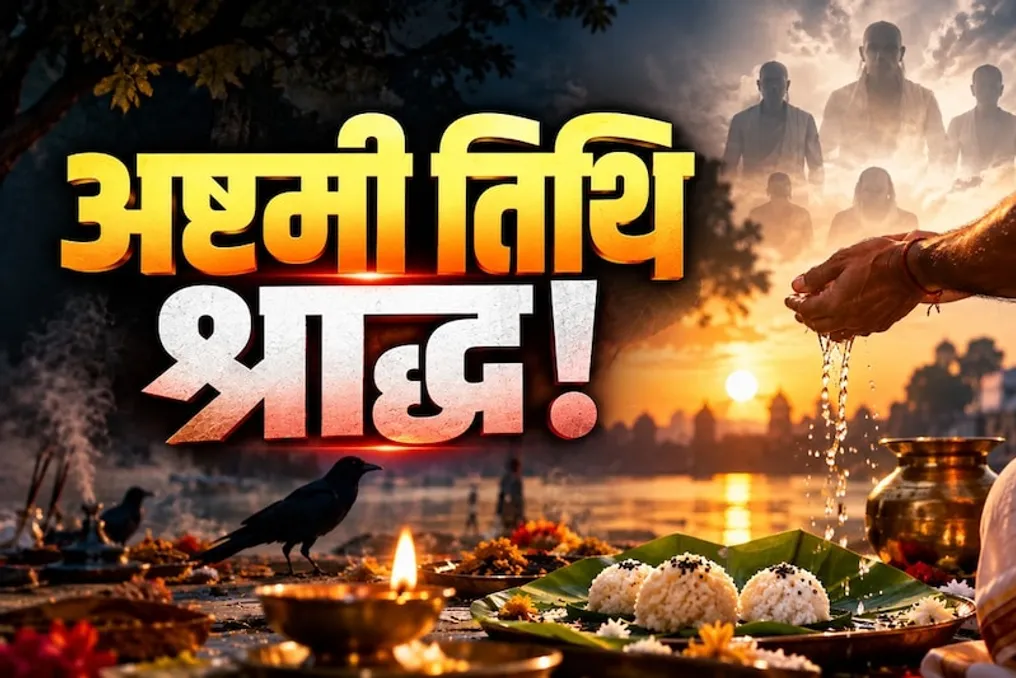
During Pitru Paksha 2026, the Sharaddha ritual will be performed on Ashtami Tithi, which falls on Saturday, September 3rd. Special significance is given to Ashtami Tithi Sharaddha because it is intended for deceased individuals whose death occurred on the eighth day (Ashtami Tithi) either in the lunar or new moon phase of any month.

On this day, the tradition of performing tarpana, conducting a havan, panchbali, and offering food to Brahmins is observed. A detailed description of the time, auspicious moment, and procedure for the Ashtami Tithi ritual is presented next.

According to the Hindu Panchang, Ashtami Tithi will begin on October 3rd at 7:59 AM and conclude on October 4th at 5:51 AM. The Kutup Muhurta is considered auspicious for performing Sharaddha rituals. On October 3rd, the Kutup Vela will last from 11:46 AM to 12:34 PM.

When performing the Sharaddha ritual during Pitru Paksha, one must first prepare a seat made of Kusha grass. One should sit facing east. After that, incense and a lamp should be lit, and flowers, garlands, and offerings should be placed before the deities, sages, and ancestors. Then, clean water is taken in a vessel or plate, to which black seeds, raw milk, barley, and Tulsi leaves are added. An empty vessel is also kept nearby.

Next, a sacred amulet made of Kusha is worn on the ring finger. After this, taking the water, incense, coin, and flowers in hand, the person decides on the tarpana of the ancestors. Rose petals are added to the water for tarpana. While holding the akshata, invocations are made to the deities and sages. Then, tarpana is performed while chanting mantras. According to the worship procedure, the tarpana of the deities is done by facing east, and the tarpana of the sages—facing north. Traditionally, the water for the ancestors is offered while facing south.

A havan is also conducted as part of the Sharaddha ritual. The method of offering cow's milk, yogurt, ghee, and Kira into the fire is described. After this, as part of the panchbali, a portion of food is allocated for the cow, dog, and crow. To conclude the Sharaddha ritual, a worthy Brahmin is solemnly offered food. By tradition, the food can also be fed to a son-in-law or nephew. After eating, alms and offerings are given. Then, family members partake in the prasad.


Similar stories

Schedule of Major Fasting Days and Festivals of Ashwin Month 2026, from Navaratri to Karva Chauth
Read more
www.aajtak.in

Schedule of Major Fasting Days and Festivals of Ashwin Month 2026, from Navaratri to Karva Chauth

The month of Ashwin in 2026 will begin on September 27th and end on October 26th, and this period is considered very significant in terms of religious fasts and festivals. Furthermore, this month is considered auspicious for performing rituals dedicated to ancestor worship.

The period for performing ancestral remembrance rites (Sharad Drik) will last from September 27th to October 10th. Following this, the great festival of Navaratri, dedicated to Goddess Durga, will commence. During this time, important events such as Durga Ashtami, Mahanavami, Vijayadashami, Papankusha Ekadashi, Sharad Purnima, and Karva Chauth will take place.

The following events are scheduled for the month: completion of Shri Mahalakshmi fast on October 3, 2026; Indira Ekadashi on October 6, 2026; end of the ancestor worship period (Sarvapitri Amavasya) on October 10, 2026; start of Sharadiya Navaratri on October 11, 2026; worship of Durga Ashtami on October 19, 2026; Mahanavami on October 20, 2026; Vijayadashami on October 20, 2026; completion of Navaratri fast on October 21, 2026; Sharad Purnima fast on October 25, 2026; Kojagara Vrat on October 25, 2026; Jayanti of Maharshi Shri Valmiki on October 26, 2026; start of Kartik month on October 26, 2026; and Karva Chauth fast on October 29, 2026.

In 2026, Sharadiya Navaratri will begin on Sunday, October 11th. On this day, which coincides with Ashwin Shukla Pratipada, Navaratri and Ghatasthapana will commence. During Navaratri, worship of various forms of Goddess Durga is performed.

Durga Ashtami during Navaratri will be celebrated on Monday, October 19th. On this day, special significance is given to the worship of the form Mahagauri of Goddess Durga. Many devotees observe the tradition of Kanya Puja and the completion of the Navaratri fast on this very day. This date also coincides with Mahanavami.

Vijayadashami, or Dasara, will take place on Tuesday, October 20th. In 2026, Durga Ashtami and Mahanavami fall on October 19th, while Vijayadashami and Dasara are celebrated the following day, on Ashwin Shukla Dashami.

The Karva Chauth fast is observed on the fourth day (Charti) of the Krishna Paksha Kartik lunar month. In 2026, Karva Chauth falls on Thursday, October 29th. On this day, married women observe a fast wishing longevity and a happy married life for their husbands. According to tradition, the fast is broken after offering water (Arghya) to the Moon.

Pitru Paksha Dates 2026: Start and First Shraddha According to Forecasts
Read more
www.aajtak.in

Pitru Paksha Dates 2026: Start and First Shraddha According to Forecasts

Pitru Paksha, also known as Shraddha Paksha, is approaching. According to beliefs, performing the proper Shraddha ritual during this period brings peace to the souls of ancestors. Currently, there is some confusion among people regarding the start dates of Pitru Paksha, as some sources indicate September 26th, while others state September 27th.

According to astrologer Pravin Mishra, Pitru Paksha in 2026 will run from September 26th to October 10th. On September 26th, Shraddha will be performed on the full moon day of the Bhadrapada month, which applies to those whose ancestors passed away on that day. Following this, September 27th is considered the official start of Pitru Paksha, as it will be the first date of the Ashvina lunar month in the waning phase of the Moon.

The conclusion of Pitru Paksha will take place on October 10th, on the day of Sarvapitri Amavasya. On this day, the Shraddha ritual is permitted for all ancestors whose date of death is unknown. Traditionally, it is believed that if the exact date of death or Shraddha of an ancestor is forgotten, they should be honored on the day of Sarvapitri Amavasya.

During Pitru Paksha, it is customary to respectfully remember ancestors. During this period, Shraddha, Tarpan, Pindadaan rituals are conducted, and food donations are made. If for any reason it is impossible to perform the ritual according to tradition, it is recommended to donate food or products to those in need according to one's means. Items that can be donated include rice, lentils, flour, salt, fruits, vegetables, ghee, maple syrup, and clothing.

During Pitru Paksha, it is advised to refrain from holding auspicious events such as weddings, engagements, housewarmings, or starting a new business. There is also a tradition of refraining from purchasing new real estate and vehicles. Many people also prefer not to buy new clothes during this period. It should be noted that all these recommendations are related to religious beliefs and traditions.

According to the calendar, Shraddha on the full moon day falls on September 26, 2026 (Saturday). Shraddha on the first date of the lunar month will take place on September 27, 2026 (Sunday). Subsequently, dates for Shraddha on the second, third, fourth, and fifth dates are from September 28 to September 30, 2026. The sixth day of Shraddha is scheduled for October 1, 2026 (Thursday), and the seventh for October 2, 2026 (Friday).

The dates for the eighth, ninth, tenth, eleventh, and twelfth days of Shraddha are October 3, 4, 5, 6, and 7, respectively. It is also noted that Shraddha for the Magha date will take place on October 7, 2026 (Wednesday). The dates for the thirteenth and fourteenth days of Shraddha are October 8 and 9, 2026. The Sarvapitri Amavasya period concludes on October 10, 2026 (Saturday).

Parivartini Ekadashi 2026: Date of Celebration, Worship Time, and Fast Completion Time
Read more
www.aajtak.in

Parivartini Ekadashi 2026: Date of Celebration, Worship Time, and Fast Completion Time

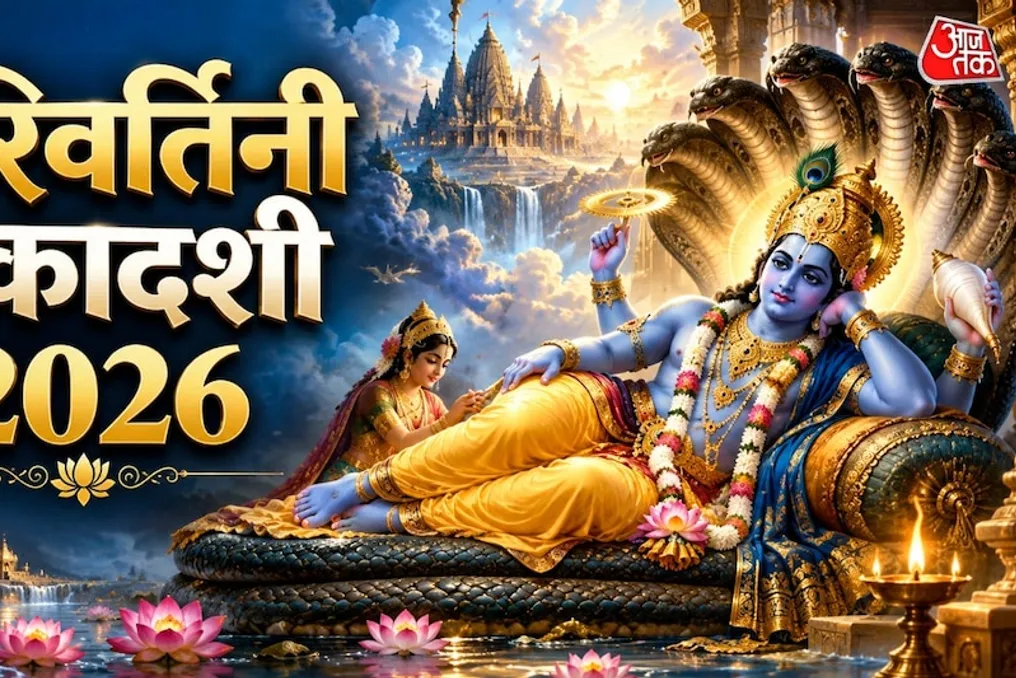
Parivartini Ekadashi is observed in the month of Bhadrapada, during Shukla Paksha, as Ekadashi. This festival is also known as Padma Ekadashi and Jayanti Ekadashi. According to religious beliefs, observing this fast helps rid oneself of sins committed intentionally or unintentionally. On this day, worship is performed to Vamana, an incarnation of Lord Vishnu. Special significance is given to worshipping Lord Ganesha and Shrihari during Ganesh Mahotsava.

The date of Ekadashi in Shukla Paksha of the month of Bhadrapada will begin on the evening of September 21st at 20:01 and last until 21:43 on September 22nd. According to the rising date, the Parivartini Ekadashi fast will be observed on Tuesday, September 22nd. It is believed that honoring Vamana, an incarnation of Lord Vishnu, on this day brings special merits. This fast is also considered beneficial for those who desire progeny and financial well-being.

On this day, Brahma Muhurta will start at 4:35 AM and last until 5:22 AM, during which one can bathe and decide whether to observe the fast. The auspicious time for worshipping Lord Shrihari is set from 9:11 AM to 1:45 PM. The completion of the fast is scheduled for the next day, September 23, 2026. Fasting individuals can break the fast anytime between 6:10 AM and 8:35 AM after performing all rituals.

It is necessary to take a bath early in the morning and offer water to the Sun god. Then, dressed in yellow clothes, one should worship the gods Ganesha and Vishnu. First, Modak and Durva are offered to Ganesha. After that, yellow flowers, Panchamrit, and Tulsi leaves are offered to Lord Shrihari. During worship, mantras should be recited first to Ganesha, and then to Vishnu. On this day, it is also recommended to donate to needy people according to one's means—water, grains, clothing, footwear, or umbrellas. During the fast, consuming solid food is prohibited; traditionally, the fast is observed on fruits or water.

Special practices exist to achieve different goals. If a person desires progeny, they can offer Modak to Ganesha in a quantity equal to their age on Parivartini Ekadashi, and also recite Shantan Ganapati. Additionally, one can repeat the mantra 'Om Umaputray Namah'. To attract financial success, it is recommended to offer a mouse made of clay or metal to Ganesha, and also offer yellow flowers and yellow prasad. After this, one must repeat the mantra 'Om Shrim Saumyai Saubhagyay Gam Ganapataye Namah' 108 times, and then place the mouse in the money storage area.

To achieve business success, one should create a small statue of Ganesha from turmeric. Then, Modak, Durva, and Belapatra are offered to Ganesha. Upon completion of the ritual, this turmeric statue is placed in the place of business. It is believed that this promotes success in trade.

Popular