
Uzbekistan Committee Identifies Discrepancies at 127 Flour Milling Enterprises
Read more
UzDaily
uzdaily.uz

Uzbekistan Committee Identifies Discrepancies at 127 Flour Milling Enterprises

The Competition Committee of Uzbekistan, together with the Inspection for Agro-Industrial Complex Control, conducted a re-inventory of flour production enterprises that acquired wheat through the Fund via exchange trading.

This inspection was carried out as part of continuous monitoring of factors affecting the placement of in-demand goods, such as wheat and flour, in exchange trading, as well as their pricing and sales process.

During the inventory, specialists examined the production capacities of the enterprises, the volumes of grain processing and finished product output, as well as warehouses and other storage facilities. Additionally, they checked for compliance certificates and sanitary-epidemiological conclusions.

It was established that there are 301 flour production enterprises operating in Uzbekistan. Of these, 49 companies operate under contract agreements without having their own production capacities. Another 22 enterprises are temporarily inactive, and the activities of six enterprises have been suspended.

Furthermore, 42 enterprises lacked compliance certificates, and eight of them did not have sanitary-epidemiological conclusions. Thus, the inventory revealed 127 enterprises with the listed discrepancies or specific operational characteristics.

Following the inspection, the Competition Committee sent relevant proposals to authorized bodies to strengthen supervision over the targeted use of the Fund's wheat by enterprises that purchased it through exchange trading. It was also proposed to improve the existing regulatory mechanisms in this area.
Similar stories

HEGTA Head States Resilience is Key to Iran Tourism's Survival in Difficult Conditions
Read more
www.tehrantimes.com

HEGTA Head States Resilience is Key to Iran Tourism's Survival in Difficult Conditions

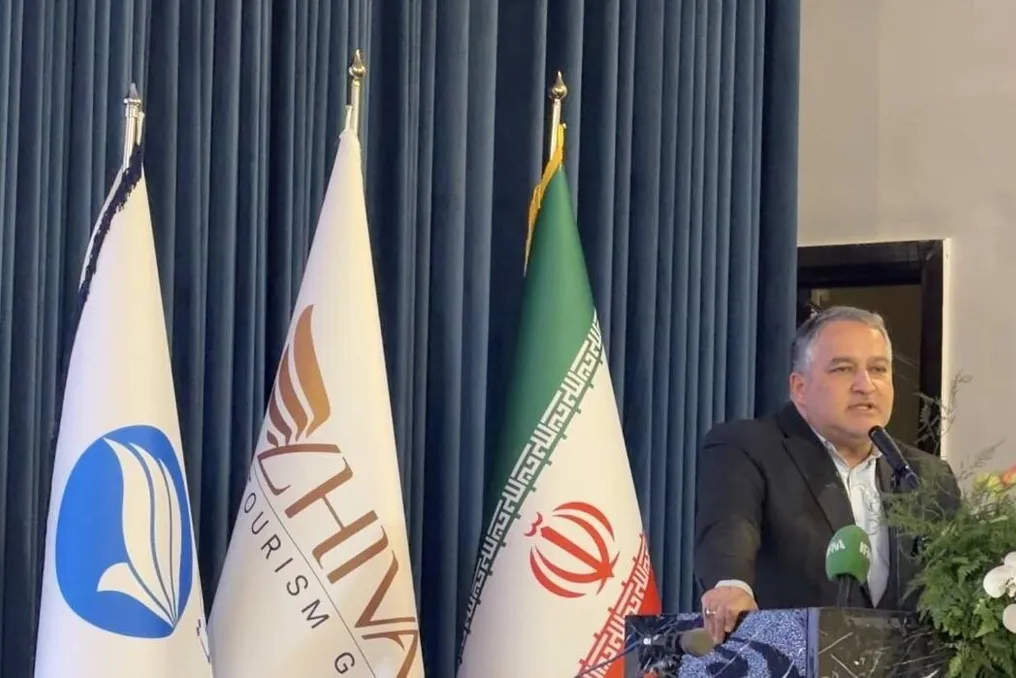
The head of the Iranian Social Security Organization's Tourism Group (HEGTA) stated on Friday that resilience and a fundamental overhaul of planning are vital for Iran's tourism sector. This is due to the industry facing pressure from rising travel costs, transportation restrictions, sanctions, investments, and the regional situation.

Alireza Tabesh noted that the main task is no longer just increasing demand, but transforming Iran's vast tourism resources into commercially attractive products that generate economic and social value.

He made these remarks at the ceremony concluding Tourism Week and the celebration of Mehrgan at the Homa Hotel in Tehran. The event was attended by tourism industry specialists, hotel staff, tour operators, guides, and journalists.

Tabesh highlighted the problem of the existing gap between significant potential and the actual share of tourism in the economy, describing tourism as an interconnected chain where destinations, transport, accommodation, services, storytelling, local communities, sales, and the travel experience itself must work together.

According to Tabesh, the decrease in household purchasing power does not mean the end of travel demand, but merely changes travel patterns. He added that shorter, closer, and more affordable trips could become part of the sector's response to current economic realities.

Furthermore, he emphasized the importance of Iran's living cultural heritage as a tourism resource. He pointed out that events such as Nowruz, Yalda, and Mehrgan are not just calendar dates, but manifestations of a living cultural memory that can be transformed into a meaningful travel experience.

"Mehrgan, due to its connection with nature, harvest season, family, community, music, food, and collective rituals, can become more than just a cultural event; it can become a travel experience," he stated.

He then called for the creation of locally focused tourism products that combine cultural traditions with accommodation, transport, food, crafts, heritage, nature, and local business, while maintaining cultural authenticity and ensuring local communities benefit economically.

Tabesh reported that HEGTA is capable of using its expertise in hotel management, transport, and organized tours to develop sought-after tourism products. He also strongly urged increased cooperation between government bodies, municipalities, private companies, cultural institutions, and transport operators.

He added that technology, data, and artificial intelligence must move beyond slogans and be applied to understanding markets, improving decision-making, and creating products that meet travelers' needs.

"Hope in tourism arises when we acknowledge reality, prepare for various scenarios, and utilize available opportunities to create value and social viability," Tabesh concluded.

South Africa faces fuel price crisis amid declining global oil supplies
Read more
iol.co.za

South Africa faces fuel price crisis amid declining global oil supplies

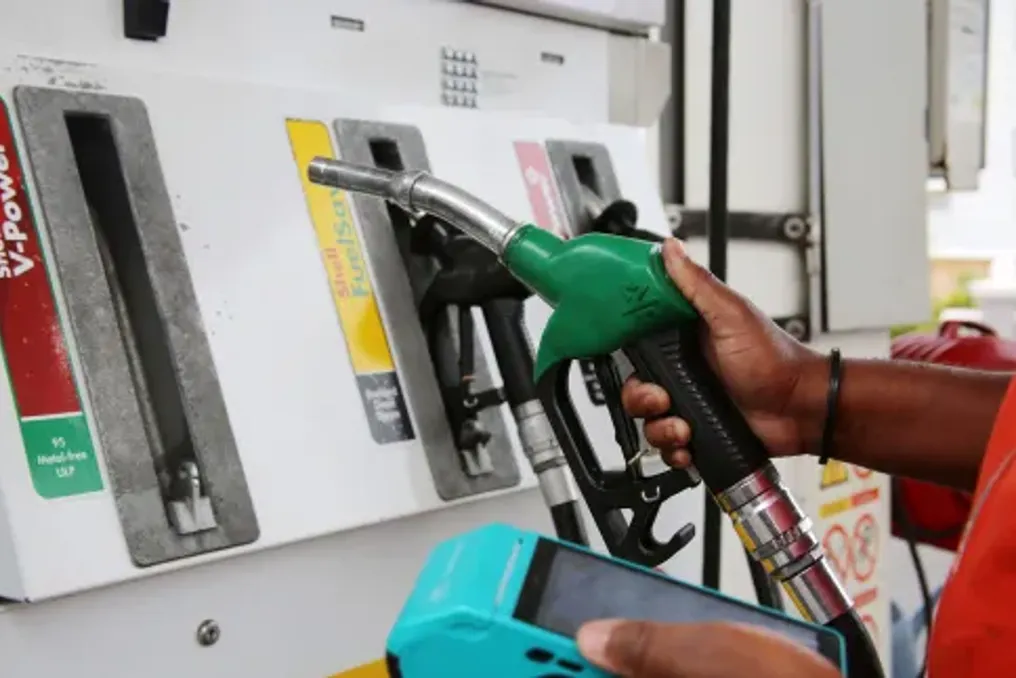
South African countries are facing growing risks to global oil supplies, drawing close attention to limited strategic crude oil reserves. motorists are bracing for record fuel prices, while the International Energy Agency (IEA) warns that global oil stocks are depleting.

In August, global oil stocks fell further by 95 million barrels, increasing the total draw since the conflict to 507 million barrels, or an average of 2.8 million barrels per day. As oil flows through the Strait of Hormuz remain significantly below normal, and the global refining system is already overloaded, the IEA notes the rapid depletion of buffer stocks.

The fuel crisis raises questions about South Africa's ability to withstand disruptions in global oil supplies, especially given its limited strategic crude oil reserves and increasing reliance on imported petroleum products.

Strategic Crude Oil Reserves in South Africa

Mantashe informed Parliament that South Africa currently holds a strategic fuel reserve of 6.9 million barrels, sufficient to cover crude oil needs for approximately 30 days. He assured that despite disruptions caused by the Middle East conflict and risks around the Strait of Hormuz, there is no threat to the country's fuel security. Mantashe also emphasized that South Africa has diversified its supply sources to reduce dependence on the Middle East.

Nevertheless, he acknowledged the country's vulnerability due to reduced domestic refining capacity. He specified that Sasol's production capacity covers 40% of the country's needs, with the remaining sixty percent coming from imports.

The government plans to reach a target storage level of 60 days. It was previously reported that South Africa is taking steps to strengthen energy security and reduce dependence on fuel imports. Mantashe had previously outlined government plans to create strategic fuel reserves equivalent to 60 days of net fuel imports, as well as to accelerate oil and gas exploration and implement regulatory reforms in the oil and gas sector.

He explained that the 60-day storage plan aims to ensure sufficient reserves of crude oil and refined fuel to protect the country from market shocks and global supply disruptions. Mantashe noted that in 2024, the Department conducted a comprehensive assessment of South Africa's strategic petroleum product reserve vulnerabilities. The study identified areas requiring urgent attention, including the need to strengthen reserve storage mechanisms and increase domestic refining capacity. In response, a draft Strategic Petroleum Product Reserve Policy was developed, which is ready for Cabinet review before public consultation.

According to this policy, a mixed storage model will be implemented, where the South African National Petroleum Corporation (SANPC) will be responsible for maintaining strategic reserves equivalent to 60 days of net imports of both crude oil and refined products.

Closure of Refineries Increases Import Dependence

The reduction in domestic refining capacity has also impacted the country. According to the South African Reserve Bank, South Africa's shift to importing refined petroleum products has increased the cost of meeting the country's fuel needs. The central bank estimates that the bill for oil imports could have been approximately 76 billion rand lower between 2021 and 2024 if refined petroleum products constituted no more than 25% of the total oil import volume.

Furthermore, the closure of refineries has led to a reduction in related industrial production by approximately 20% since 2019, displaced about 5,400 direct and indirect jobs, and prompted companies to postpone investments. In contrast, regional and global competitors are expanding capacity through new mega-refineries, making South Africa increasingly dependent on imports and highlighting the need for a coordinated policy response to restore energy system resilience.

A sharp rise in fuel prices is expected. South Africans will face another significant increase in fuel prices this month as international oil prices remain high, and gasoline and diesel prices are expected to reach record levels. Minister of Minerals and Energy Gweed Mantashe dashed the hopes of millions of South Africans who were counting on government intervention, stating there are no immediate plans to mitigate the impact of rising fuel prices on households and businesses.

Mantashe stated: 'Currently, no intervention measures are planned, partly due to the ongoing volatility in petroleum product prices.' He added that 'the department continues to administer fuel prices transparently, as prescribed by law.' It is anticipated that the latest fuel price increases will reach a record level, with recent data from the Central Energy Fund indicating an increase of more than 3 rand per liter for some grades of gasoline and diesel. This increase has caused concern among businesses, drivers, and consumers who are already feeling the pressure of the rising cost of living.

Popular