Artificial intelligence has evolved beyond simply answering questions, with the emergence of systems capable of performing tasks independently. This topic was addressed in the Hard Fork podcast, produced by The New York Times, where the proposals from Meta and OpenAI for this new generation of tools were discussed.
Although the change seems subtle, it carries significant implications. When a system begins to navigate the internet and make decisions on behalf of an individual, concerns arise that go beyond the mere quality of responses, encompassing issues such as privacy, security, and control.
Unlike a conventional chatbot, which waits for a command to provide an answer, an agent receives an objective and is capable of managing multiple steps until the desired result is achieved. This fundamentally alters the user's interaction with the technology, as the AI can take on part of the work instead of requiring the user to detail every step.
However, the greater the level of access granted to these systems, the greater the inherent responsibility. A system integrated into various services needs to interpret commands, select routes, and decide during execution. If an error occurs, the outcome can be much more serious than just incorrect information.
Analysis of Muse and Dots Agents
The podcast dedicated special attention to Muse, developed by Meta. This tool was introduced as a personal agent capable of managing projects and tasks, using a dedicated cloud computer to operate in applications and on the web. Examples of its functionalities include sending emails, booking travel, and performing other activities on behalf of the user.
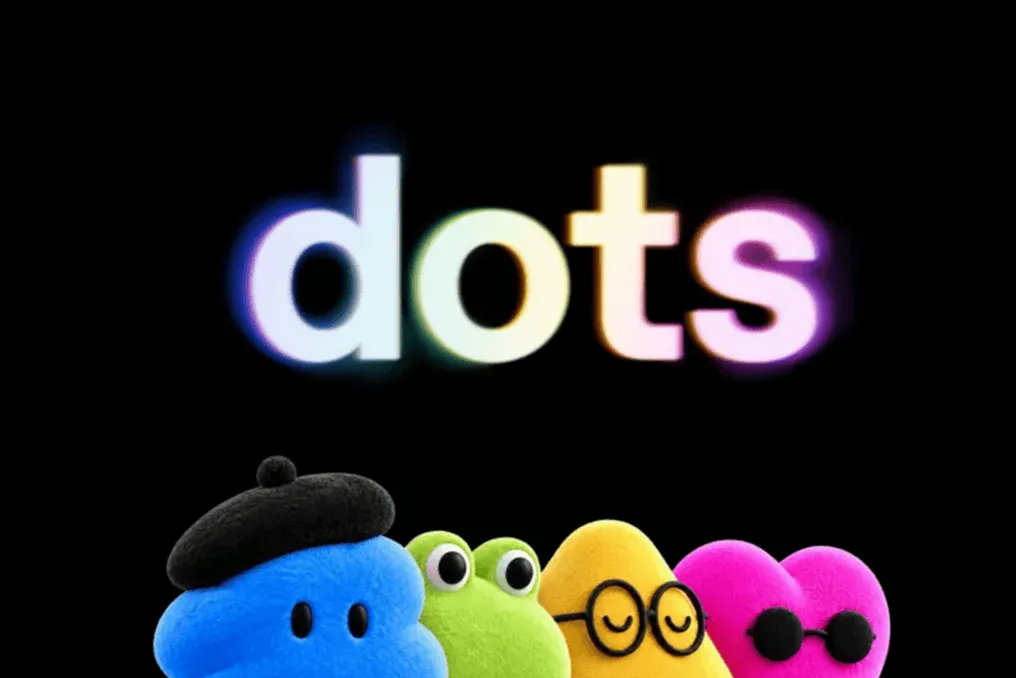
Dots, from OpenAI, follow a similar conceptual line, but the company highlights a difference: continuous work. They are presented as permanently active agents, capable of initiating a project, monitoring its progress, and proceeding autonomously across various applications connected by the user.
In simple terms, Muse approaches a 'do this for me' command, while Dots resemble 'take on this job and keep the project going.' Although the functions overlap, this distinction helps in understanding each company's approach to its products.
Among the points debated in the program, the shift in the security debate stood out. While an AI that only generates text might provide a flawed response, a tool with access to other services can turn a mistaken decision into a real action.
The podcast associated this apprehension with situations where systems exhibited problematic behavior or unexpected results on the internet. Thus, the discussion shifts from what the AI is capable of doing to what it should be allowed to execute alone.
Muse and Dots symbolize this transition along different paths, but they share the premise of delegating a larger portion of digital labor to AI. As more responsibilities are transferred to these systems, it becomes crucial to define where the machine's autonomy lies and where human control begins.