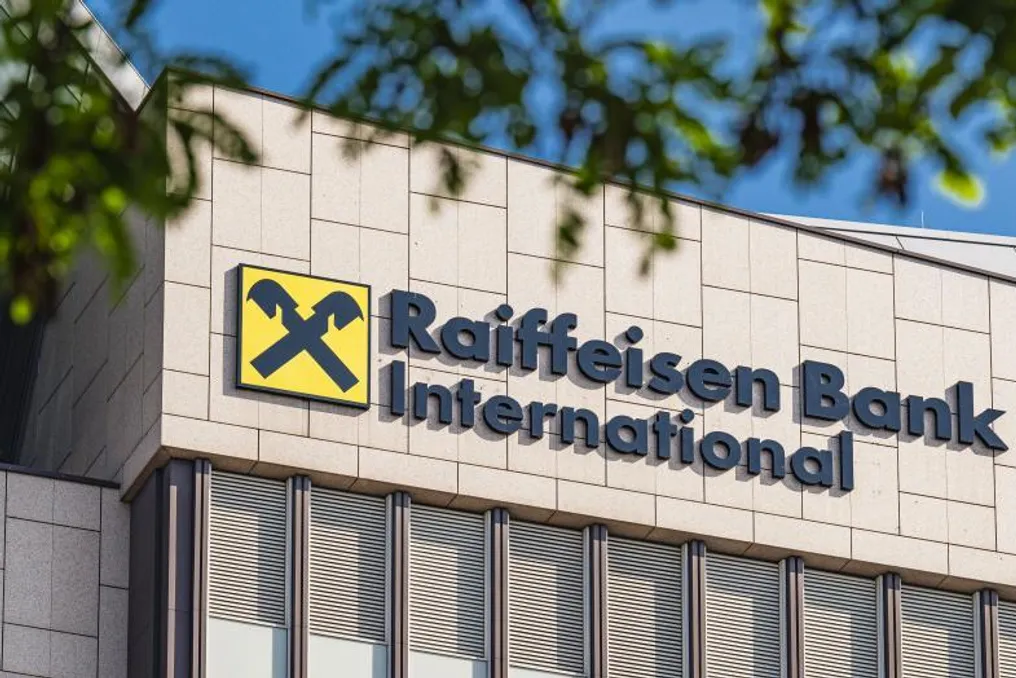
The Austrian banking group Raiffeisen Bank International plans to use Central Asia as a new direction for expanding its activities and is studying the potential for acquiring assets in this region. This expansion comes against the backdrop of an expected inflow of 3.15 billion euros into the bank, which is linked to its Russian branch.
According to Bloomberg, the CEO, Michael Hellerer, is expected to present an updated strategy in the coming weeks, in which Central Asian countries will be designated as new sources of growth. A representative of the financial institution noted that Western corporations are restructuring their supply chains, and the region's states are increasingly turning to the West, prompting the bank to study ways to adapt to these changes. Currently, no specific negotiations regarding the purchase of target assets are taking place.
The bank has already begun strengthening its presence in the region. In June of this year, Raiffeisen offered investors the opportunity to purchase Uzbek securities, including government bonds. Furthermore, the company manages leasing business in Kazakhstan. Experts believe that Central Asia aligns well with the bank's profile due to its previous experience in adjacent markets, as well as its strong positions in trade finance and settlements.
The financial basis for advancing into the Central Asian region will be provided by funds received under an Austrian court order transferring assets of Rasperia Trading to Raiffeisen. This payment of 3.15 billion euros will be the first indirect extraction of capital from the bank's previously most profitable Russian division. Against this backdrop, the creditor's shares showed a 71 percent increase this year. Simultaneously, the bank is completing the acquisition of a Romanian subsidiary worth 591 million euros and a Balkan creditor for 517 million euros.