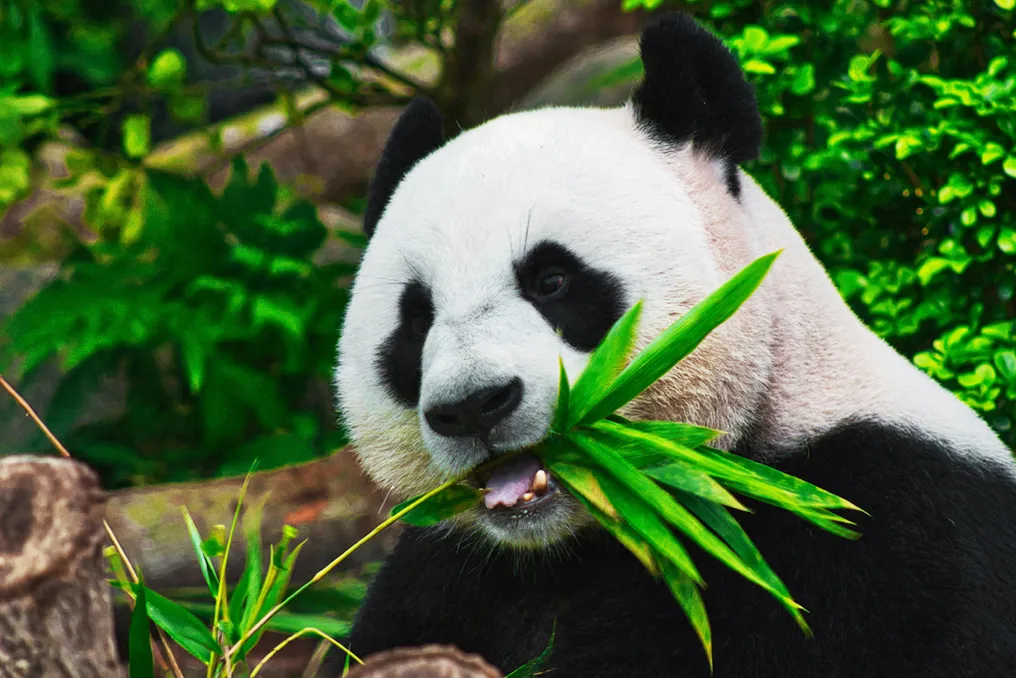
The probability of pandas returning to a carnivorous diet is low, given that they are highly adapted to consuming bamboo, which constitutes about 99% of their diet.
Within the Ursidae family, there are eight species, and most of them have an omnivorous nature with a preference for meat. Evolutionarily, pandas were the first to separate from the common ancestor of all bears, an event that occurred 20 million years ago.
With the great availability of bamboo in the southern and eastern regions of China, pandas have developed specific characteristics to consume this plant. Among these adaptations are a 'false thumb,' which aids in fixing and pulling out resistant stalks; large molars and a robust jaw to crush them; as well as enzymes and microbes capable of processing the toxic cyanide present in raw bamboo.
Despite these specializations, the panda's gastrointestinal tract retains characteristics closer to those of carnivores. This contrasts with ruminants like cows, which have a complex digestive system composed of three 'forestomachs' (rumen, reticulum, and omasum) and a true stomach. These animals regurgitate food to chew it again, ensuring very small pieces, while millions of microorganisms in the bovine rumen decompose vegetables into simpler molecules, a process that can take more than 24 hours.
Humans and most other omnivores, on the other hand, do not efficiently digest the fiber found in vegetables and fruits, although these are important for maintaining intestinal health and aiding in stool formation, potentially contributing to satiety without adding calories.
In summary, pandas have a diet similar to cattle, but a digestive system closer to that of lions. Since they feed exclusively on bamboo, they absorb few nutrients from meals that are naturally poor in protein. Consequently, they dedicate between 12 and 14 hours daily to feeding to survive. Their metabolism is slow, and they do not hibernate because they cannot accumulate enough energy for it.