History of Artistic Miniatures Scattered Throughout the Hungarian Capital Budapest
Read more
Viagem e Turismo
viagemeturismo.abril.com.br

History of Artistic Miniatures Scattered Throughout the Hungarian Capital Budapest

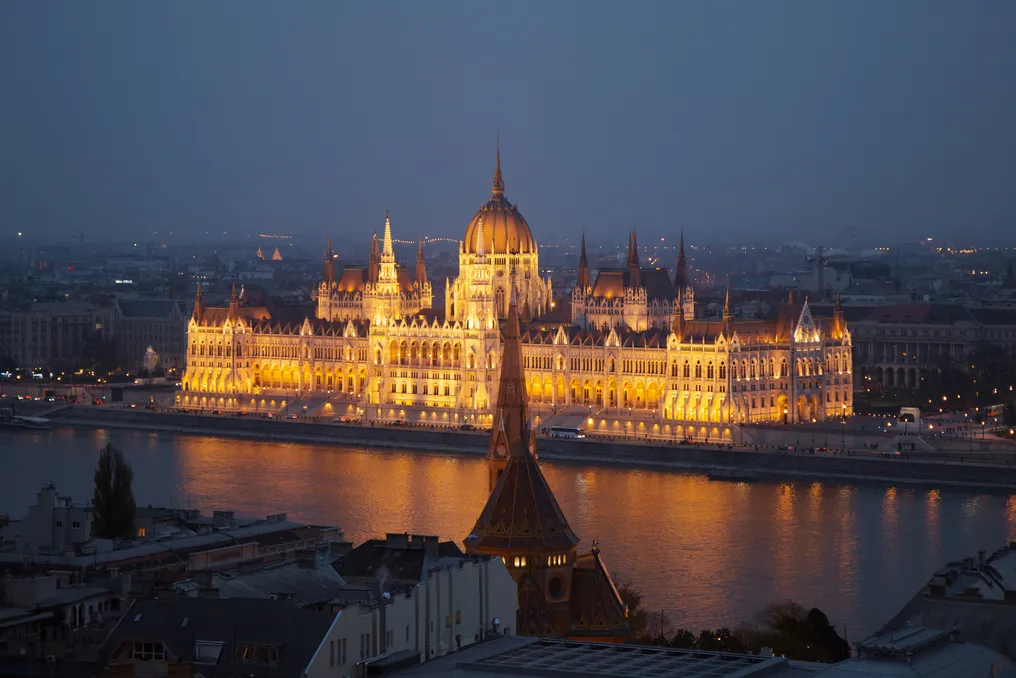
Budapest, the capital of Hungary, is a city marked by the cultural fusion of Magyar, Turkish, German, Slavic, and Romani peoples. Its period of greatest prosperity occurred in the late 19th century, when it functioned as a co-capital of the Austro-Hungarian Empire.

After World War II and decades under Soviet communist rule, the current metropolis has consolidated itself as a vibrant center, renowned for its thermal baths and the historical union of its two halves, Buda and Pest, separated by the Danube River.

In this urban context, peculiar miniature bronze statues have emerged—small sculptures placed in frequently unexpected locations across the capital. Pedestrians often encounter these works during mundane moments, whether walking along sidewalks, visiting historical landmarks, or cycling along the riverbanks.

Examples of these pieces include a mini Lisa Simpson portraying Joan of Arc, or a representation of the Austro-Hungarian Emperor Franz Joseph I, who governed the empire for a long time, resting in a hammock.

The creator of all this artistic production is the Hungarian-Ukrainian sculptor Mihály Kolodko, originally from Uzhhorod, western Ukraine. The concept of the miniature statues arose from the artist's dissatisfaction with the complex bureaucracy required to install public monuments.

Around 2010, Kolodko realized that small-scale art provided him with greater creative freedom and speed. Because they are small, the sculptures are simpler to model and can be installed at night in public spaces without prior permission. The artist maintains mystery about the location and timing of each new piece, stimulating public curiosity.

Generally, the statues celebrate aspects of Hungarian culture and the influence of American media in the country. Many feature characters from cartoons and popular children's programs on Hungarian television from the 1970s and 1980s.

Among the popular characters, stands out the biscuit goat Mekk Elek, a central figure in the series 'Mekk Elek az ezermester' (translated as 'Mekk Elek, the handyman'). Another icon is the checkered rabbit Kockásfülű nyúl, from the program 'The Checkered Rabbit', from the late 1970s, which can be seen atop Buda Castle Hill, observing the city through a telescope.

Kolodko also addresses delicate geopolitical and historical themes. One example is the Mini Tank ('Sad Tank'), positioned with its cannon pointed downwards, symbolizing the end of the Hungarian Revolution of 1956.

The miniature statues encourage visitors to explore the Hungarian capital attentively, as many are situated in traditional tourist spots, enriching familiar locations.

On the Buda side, near Batthyány Square, one of the most famous sculptures can be found: the Rubik's Cube, which pays tribute to the invention of Hungarian architect Ernő Rubik, presented in miniature.

The image of the Austro-Hungarian Emperor Franz Joseph I resting in a hammock is located on the eastern side of the Liberty Bridge, serving as a reminder of the annual period when the area is closed to traffic to allow citizens to rest.

Furthermore, globally known American characters can also be found. One of them is Kermit the Frog, a prominent face of the Muppets, who can be seen in Freedom Square, a rich spot in the capital, surrounded by Art Nouveau buildings, near the base of a fence adjacent to the park's main café.

In Fővám Square, in the southern quadrant of Corvinus University, there is a bronze statuette that intrigues both tourists and residents of the Pest area: it depicts the character Lisa Simpson tied to a stake, referencing a scene from The Simpsons series that draws a parallel with the story of Joan of Arc.
Similar stories

Évora: Roman Ruins, Bones, and Winemaking in the Heart of Alentejo
Read more
viagemeturismo.abril.com.br

Évora: Roman Ruins, Bones, and Winemaking in the Heart of Alentejo

Despite its small city core, Évora is a city rich in historical heritage. This main municipality of Alentejo inherited both Roman and medieval traditions, which allowed it to be designated a UNESCO World Heritage site in 1986. In addition to ancient monuments, the region is famous for its strong winemaking tradition.

When planning a trip to Portugal, it is worth considering including Évora in the itinerary, as Nobel laureate José Saramago notes, 'there is truly an atmosphere in Évora that cannot be found anywhere else.'

Traces of various historical eras are preserved in Évora, ranging from the Roman Empire to the Golden Age of Portugal. Most attractions are concentrated in the historic center, allowing for easy walking between them. The territory is surrounded by walls built in the 17th century.

Main Historical Attractions

The most famous attraction in the municipality is the Chapel of Bones. Located within the São Francisco church complex, this place prompts visitors to contemplate the transience of life. Upon entering, visitors are met with the inscription: 'We, the bones here, hope in you.' The interior consists of three naves and columns nearly 20 meters high, completely covered with the bones and skulls of over five thousand skeletons.

The São Francisco Church, where the Chapel of Bones is located, was built in the Gothic style in the 15th century. It is considered the first residence of the Franciscan Order in Portugal and is decorated with paintings from the Portuguese Renaissance and Baroque carvings. Another well-known religious temple in the city is the Sé Cathedral, the largest medieval church in the country. This building consists of five chapels and is dedicated to Saint Mary.

On the highest point of Évora stands the Temple of Diana, a sanctuary dating back to the 1st century and dedicated to the Roman goddess of the hunt. It is one of the oldest structures in the region and one of the best-preserved Roman buildings on the Iberian Peninsula.

The Aqueduct of Água de Prata, built by order of King Dom João III in the 16th century, served to supply water to the city center. It spans 18 kilometers, starting from Ferdade do Divor and reaching the heart of the municipality. This Renaissance structure is open to visitors, and tours can be taken through those organized by the Municipality of Évora.

Heraldo Square

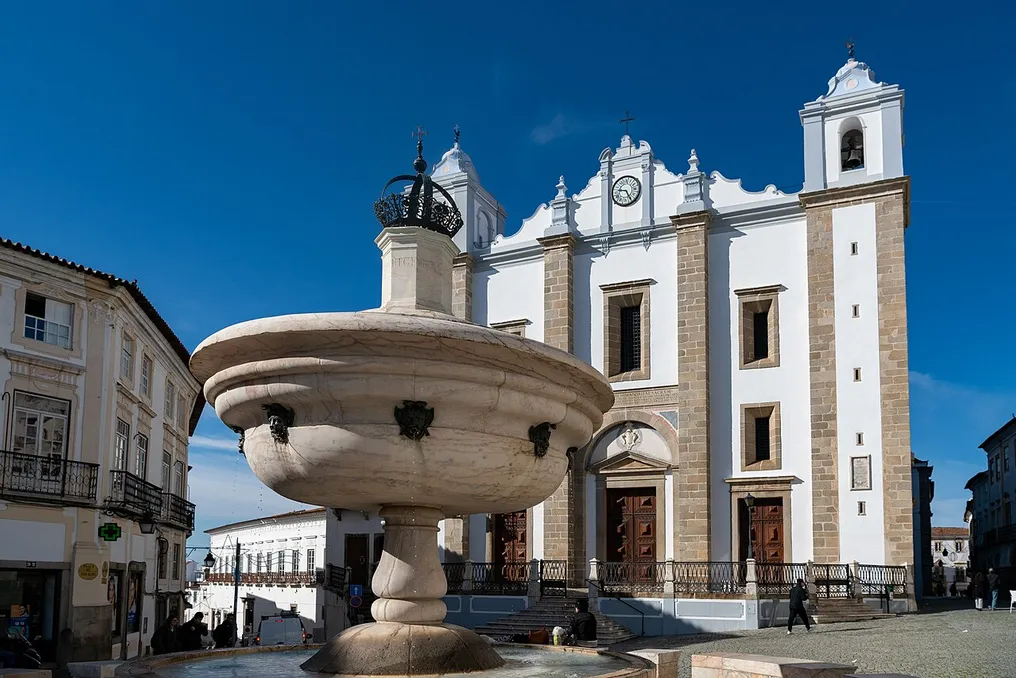
Heraldo Square is also a must-see stop. Located in the historic center, it serves as the main meeting place for local residents. The square, paved with traditional Portuguese cobblestones and adorned with a Baroque marble fountain, is the central point of the region's social life. While strolling through the center, one should not overlook the white houses with red tiled roofs, built in the 16th and 17th centuries. They fill the narrow medieval streets and lend the city a special charm.

In addition to its rich historical and cultural content, the region is distinguished by its wine production. Winemaking culture is one of the pillars of Alentejo's identity, and the municipality is known for its quality wine brands.

Enotourism is popular thanks to organized tours and tastings at wineries. Among the most famous producers in the region are Adega Cartuxa, known for their Cartuxa and Pêra-Manca brands, Fitapreta Vinhos, and Casa Relvas.

The city of Évora is 134 km from Lisbon, making it a good option for both a longer stay in Alentejo and a day trip. The easiest way to get there is by car or bus.

1500-year-old statuette of an adorned heroine with hairstyle and necklace found in Panna
Read more
www.aajtak.in

1500-year-old statuette of an adorned heroine with hairstyle and necklace found in Panna

An archaeologically significant find was made in the Panna region of Madhya Pradesh state. During excavations conducted by the Archaeological Survey of India (ASI) in the historic village of Nachna, located in the Salha district, an ancient statuette of an adorned heroine was discovered.

This artifact, estimated to be approximately 1500 years old, is important evidence for understanding the art, culture, and beauty traditions of women from that era, belonging to the Gupta period.

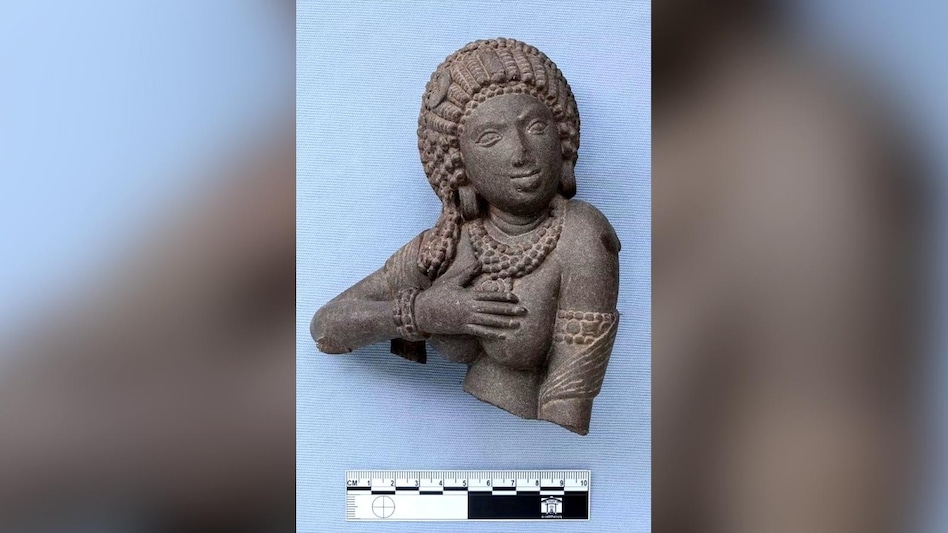
The statuette, about 20 centimeters high, is made of gray sandstone and has a glossy polish. The sculpture depicts a woman attending to herself. Particular attention is drawn to how meticulously the artisan carved her hairstyle and ornaments.

Decorative elements resembling hairpins are visible on the woman's head, and a seven-strand necklace is on her neck. Additionally, bracelets are visible on her arms, and armlets are on her forearms. These small details suggest how developed the traditions of jewelry and cosmetics were among Indian women more than fifteen hundred years ago.

According to archaeologist and ASI chief Shivkanta Bajpai, this statuette is about 1500 years old. This artifact, dated to the 4th-5th centuries, demonstrates the artistic achievements and cultural richness of that time. The extremely fine depiction of jewelry, hairstyle, and makeup on the stone testifies to the outstanding craftsmanship of the artisans of that period.

This statuette is considered special because the image of an adorned heroine in Gupta art is rare. Other well-known works, such as 'Dama Gyaraspura' and 'Sukhanaika', housed in the Khajuraho museum, should also be noted, but the find from Nachna is considered significantly older, making it an important discovery for studying the evolution of Indian sculpture.

The village of Nachna in the Panna district is already known for its temple architecture from the Gupta period. It houses the Parvati Mandir and Chaumkhanaat Mandir, which hold significant historical and religious importance. The discovery of the statuette of the adorned heroine has further enriched the archaeological significance of this village.

This discovery goes beyond simply finding an ancient statue; it provides an opportunity to study the lifestyle, aesthetic preferences, beauty, and socio-cultural traditions of that time. The jewelry and hairstyle depicted on the statuette point to a deep connection between beauty and art during the Gupta era.

It is planned that this historical statuette will be exhibited and preserved in a museum in the future. This will allow the general public to view a unique example of Gupta period art up close. For archaeologists and history enthusiasts, this artifact will be of particular interest.

The heroine's statuette found in Nachna serves as a reminder of the glorious period of Indian history when works of art carved in stone served not only as decoration but also as a living document of the society, culture, and way of life of that time. Even after almost 1500 years, the form of the adornment on this statuette remains, telling the story of artistic mastery and cultural prosperity of ancient India.

Museum in Italy features Greek sculptures inspired by Homer's myths
Read more
viagemeturismo.abril.com.br

Museum in Italy features Greek sculptures inspired by Homer's myths

In the Sperlonga region, located between Rome and Naples, the old villa of Roman Emperor Tiberius has been transformed into the National Archaeological Museum and Archaeological Zone of Sperlonga. It houses one of Italy's most impressive collections of sculptures—a series of images created based on Homeric texts discovered among the ruins.

Tiberius, who ruled from 14 to 37 AD, was known as a reclusive emperor. He used Sperlonga—then known as Spelunca, the Latin word for cave—as his summer residence. The ruins of this villa were only found in 1957 during archaeological excavations near the town, which also uncovered finds in the cave that gave the place its original name.

Due to the threat of the artworks being moved to Rome, local residents organized themselves and managed to preserve this archaeological treasure in Sperlonga by building a museum. Visiting includes both the archaeological zone, where the old villa is located, and the museum itself, where the excavated sculptures are kept.

The archaeological zone features the original structure of Tiberius' Villa with terraces overlooking the sea, built in the style of the late Roman Republic. However, the main attraction of the old residence is its cave. This natural sea cave served as a decorative backdrop for banquets hosted by the emperor. One of the emperor's activities at his Sperlonga residence was fish farming in so-called fish farms connected to the cave.

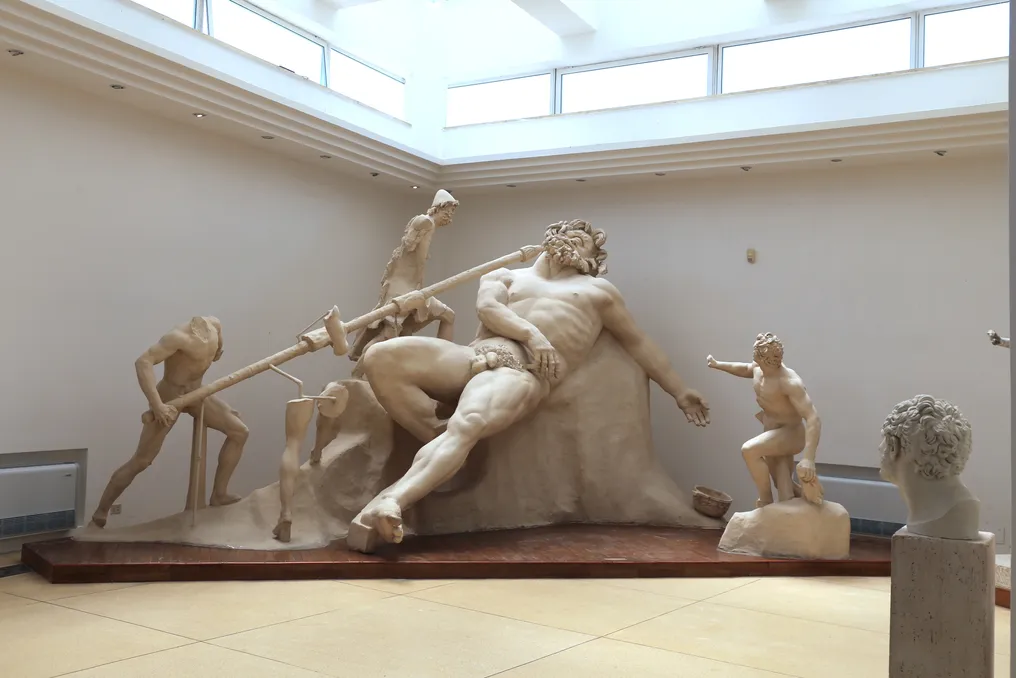
Original fragments and full-scale reconstructions of Greek marble statues found on site are also displayed. These sculptures have Homeric inspiration and refer to the legends of the 'Odyssey' and the 'Iliad.' The collection mainly consists of four large sculptural groups.

One group depicts the encounter between Ulysses and the Cyclops Polyphemus, a scene known from the 'Odyssey.' Ulysses tricks the cyclops into thinking his name is 'Nobody.' Thus, when he and his companions attack Polyphemus in his sleep, his cries for help go unanswered—the cyclops screams that 'Nobody' is attacking him.

Also presented are the attack by Circe, the sea monster that attacked Ulysses' ship and swallowed his comrades; the Abduction of Pallas, when Ulysses and Diomedes steal the statue of the goddess Athena from a Trojan temple; and Ulysses' rescue of Achilles' body during the Trojan War.

The museum collection also includes various items from the Classical and Post-Classical periods, detailing the history of the region's settlement over centuries. Among the exhibits are Attic vessels, architectural terracotta, African ceramics, and Christian chandeliers. Additionally, a video is shown recounting the 1957 archaeological discovery and the creation of the museum.

The museum is open from 8:30 AM to 7:30 PM, with entry permitted until 7:00 PM. The archaeological zone has a different schedule depending on the season: for example, from April to September, the last entry is at 6:00 PM, and closing is at 7:00 PM. In November and December, the last entry is at 3:00 PM, and closing is at 4:00 PM. Therefore, it is recommended to check the operating hours on the website before visiting. The entrance fee is 5 euros. Young people aged 18 to 25 are entitled to a reduced price of 2 euros. Children under 18 enter free of charge.

Popular