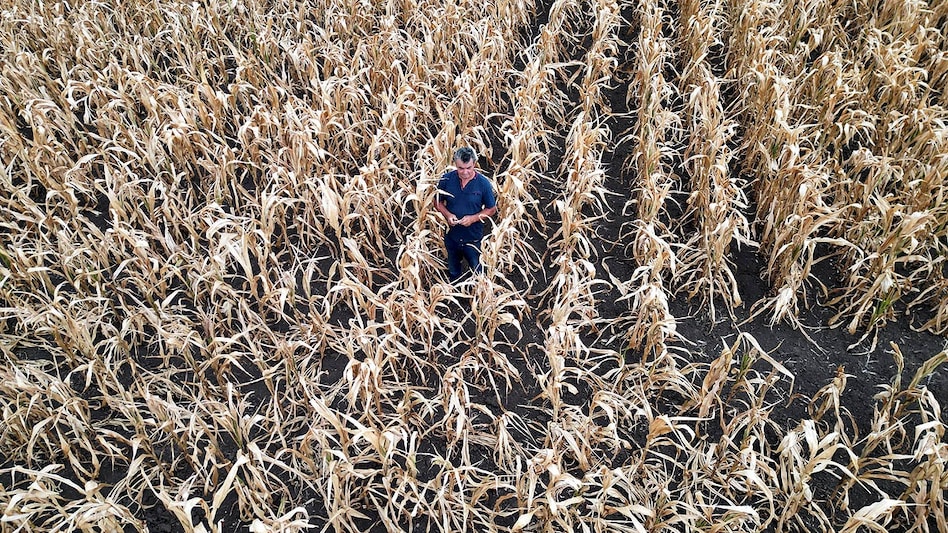
Severe heat and prolonged drought have significantly complicated the situation for farmers in Europe. According to new estimates, the production of grain crops such as wheat, corn, and barley is expected to decrease by approximately 167 million tons between June and September. This damage is estimated at about €3.2 billion, representing huge financial losses for European agricultural producers.
This loss exceeds the initial forecasts made in July by about 80 million tons, indicating a more serious impact from heat and drought than previously assumed. France has been hit the hardest, with a projected reduction in grain production of about 58 million tons, resulting in losses of €1.47 billion. In addition to France, Hungary, the United Kingdom, Germany, and Spain have suffered significant losses.
According to statistical data, grain production in Hungary has decreased by approximately 31 million tons, causing farmers to incur losses of €72.3 billion. The UK has seen a harvest reduction of about 30 million tons, leading to losses of €52.7 billion. Germany expects a decrease in grain production of 25 million tons, corresponding to damage of €39.8 billion. Meanwhile, in Spain, the harvest has dropped by about 12 million tons, with losses amounting to approximately €22 billion. These figures include major crops such as wheat, corn, and barley, whose yields have been directly affected by high temperatures and water scarcity.
The impact of heat and drought has not been limited to grain crops. It is projected that soybean yields will decrease by about 15%, potatoes by 7%, and sugar beets by 11%. There is also a reduction in grass, which causes difficulties for livestock farmers due to feed shortages. Thus, the consequences of climate change have affected both agriculture and animal husbandry.
Farmer Sébastien Naville from France, who owns a 300-hectare plot, reported that all his crops were affected this year. The yield of winter-sown crops also decreased by about 25%. Sunflower was particularly damaged: under normal conditions, its yield is between 1.5 and 2 tons per hectare, but this year it fell to only 0.7 tons per hectare, representing a loss of about 60%. The farmer noted that heatwaves began back in May, and the constant heat and drought worsened the condition of the crops.
Agricultural analyst Tom Lancaster emphasized that the impact of heat and drought in Europe this year has been very significant. According to him, the volume of grain production decline this year is comparable to the total grain production of Italy, Belgium, and the Netherlands combined. He also noted that Europe is warming about twice as fast as the global average. Lancaster warns that if greenhouse gas emissions are not reduced, similar losses could increase in the future.
Farmers' problems are not limited to low harvests; operating costs in agriculture are also rising. Furthermore, market prices for produce often do not cover all expenses. Constant heat and lack of precipitation lead to reduced soil moisture. Therefore, the focus is on the need to improve soil condition and use water rationally, which can help minimize future losses from heat and drought.