Chinese companies are entering a new phase of international expansion. Some experts believe that successful entry into the global market requires combining the preservation of internal systemic capabilities with adaptation to local market requirements and regulations.
Digital operations, integration into the global supply chain, and a constantly evolving system of product innovation serve as the foundation for global development, determining the speed and scale of a company's penetration into unfamiliar markets. However, the decisive factor for brand establishment is the localization of values, the development of intercultural understanding, and the creation of local operations that comply with regulatory norms and consumer habits.
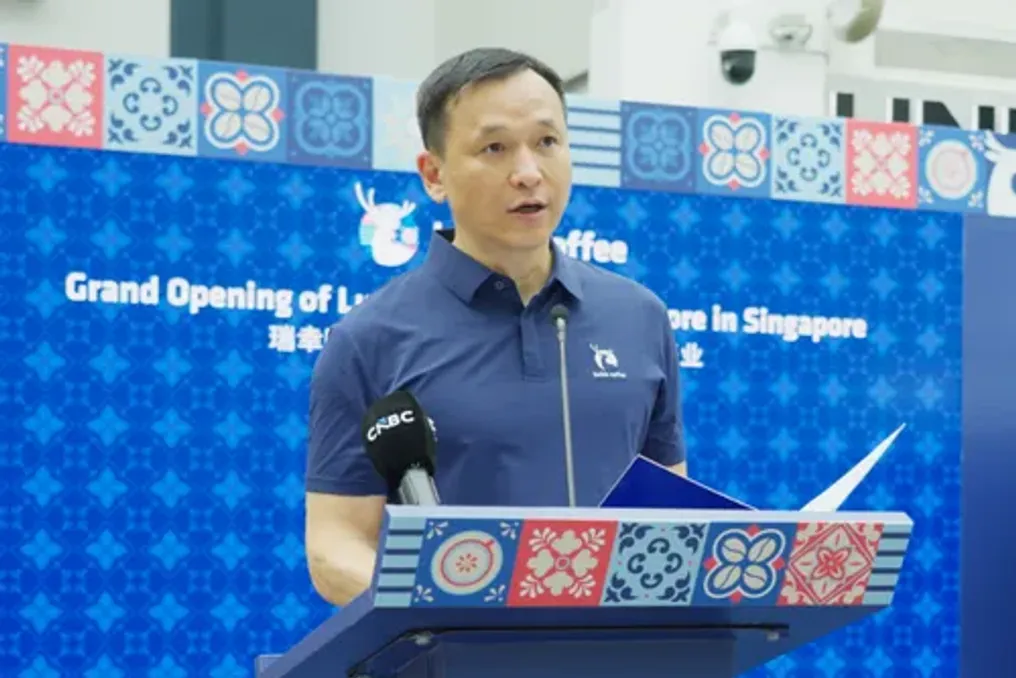
Chinese coffee brands serve as an example of this process. Luckin Coffee opened its one hundredth store in Singapore on September 28. Over the past three years, the brand has served more than 1.9 million customers and launched over 130 products, becoming the second-largest coffee shop chain in Singapore by number of locations.
At the opening ceremony, Luckin Coffee Chairman of the Board, Li Hui, stated that the company has successfully adapted its systematized digital capabilities, product innovation system, and strengths in the global supply chain developed in China for the Singapore market. In his opinion, the company's business model can be replicated abroad.
Singapore, as a major economy in the Asia-Pacific region, a member of ASEAN, and a global hub for trade and investment, heavily relies on an open, stable, and inclusive regional environment. This has made it an important testing ground for Chinese brands aiming to enter regional and global markets.
Ng Min Liang, Vice President of Global Enterprises at the Economic Development Board (EDB) of Singapore, noted: 'Chinese brands are not just 'going international.' More and more of them are becoming truly international brands.' He added that 'Luckin is one example. A truly international brand not only enters foreign markets but also serves local consumers, develops local talent, and creates long-term opportunities locally.'
In terms of the supply chain, Luckin uses its extensive customer base to connect with high-quality regions worldwide. The company purchases premium coffee beans from Brazil, Colombia, Ethiopia, and Yunnan province in southwestern China, as well as ingredients such as Indonesian coconut, directing them to the vast domestic market of China. Through large-scale procurement and deeper interaction with production regions, the company contributes to the coordinated development of the entire global coffee industry chain.
Regarding local operations, Luckin has studied local consumer preferences and regulatory standards. The company implemented Singapore's Nutri-Grade beverage labeling system, developed flavors tailored to local tastes, and built 'green' stores applying LEED green building standards in its overseas branches.
According to data, as of the end of September, Luckin had over 38,000 stores worldwide and served more than 500 million customers, with presences in China, Singapore, Malaysia, and the United States. Industry insiders claim that these figures indicate a shift in the globalization paradigm: it is no longer just about exporting goods, but about exporting a complex of supply chains, business models, store standards, and social responsibility to local communities. This means that Chinese companies are moving from an era of simple overseas sales to a new stage of deeply rooted brand globalization.