Chinese brands actively participated in the organization and supply of the 20th Asian Games in Nagoya
Read more
IOL
iol.co.za

Chinese brands actively participated in the organization and supply of the 20th Asian Games in Nagoya

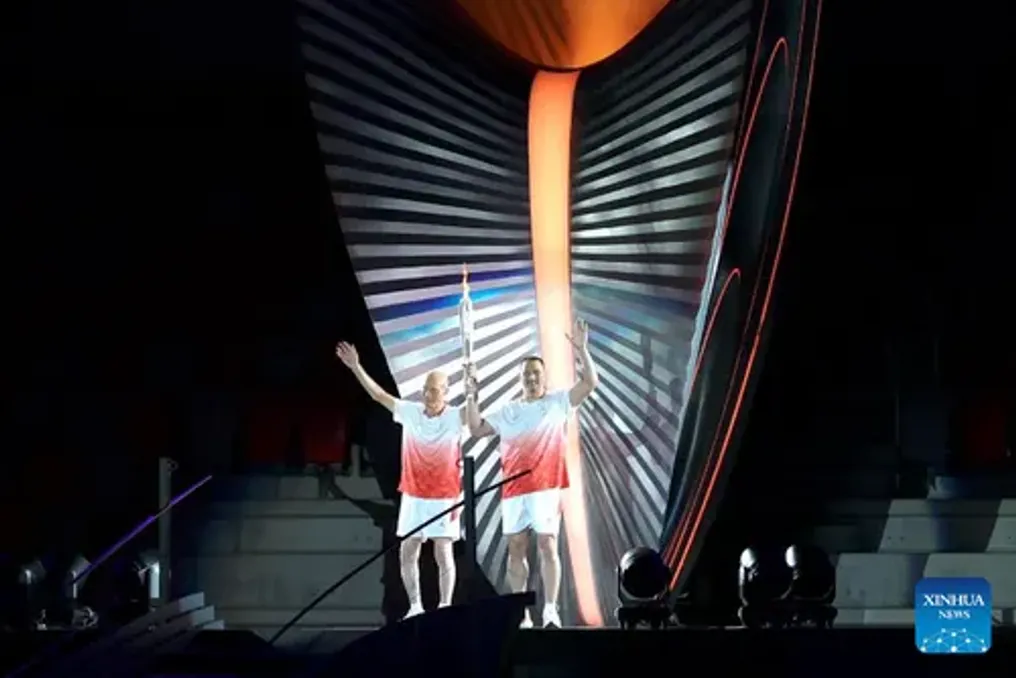
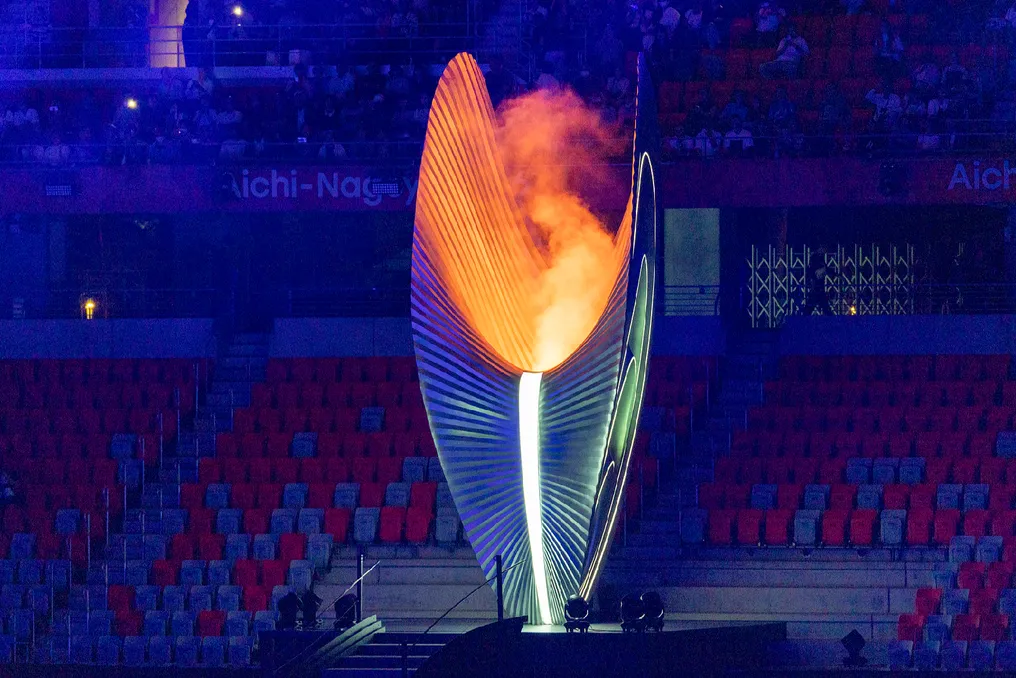
The 20th Asian Games kicked off in Nagoya on September 19th when the final torchbearer lit the heart-shaped urn before the bustling stadium. However, China's involvement extended to other areas, as Chinese technology and craftsmanship were present at the Games—from sportswear to competition equipment, providing both engineering and design components.

Engineering solutions for the opening ceremony stage, the urn's design, digital content, and event execution were handled by the team from Zhejiang Dafeng Industry Co., Ltd. (Dafeng) in Zhejiang province, eastern China. Dafeng was also responsible for closing the ceremony, providing creative planning, performances, and overall management.

Xu Xian, Executive Producer and Artistic Director of Ceremonies at Dafeng's performing arts division, noted that the project took over five hundred days from contract signing to the opening ceremony. His team began work in April 2025, balancing design refinement, equipment development, obtaining cross-border permits, and adhering to Japanese regulatory requirements.

Nagoya's coastal location presented unique demands. The outdoor stage and urn systems had to comply with strict Japanese standards across several parameters simultaneously—wind and water resistance during typhoon season, as well as seismic resistance for a country with constant seismic risk.

Xu Huiwen emphasized that the most challenging task was not the work of any single piece of equipment, but the coordination of dozens of subsystems. He added that the slightest discrepancy in lighting, stage design, projection, or sound could disrupt the entire sequence.

The team distributed the work between two sites in China: engineers in Hangzhou refined the design and used digital twin technology to model wind and lighting conditions in Nagoya, while the urn itself was manufactured at an intelligent production base in Yuyao, Zhejiang province. After multiple stress tests, it was shipped overseas in August 2026.

The heart-shaped urn, intended to symbolize the beating heart and friendship, utilized an internal lighting method developed by Dafeng: a combination of mist and light simulated flame without continuous fuel burning. Compared to traditional open fire, this approach is estimated to have reduced carbon emissions by 200 tons during the Games.

Dafeng has previously worked on the Asian Games in Jakarta, the Winter Olympics in Beijing, the Asian Games in Hangzhou, and the G20 Summit in Hangzhou. Today, its technologies and services are used in over 100 countries and regions.

Beyond the competition venues, Chinese design was evident in the official uniform, supplied by the sports brand 361°. As the Games' uniform partner, the company equipped volunteers in leafy green tones, staff in indigo, and technical specialists in metallic gray and silver shades to denote each group's role. The fabric was lightweight and quick-drying, suitable for long hours standing in hot weather.

Zheng Yixin, the company's General Manager of Brand Management, stated that the event uniforms serve a function beyond giving personnel a professional appearance; they are a 'language of action, a bridge between cultures, and a link for communication.'

The company also designed uniforms for six national and regional delegations, including designs inspired by Angkor Wat for Cambodia and steppe motifs for Mongolia. Nagoya hosted its fifth consecutive Asian Games, and the total amount of clothing supplied exceeded 5.4 million units. The company expanded its presence in Indonesia and opened a store in Nagoya in April.

In the gymnasium, the team from Chinese equipment manufacturer Taishan Sports checked every detail. Staff remained on site around the clock, ready to report any equipment issues to coaches through the organizing committee to ensure athlete safety. 'Every detail must meet standard procedure. On competition day, we conduct another full check one hour before the event. This is a strict rule,' reported Wang Wei, the company's chief engineer.

In addition to gymnastics, Taishan supplied equipment and on-site support for 16 sports. The company has participated in every Asian Games since 1990 in Beijing and claims never to have recorded equipment failures or complaints.

Wang added: 'We want to be more than just participants in these events. We want to help shape the brand and set standards for sports equipment worldwide.'
Similar stories

XXI Asian Games opened in Nagoya, Japan, as a celebration of sport and culture
Read more
cgtn.com

XXI Asian Games opened in Nagoya, Japan, as a celebration of sport and culture

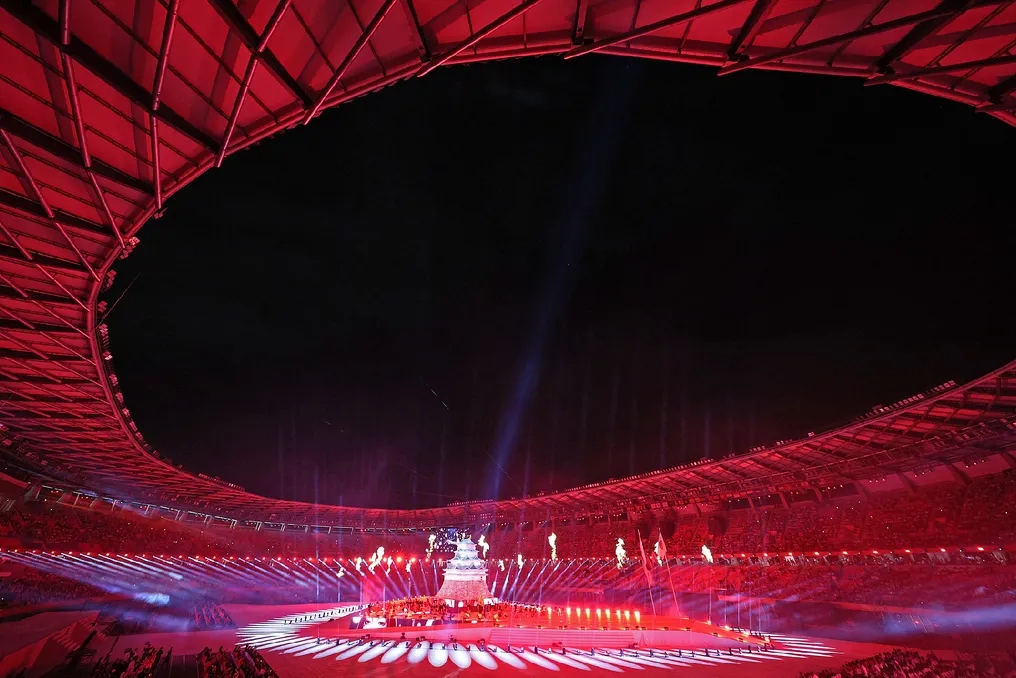
The XXI Asian Games officially kicked off in Nagoya, Japan, on Saturday. The opening ceremony combined music, dance, technology, and local culture, gathering athletes from across the continent for Asia's largest multi-sport event.

Delegations from 45 countries and regions of the continent participated in the parade at the Paloma Mizuho Stadium. The Chinese delegation was escorted to the stadium by basketball player Hu Mingshuang and world boxing champion Wu Yu, who served as flag bearers.

China, which took the lead in the medal table four years ago with 201 gold medals and 383 total placements, sent 815 athletes to compete in 369 disciplines across 38 sports. The team includes 36 Olympic champions. The average age of the delegation is 24 years, with 548 participants taking part in the Asian Games for the first time.

The ceremony was organized around a central heart-shaped platform, and its theme, 'Harmonious Heartbeat,' symbolizes the connections between the peoples of Asia. Performances showcased the history and culture of Aichi and Nagoya prefectures, while also highlighting the region's strong ties to modern industry and technology.

The evening culminated in the final torch relay race. Six torchbearers carried the flame around the stadium, after which Japanese hammer throw masters Shigenobu Murofushi and his son Koji Murofushi ascended the steps together to light the cauldron.

Senior Murofushi won five titles at the Asian Games, and Koji won a gold medal at the Athens Olympics in 2004, in addition to two titles at the Asian Games.

Approximately 11,000 athletes are participating in the current Games across 43 sports, 71 disciplines, and 469 events held at 54 venues. Most of these are located in Aichi and Nagoya prefectures, but events are also taking place in Tokyo, Gifu, Shizuoka, and Osaka.

Competitions in basketball, football, modern pentathlon, volleyball, and other sports have already begun before the opening ceremony. The Asian Games in Aichi-Nagoya will run until October 4th. Japan is hosting this continental sporting event for the third time, following Tokyo in 1958 and Hiroshima in 1994.

XXI Asian Games open in Japan; Chinese team ready for competition
Read more
cgtn.com

XXI Asian Games open in Japan; Chinese team ready for competition

The XXI Asian Games officially kicked off in Japan on Saturday. These games, running from September 19 to October 4, feature 43 sports and bring together over 11,000 athletes from 45 countries and regions.

A More Optimized Opening Ceremony

The opening ceremony, held at the Mizuho Park Athletics Stadium in Nagoya, lasted about two hours. In line with the 'Socially Useful Games' concept, this year's ceremony emphasized sustainable and low-carbon practices. Performances, stage decorations, and props were simplified, while greater attention was paid to emotional expression.

Delegations entered the stadium in alphabetical order according to the Japanese syllabary. Organizers allocated more time to the parade of athletes, allowing representatives from different countries and regions to have a more prominent place in the ceremony.

China's Team Ready to Shine

China sent 815 athletes to participate in 38 sports and 369 disciplines. The team is relatively young: 27% of its athletes were born in 2005 or later. According to the Chinese Olympic Committee, 548 of them are debuting at the Asian Games, while 306 have previously competed in the Olympics or Asian Games.

During the opening ceremony, basketball player Hu Mingshuang and boxer Wu Yu served as flag bearers. Wu Yu competes in the women's 50 kg category and won a gold medal at the 2023 World Boxing Championships, as well as at the Asian Games in Hangzhou that same year. Hu helped the Chinese men's basketball team win bronze in Hangzhou and will lead the team at the current Asian Games.

New Sports and Asian Favorites This Year

The Asian Games in Aichi-Nagoya present a blend of traditional Olympic disciplines and sports with strong Asian roots. Alongside major Olympic events such as athletics, swimming, badminton, and boxing, Asian favorites like Kabaddi, Sepak Takraw, Wushu, Kurash, and Jiu-Jitsu are included.

Several new sports and disciplines are also debuting this year. Padle and Tekball were added to the program in March, increasing the total number of sports from 41 to 43. Surfing is also making its debut at the Asian Games, including shortboard competitions for men and women.

The list of newcomers also includes BMX Freestyle—a cycling discipline where athletes perform a series of tricks and jumps on specially designed tracks—and Mixed Martial Arts (MMA). Virtual Taekwondo, with one mixed individual discipline, is added to the program for the first time. Meanwhile, wrestling and esports, which officially debuted at the Asian Games in Hangzhou in 2023, will return to the Asian Games in Aichi-Nagoya.

Popular