China's express delivery industry is undergoing a phase of transformation and modernization. In the first half of 2026, the sector processed 100 billion parcels, a 5% increase compared to the previous year, with revenue exceeding 770 billion yuan ($114.82 billion USD), marking a 7.3% growth. Notably, for the first time in half a year, revenue growth surpassed parcel volume growth, indicating a structural shift in the market.
This trend is reflected in the latest financial reports from major public courier services. SF Express reported a 9.3% year-on-year increase in net profit (excluding one-off gains and losses), while YTO Express, Yunda Express, and STO Express demonstrated net profit growth for shareholders of over 70% during the same period.
As profitability consistently outpaces volume expansion, the sector's traditional strategy of reducing margins for market share is giving way to a more sustainable model, signaling a decisive transition to growth based on operational efficiency and value.
Key logistics providers have presented their strategic adaptations in response to questions about how this transition is occurring and what will drive the next stage of expansion. Technological innovations are at the forefront of these changes.
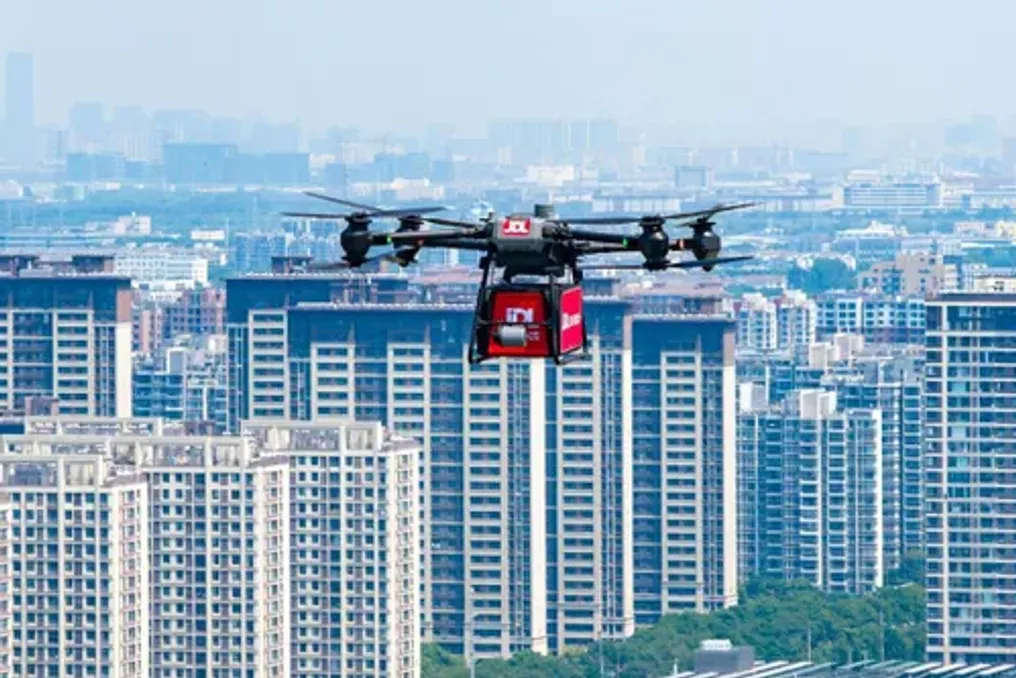
In June, JD Logistics, the supply chain division of e-commerce giant JD.com, launched China's largest rural drone delivery network in Zizhou County, Sichuan Province. This system serves 131 administrative villages, delivering parcels to remote mountain settlements in just seven minutes.
At the Jianggao sorting center in Guangzhou, Guangdong Province, southern China, employees work alongside eight humanoid robots on automated sorting lines. These machines seamlessly pick up, turn, and place parcels at a rate of 800 units per hour.
Yu Rao, senior engineer at the State Post Bureau's Research and Development Center, explained that a significant portion of the industry's profit growth in the first half of 2026 is due to the maturity of investments in digital infrastructure made in previous years. He noted that artificial intelligence is increasingly integrated across the entire logistics chain, and the widespread adoption of drones and autonomous vehicles serves as a key catalyst for cost optimization and increased operational efficiency.
For instance, YTO Express implemented an AI-based routing platform that analyzes historical delivery data and current operating costs to optimize delivery routes. This system alone allowed the company to reduce operating costs by approximately 90 million yuan in the first half of 2026.
ZTO Express similarly utilized automation in customer support. Its AI-powered system now independently resolves about 90% of seller inquiries post-sale and 70% of recipient requests from start to finish. Yan Wen, CTO of ZTO Express, stated: 'Over 60% of routine customer issues are now resolved end-to-end by our intelligent service platform, significantly reducing labor costs.'
Fleet automation is also scaling rapidly. By the end of June, Yunda Express had over 1,500 autonomous delivery vehicles in its network, more than 1,000 more than the previous year. The standardization of large-scale autonomous operations has led to a 30% reduction in transportation costs at local distribution hubs.
Across the broader postal and courier sector, the adoption of advanced technologies is accelerating, including AI-powered customer service, automated sorting, smart security monitoring, computer vision surveillance, and dynamic route optimization. Across the country, the industry currently operates over 16,000 autonomous delivery vehicles and more than 400 drones designated for last-mile delivery.
Xu Huarong, Deputy General Manager of the State Post Bureau's Policy and Regulation Department, stated: 'During the 15-Year Plan period (2026–2030), we will accelerate the integration of advanced technologies into the logistics sector and develop new drivers of economic growth.'
Financial indicators also show that the average revenue per parcel has grown across the sector since the beginning of 2026. Yu added that 'sustainable regulatory efforts to curb fierce price competition have played a crucial role in reversing this trend.' Following a symposium held by the State Post Bureau in July 2025, which mandated adherence to fair competition rules, the notorious price wars in the sector have gradually subsided, allowing companies to restore a healthy profit margin.
Industry analysts note that the sector's traditional reliance on e-commerce-driven volume spikes has reached a plateau. Consequently, diversifying income sources beyond online retail has become a primary strategic priority for major couriers.