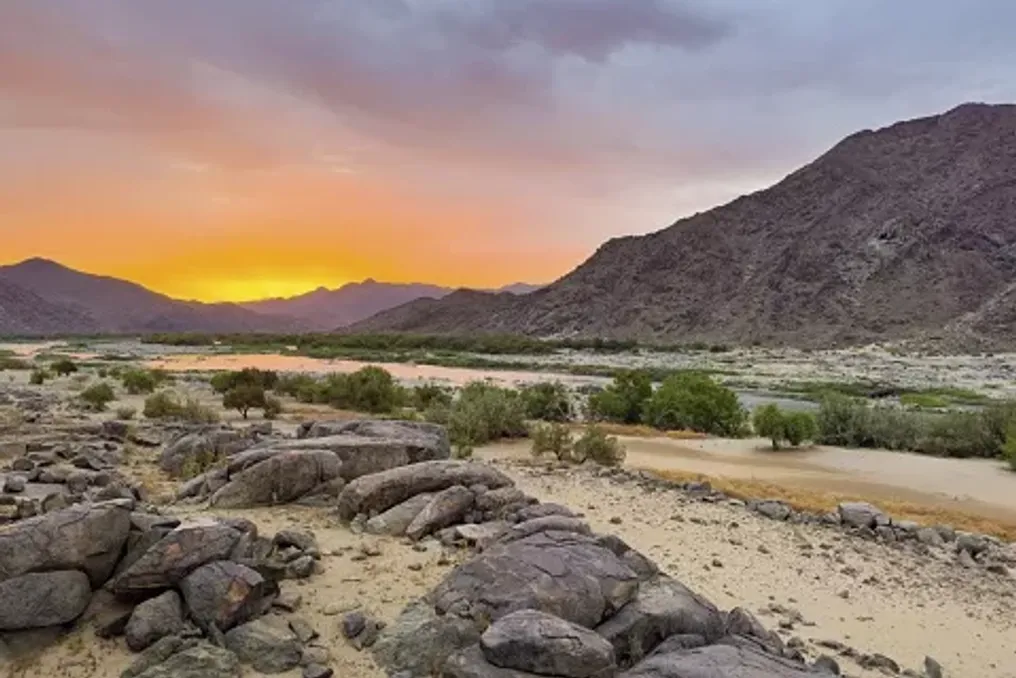
Richtersfeld is often characterized as a desert, but closer examination reveals that the landscape offers much more than just mountains, sand, and heat. In the northwestern corner of South Africa, the Orange River flows through rugged mountains, tiny succulents grow among the rocks, and morning mist brings precious moisture to an otherwise extremely arid landscape. This region is also home to the Nama people, whose semi-nomadic pastoral traditions have shaped the landscape for centuries.
The cultural and botanical landscape of Richtersfeld, covering about 160,000 hectares, was inscribed on the UNESCO World Heritage List in 2007. Its significance stems not only from its outstanding flora but also from its living cultural heritage, including seasonal livestock grazing methods and traditional 'huru om' portable dwellings.
To experience the essence of this unique landscape, 48 hours are sufficient, provided visitors are prepared for its remoteness and do not rush between attractions. The main South African entry point into the Ai-Ais/Richtersfeld Transfrontier Park is Sendelingsdrift, which serves as a convenient starting point for exploring the area.
The journey here is part of the experience itself. The nearest major commercial center, Springbok, is over 300 km away, and the final approach via the N7 highway through Steenkop, Port Nollet, and Alexander Bay includes a long gravel section. Inside the park, roads are mostly uneven farm tracks, and a 4x4 vehicle is necessary for many routes.
This remoteness distinguishes Richtersfeld from more accessible wildlife areas in South Africa. Upon arrival, it is recommended not to rush to viewpoints but instead to notice the details along the road: rock formations, resilient plants, and the changing colors of the mountains. Although Richtersfeld may appear barren from afar, it is one of the world's greatest succulent landscapes.
SANParks describes this area as supporting exceptional diversity of desert flora, including characteristic halophytes, quiver trees, and aloe. Morning mist descending from the Atlantic provides vital moisture for plants and animals in this exceptionally dry environment. Halophytes are one of Richtersfeld's most recognizable plants; their unusual vertical form inspired the name, and their presence lends the mountain landscape an almost ethereal quality.
Instead of focusing only on the largest plants, one should look down. Small succulents and miniature rock gardens can appear between stones and on rocky slopes, transforming what seems like a desolate landscape into a surprisingly vibrant botanical world. Richtersfeld is a mountain desert with harsh peaks, rocky valleys, and dramatic formations stretching inland from the Orange River.
One of the best ways to appreciate the changing topography is through a scenic drive. It is essential to stop in safe places, turn off the engine, and allow silence to become part of the experience. An unusual landmark worth noting is the 'Hand of God'—a rock formation near Sendelingsdrift, which has become a recognizable park feature.
The landscape also reveals its antiquity through archaeological evidence. SANParks notes that human habitation in the region spans thousands of years, with findings at Di-Tuun near Tatasberg dating back to approximately 2200 BCE. Animal remains in Kokkerboomkloof also indicate the presence of species such as antelope, zebra, and klipspringer thousands of years ago.
Accommodation in the park ranges from basic campsites to more comfortable nature camps. Potjiespram Campsite is located near the Orange River, and Tatasberg Nature Camp is within sight of the river. Gannakkueriep Nature Camp is situated in a rocky valley and offers equipped chalets with solar lighting and geothermal gas sources.
For a 48-hour trip, it makes more sense to stay inside or near the park rather than spending hours commuting back and forth daily. As the sun sets, the landscape transforms again. The absence of city lights makes Richtersfeld particularly suitable for stargazing. SANParks highlights the night sky in this area as one of its features, and the combination of rugged mountains, silence, and darkness makes simply sitting outside after dinner a worthwhile experience.
There is no need to over-plan this part of the trip. Find a safe spot, turn off the lights, and look up.
Additional Information
After a day filled with dry mountains, the Orange River offers an unexpected change of scenery. The river forms the northern boundary of the park, allowing a strip of greenery and wildlife through the otherwise arid landscape. SANParks lists activities on the river, such as fishing and boating, as ways visitors can experience this part of the park.
Mornings by the river are also a good opportunity to slow down. One can have breakfast, have a picnic, or simply sit by the water, watching the reflection of the landscape in the river. The contrast is striking: bare mountains rise behind vegetation growing close to the water, clearly illustrating the river's importance in this dry corner of the country.
Richtersfeld cannot be understood without its people. The cultural landscape is closely linked to the Nama community and its traditional pastoral lifestyle. Seasonal movements between pastures and livestock points have been practiced for generations, and UNESCO describes this tradition as having been preserved for at least two millennia.
Traditional 'huru om' portable homes, constructed from wooden frames and woven reed mats, are another distinctive feature of this heritage. The relationship between people and nature here is particularly interesting. Nama pastoral practices have contributed to shaping the landscape while allowing the region's succulent vegetation to persist. UNESCO recognizes this interaction between traditional land management and biodiversity as one reason for the region's World Heritage status.
This makes Richtersfeld something more than just wildlife containing traces of human history. Its cultural traditions are part of the landscape itself. On the last day, it is better to dedicate time to another scenic drive rather than trying to fit in a long list of sights. Roads can be uneven, sandy, and mountainous, so SANParks recommends traveling in convoys on difficult routes. Sedan driving is prohibited in the park, and overnight visitors are advised to arrive early enough to reach the camps before dark.
This makes Richtersfeld more suitable for travelers who value the journey as much as the destination. Stop for photos, look for birds and small animals, and pay attention to plants that become easier to spot when you know what to look for.
Two days will not be enough to reveal everything Richtersfeld has to offer, but they can change one's perspective on the desert. Here, dryness does not mean lifelessness. Mist becomes water. The Orange River turns into a green corridor. Succulents transform rocky slopes into botanical gardens. The mountains retain evidence of ancient human settlement, while Nama traditions remain tied to the land. It is this combination of nature and culture that makes Richtersfeld so unique. Come for the dramatic desert landscapes, but stay long enough to appreciate the details.
Richtersfeld is a remote wilderness requiring more preparation than a typical weekend trip. A 4x4 vehicle is necessary for many park routes, and visitors must plan their trip considering rough roads, long distances, and extreme conditions. SANParks advises overnight visitors to arrive before 4 PM to reach the camps before dark. Since service and access conditions in the park can change, visitors should check the latest information from SANParks before traveling, especially if their route includes a pontoon over the Orange River. Springbok is the nearest major commercial center, so all necessities must be stocked before entering the wilderness. Most importantly, carry an adequate supply of drinking water and take the remoteness seriously. The reward is a landscape where little stands between you and the mountains, the river, the stars, and the silence.
}, {