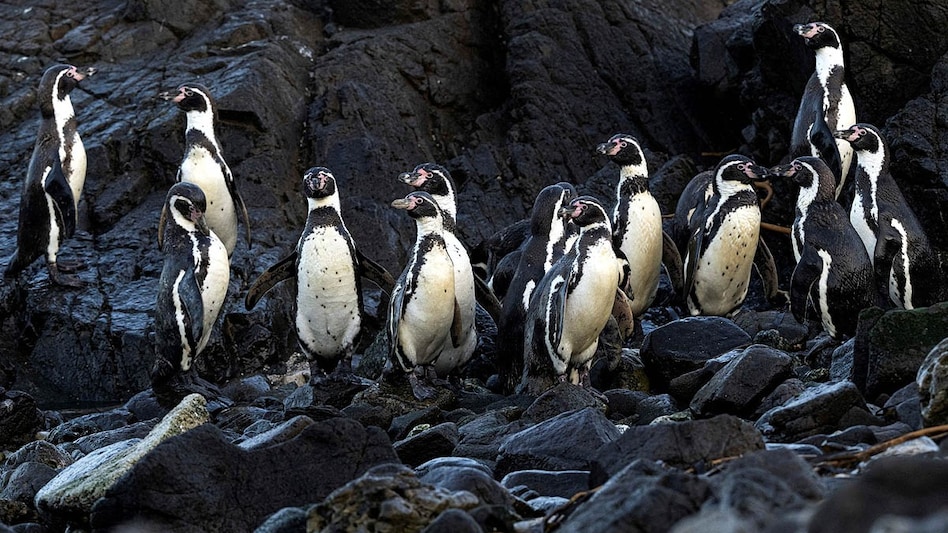
A rapid decline in the Humboldt penguin population is being observed in the Punta San Juan area of Peru. Where approximately 3,000 penguins used to reside, this number has dropped to less than 500 by 2025. Currently, rising sea temperatures and a potential 'Super El Niño' pose a new and serious crisis for these penguins. Previously, their numbers had also seen a significant decrease due to bird flu and the effects of El Niño.
Punta San Juan, located on the southern coast of Peru, is a marine reserve covering about 133 acres and is an important habitat for Humboldt penguins and other seabirds. However, conditions here have changed rapidly in recent years. Avian flu outbreaks in 2022 and 2023 affected a large number of seabirds. This was followed by an El Niño event, which caused the sea water to warm up. This heat made it difficult for the penguins to find food.
Humboldt penguins are found in the arid coastal regions of Peru and Chile, and their main diet consists of anchovy fish. A cold ocean current called the Humboldt Current flows near the Peruvian coast, providing abundant fish due to high nutrient levels.
During El Niño, sea surface temperatures rise above normal, directly impacting ocean currents and fish stocks. Anchovy fish either move to deeper waters or further away from the coast. Consequently, penguins have to travel longer distances in search of food. When food is scarce, penguins may abandon their eggs and nests, or they may migrate to other areas. In many cases, they die while searching for food.
In 2012, there were approximately 3,000 Humboldt penguins in Punta San Juan, while by 2025, this number has fallen below 500. Empty nests and eggs have also been observed under scientific monitoring. The penguin population has also decreased along the entire Peruvian coast. In 2022, approximately 15,663 Humboldt penguins were counted across various islands and coastal areas, whereas this number has dropped to around 5,400 in 2025.
Another major reason for the decline in penguin numbers is avian flu. This disease spread rapidly in Peru's marine areas in 2022 and 2023, affecting not only seabirds but also animals like sea lions and seals. Subsequently, El Niño exacerbated the food shortage for the penguins.
Additionally, industrial fishing is putting pressure on fish like anchovies, which can further reduce the availability of food for penguins. Scientists are calling for reductions in fishing quotas. Notably, the anchovy fishing quota was reduced in 2006, which resulted in an improvement in the penguin population.
Scientists and volunteers are continuously monitoring the penguins in Punta San Juan. They record data on penguin numbers, their diet, and breeding information. Artificial nests have also been constructed to protect the young penguins. Predators such as team foxes and rats are also being removed. Remote cameras are being used to monitor penguin nests and activities, and AI tools are being utilized to quickly interpret this data. Scientists hope that if sea temperatures return to normal and anchovies return, the penguins can return to their former habitats. However, the potential Super El Niño remains a major challenge to this entire effort.