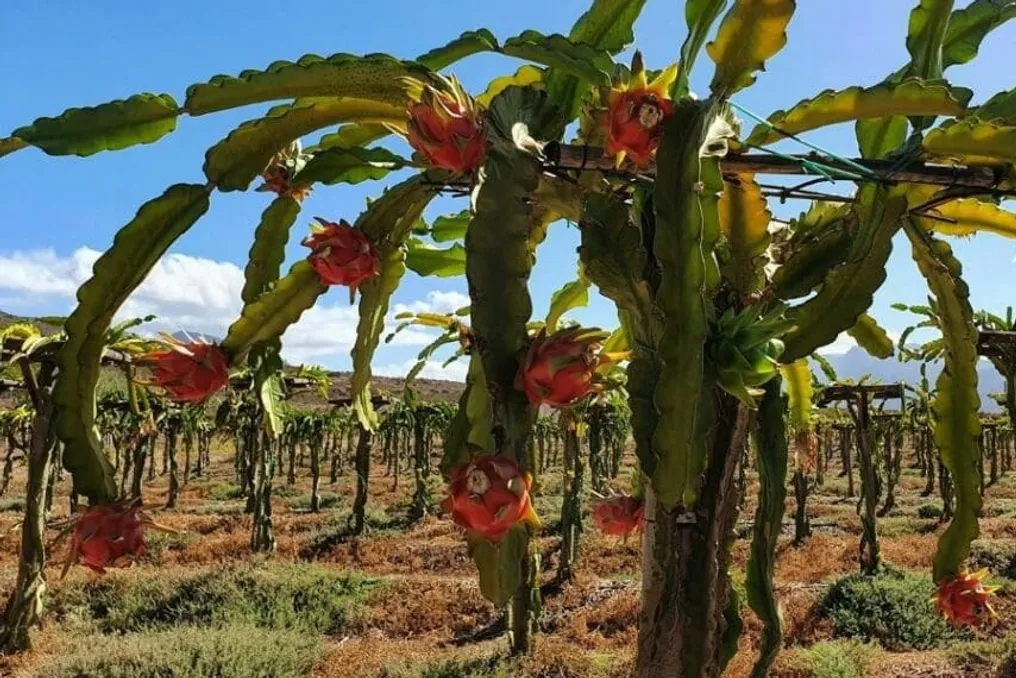
Despite the rapid expansion of the global dragon fruit market, driven by growing health awareness, increased demand for organic produce, and the development of global trade networks, local producers and seedling suppliers in South Africa face different conditions.
According to a recent report by MarkNtel Advisors, the global market volume was estimated at approximately $678 million USD in 2024 and is projected to reach $995 million by 2030, demonstrating a Compound Annual Growth Rate (CAGR) of about 7.99%.
While neighboring countries increase production and global demand rises, South African farmers struggle with capital limitations, unpredictable weather conditions, low consumer perception of the product locally, and strict environmental regulations.
In neighboring regions, the crop has shown high efficiency in hot and dry climates. Cornelius Andrias van Heerden from Wonderful Dragon Fruit noted that dragon fruit develops well in dry and warm weather and functions successfully during El Niño cycles.
He emphasized that although many farmers in South Africa are interested in cultivating this crop, they lack the funding to start operations, despite having land, motivation, and skills.
Although dragon fruit is a cactus species and relatively drought-resistant, its commercial success in the subtropical regions of South Africa has proven more sensitive to weather fluctuations than initially suggested in industry forecasts.
Lauren Strever, CEO of Amorentia Estate and Nursery, explained that while the crop was initially promoted as a promising alternative for subtropical zones, climatic features play a significant role in yield. She noted that excessive summer rainfall and prolonged wet periods can seriously negatively affect production, as high humidity and rain influence flowering, fruit development, and overall output.
In addition to weather issues and initial capital investments, South African producers face consumer resistance related to the quality of fruits on local retail shelves. Strever pointed out that the older, less sweet fruit still dominates the market, even though farmers are increasingly planting sweeter red, pink, and white varieties.
She added that although high-quality varieties are exported, they do not reach local buyers consistently enough to change public opinion. Strever believes that developing the market in parallel with production is necessary to form strong local demand, as the consumer drives cultivar and quality choice.
An additional obstacle is South Africa's regulatory framework. According to the Invasive Alien Plant Regulations under the National Environmental Management: Biodiversity Act (NEMBA), the species Hylocereus undatus (including hybrids) is classified as a Category 2 species. This classification requires farmers to obtain environmental permits for owning, propagating, or selling the plants.
Strever noted that while the goal of these rules is to protect South Africa's local biodiversity, the permit requirements create an additional entry barrier for farmers considering dragon fruit as a diversification option. She also expressed the view that there is no convincing evidence that the crop behaves as a truly invasive plant under normal commercial cultivation conditions, and that further research in South Africa is needed to assess the actual environmental risk.