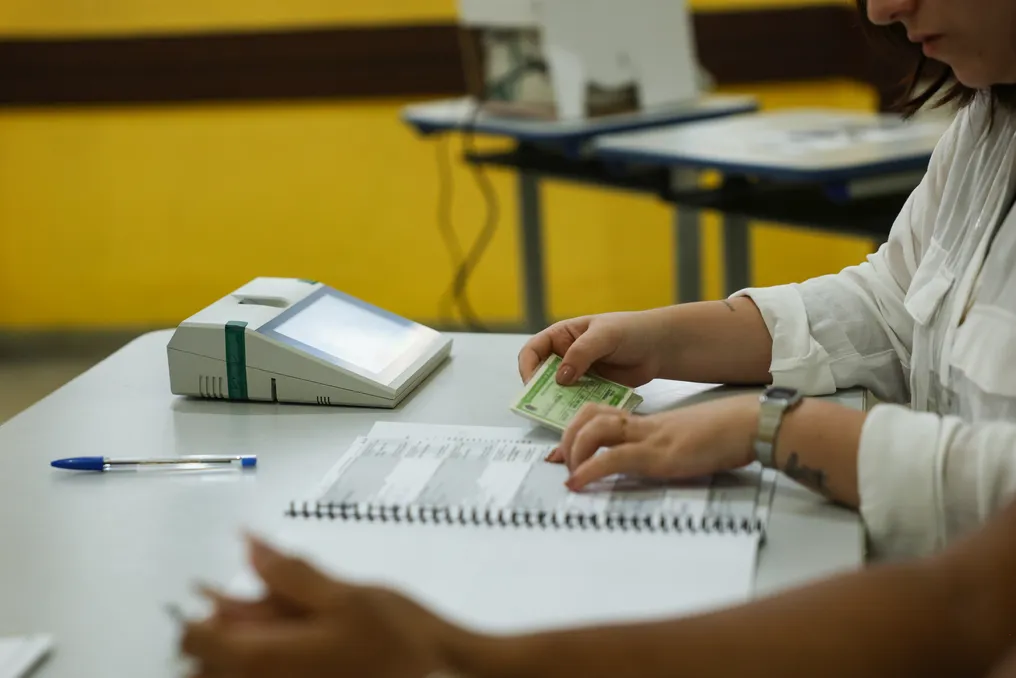
Working in elections is not classified as temporary employment and consequently does not generate the right to a salary. However, the role of a poll worker offers other forms of compensation and benefits.
Poll workers are entitled to two days of paid leave for each day worked during the elections. Furthermore, the training period also grants two days off. This allows a poll worker who participates in the training, the first, and the second rounds to accumulate a total of up to six days of leave.
It is important to note that the second round does not occur in all locations, being held only when necessary in races for President of the Republic and Governor. For the year 2026, this second round is scheduled for October 25th.
Additionally, poll workers receive a meal allowance of R$ 65 per voting round. Thus, those who work in both rounds receive a total of R$ 130.
For those participating in public service exams, electoral service can serve as a tie-breaker criterion, provided this possibility is specified in the public notice. Students from partner institutions can also use electoral work and training to fulfill extracurricular requirements.
There are extra benefits offered by some states. In Paraná, for example, poll workers are entitled to half-price admission to cultural and sporting events for two years after the election, in addition to the provision for tax exemption in certain state and municipal contests, depending on current legislation.
This year, a total of 1,922,579 people registered as volunteers or were called to act as poll workers in the 2026 elections. These people will be distributed across 516,785 polling stations, covering 2,641 electoral zones throughout the country.
Rules for Time Off
The definition of time off dates must be agreed upon between the employee and the employer. The poll worker receives a document from the Electoral Justice proving the days of service rendered. This document allows the person to negotiate the use of these days continuously or separately, and they may even combine them with vacation or holidays.
Another relevant aspect is that if the worker has multiple jobs, the right to time off is valid for all existing employment relationships at the time they participated in the elections. However, if the worker changes jobs after being a poll worker, the legislation does not guarantee the transfer of these days off to the new employment contract.
How to become a poll worker?
For the 2026 elections, the nomination period for poll workers was between July 7th and August 28th. Despite this, registration as a poll worker is permanent and can be done in advance for future elections.
Simple registration as a volunteer does not imply automatic summons. The Electoral Justice evaluates the need of each polling station and calls volunteers according to local demand, meaning it is possible to register without being called to participate in a specific election.
The training for this year's poll workers began on August 17th. This training is conducted through an application accessible on mobile phones and tablets, with a final deadline for completion at 11:59 PM on October 3rd, the eve of the first round. On election day, the same application can function as a guide, providing guidance on the procedures for opening and closing the polling station.
Who can be a poll worker?
In general, those who hold a regularly registered voter ID and do not fall into the situations of impediment established by the Electoral Justice can perform the role of a poll worker.
Among the impeded individuals are candidates and their relatives up to the second degree, as well as spouses and partners. Also impeded are members of party directories holding executive positions, authorities, and police agents, holders of positions of trust in the Executive Branch, people who are part of the Electoral Justice, and minors under 18 years old. There are also specific rules to prevent relatives or people with defined professional ties from being on the same vote reception table.
2026 Elections
The first round of the elections is scheduled for October 4th, while the eventual second round will take place on October 25th. The positions contested include President of the Republic, Governor, Senator, Federal Deputy, and State or District Deputy. A total of 158.7 million voters are eligible to vote.