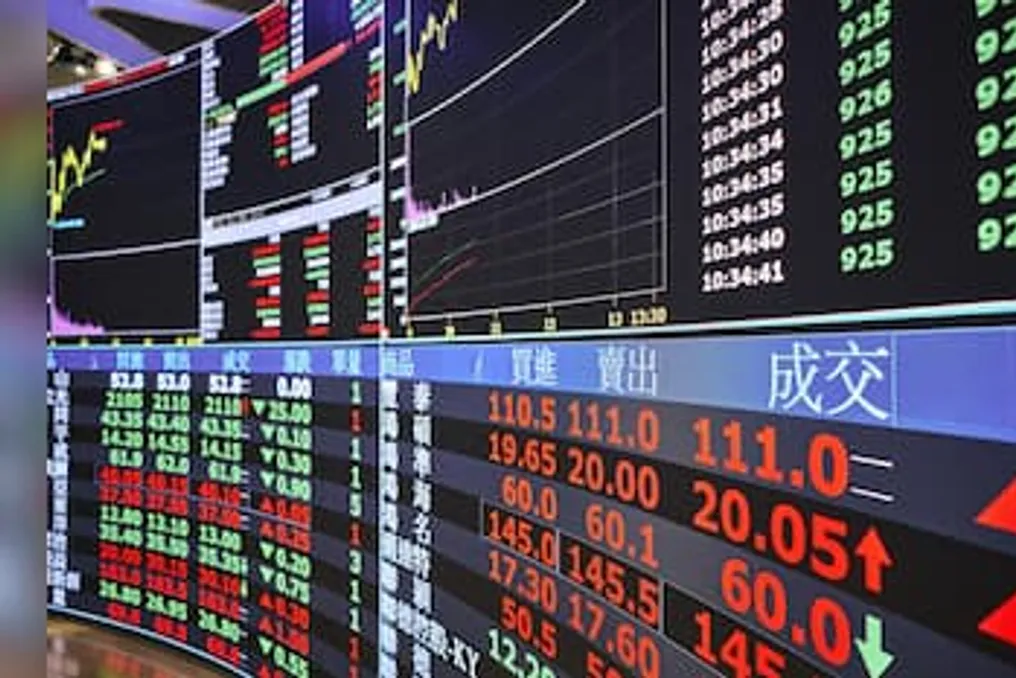
Due to the celebration of Gandhi Day on October 2nd, the Indian stock market was closed. Consequently, investors monitored the state of Asian exchanges, where a mixed picture was observed on Tuesday. Major indices in Hong Kong and Japan showed significant declines, while the South Korean and Australian markets traded higher.
Investors remained cautious awaiting data from the US labor market. Concerns in Asian markets were amplified by high bond yields and Brent crude oil prices, which exceeded the $102 per barrel mark. Since the Indian stock market was closed, these global trends did not affect the local market. Investors' attention is now focused on the dynamics of Asian markets, oil prices, bond yields, and US employment data during the next trading session.
The greatest pressure on Asian markets was exerted on the Hong Kong stock market. The Hang Seng Index (HSI) fell by approximately 3%, reaching around 23,900 points, the lowest level in 11 weeks. The Hong Kong stock market reopened after the weekend on Thursday. The decline in the Hong Kong market was caused by rising global bond yields and increased oil prices on Friday. Selling was also observed among technology stocks, and the Hang Seng Tech index dropped by approximately 2.5%.
In Japan, the Nikkei 225 index fell by approximately 0.9%, and the TOPIX index lost 1.1%. Investors' attention was also drawn to Japanese inflation data. In September, Tokyo's core CPI was 2.7%, significantly higher than the August figure of 1.8% and exceeding the market forecast of 2.4%. Following the rise in inflation, discussions about the Bank of Japan's interest rates intensified. Some policymakers considered further rate hikes necessary due to the risk of rising inflation. Investors are now anticipating potential further increases at meetings in October or December.
While the KOSPI index in South Korea showed growth of approximately 0.12% after initial volatility, Thailand's SETI index also strengthened by about 0.5%. Conversely, Singapore's Straits Times Index (STI) fell by approximately 0.3%. Mainland Chinese markets were closed due to the Golden Week National Day holiday. Chinese markets will reopen on October 8th.
Volatility in the US bond market is also reflected in Asian stock markets. The 14-year US Treasury yield rose to 5.34% on Thursday, considered the highest level since 2002. During Asian trading, this figure slightly eased to around 5.25%. Rising yields increase borrowing costs globally and may put pressure on highly valued companies on the stock market. On the other hand, Brent crude oil remains above $102 per barrel. High oil prices intensify inflation concerns. Reports indicate that the US plans to increase its military presence in the Middle East, while China has imposed an export ban on petroleum products.
Investors are now awaiting US employment data. Nonfarm payroll data will be published on Friday. The market expects the addition of about 89,000 new jobs in September, and the unemployment rate is projected at 4.1%. US labor figures are considered important for future Federal Reserve interest rate policy, and activity in global markets may increase after the release of this data.