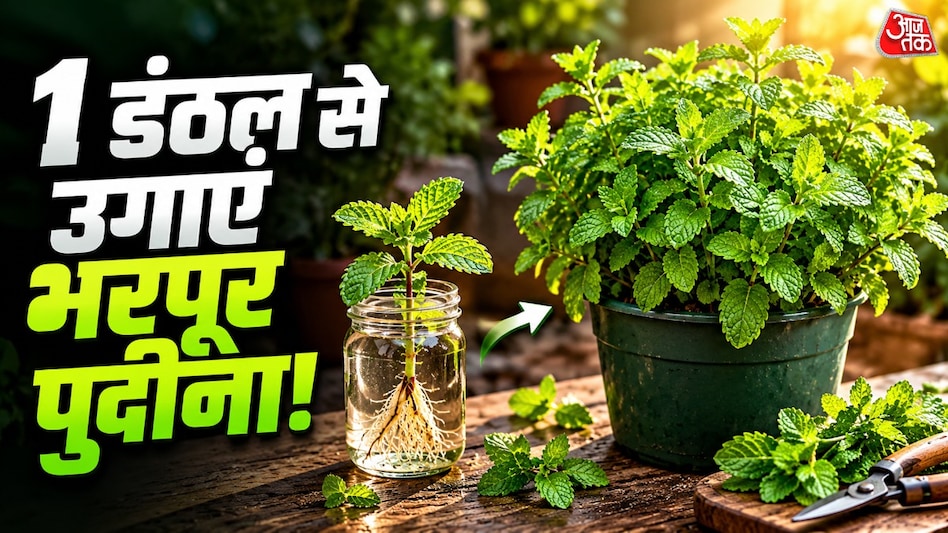
How to grow mint at home from one stem without seeds to have fresh leaves all winter
Read more
Aaj Tak
www.aajtak.in

How to grow mint at home from one stem without seeds to have fresh leaves all winter

Fresh mint is indispensable both in mint chutneys and raita during winter meals, as well as for giving dishes a special taste and feeling of freshness. However, it often happens that mint supplies run out, and you have to buy small bunches at the market, which sometimes spoil if there are too many.

If you face such a problem, we will tell you how easy it is to grow mint at home. You do not need to buy seeds or acquire a seedling from a nursery. It is enough to take one green and fresh stem bought at the market to grow an abundant harvest of mint that will delight you all winter without requiring much effort.

How to grow mint: step-by-step instructions

First, you should choose a mint stem that looks green, fresh, and sturdy. It should not have spots, rot, or signs of insects. The ideal length of such a stem is about 10–15 centimeters.

After choosing the stem, place it in a glass of water. In about 7–10 days, small white roots will begin to appear on it. As soon as the roots become visible, transplant the stem into a potted soil.

What kind of pot and soil to choose for mint?

Since mint is a fast-growing plant, growing it in a pot is quite simple. It is recommended to use a pot with a depth of 8 to 12 inches. There must be drainage holes at the bottom of the pot to prevent the accumulation of excess water, which can lead to root rot.

As for the soil, a mixture that retains moisture but also allows excess water to drain easily is best for mint. To prepare such a mixture, you can mix 40% garden soil, 40% manure fertilizer or compost, and 20% coconut fiber or sand.

Protect from strong sun: morning sun is better

Mint does not require constant exposure to scorching sun. For good growth, it is enough for the plant to receive about 3–6 hours of morning sun daily. After this, it is better to place the pot in a semi-shaded area. You can put the mint pot on a balcony, windowsill, or in a place where morning sun falls. Too little light will weaken the plant, while intense sun can damage its leaves.

Water only when the soil dries out. It is important to maintain slight moisture in the soil, but not to allow waterlogging in the pot. Overwatering can damage the roots. To help retain moisture, you can lay dry leaves or a thin layer of grass on top.

What to do to keep the plant lush

If you want the mint to be denser and greener, regularly perform light pruning of the upper young shoots. Also, remove flowers if they appear, as this will direct the plant's nutrients towards forming new leaves and branches. When the plant has grown well, you can cut the stems with leaves using sharp scissors, making the cut slightly above the leaf node. This stimulates the appearance of new side shoots.

Fresh homemade mint is useful not only for chutney but also for raita, salads, herbal tea, and various snacks. In winter, when preparing dishes such as paratha, pakora, yogurt, or chaat, you can use fresh mint from the pot. Thus, instead of throwing away a small stem of mint bought at the market, you can use it to create a plant that will provide you with fresh mint in the future.
Similar stories

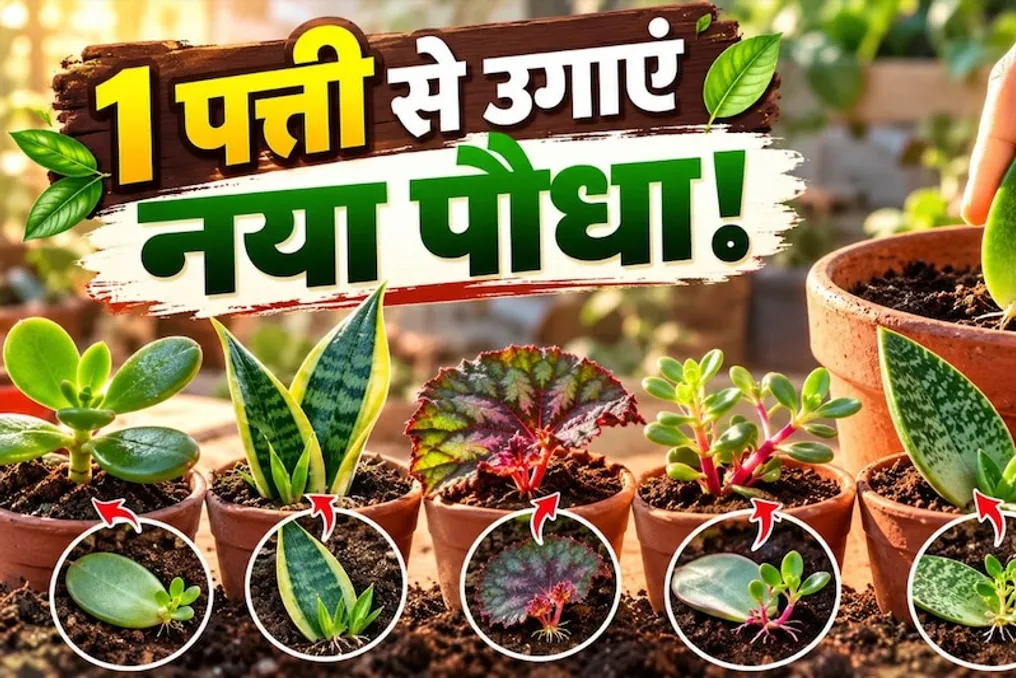
How to Grow 5 Beautiful Houseplants from One Leaf, Bypassing Seeds and Stems
Read more
www.aajtak.in

How to Grow 5 Beautiful Houseplants from One Leaf, Bypassing Seeds and Stems

Many people enjoy gardening and decorating their homes, but buying new plants from nurseries can often put a strain on the budget. If financial costs become an issue, this information may be useful. There are plants that can be grown not from seeds or cut stems, but by using just one leaf.

This method is called Leaf Propagation. It allows you to increase the number of plants at home without significant expense. However, it is important to understand that not every plant can be propagated from a leaf, and attention must be paid to the correct humidity level, soil type, and lighting.

1. Jade Plant: The Jade Plant does not require a large amount of water because the water accumulates in its thick leaves, making it relatively easy to propagate from a leaf. To start the process, take a healthy branch, let it dry out for about 1-2 days, and then place it on slightly moist soil. Roots may appear in 2-4 weeks. Once the roots are well developed, the plant can be transplanted into a pot.

2. Snake Plant: Snake Plants are often used indoors, and they can be propagated using leaf fragments. A healthy leaf needs to be cut into pieces approximately 3x3 inches. These fragments can either be placed in water or planted in a mixture of coco coir and perlite. Roots will begin to form within a few weeks, after which the plant should be moved to a soil pot.

3. Begonia: If you like flowering plants, the Begonia will be a good choice. It can also be propagated from a leaf. Take a healthy stem and cut it in half. Place it on moist soil or coco coir, ensuring that water does not stagnate. With proper humidity, roots can develop within 2-4 weeks. When roots start growing and new leaves appear, the plant can be transplanted into a separate pot.

4. Portulaca: Portulaca, known for its colorful flowers, is a low-maintenance plant that can be prepared using a leaf. Take a healthy stem and plant it in well-draining soil. It is important that the leaf is moist when planted, and it should not be buried deeply. Roots may appear in about 7-14 days. After this, allow the plant time to establish; it can fully develop within 3-4 weeks.

5. Gasteria: Gasteria is a very beautiful ornamental plant that can be placed both on a balcony and indoors, and it does not require excessive care. For leaf propagation, first take a healthy leaf and let it dry out for 1-2 days. Then, place it on a light soil mix, such as coco coir and perlite, avoiding burying the leaf completely in the ground. Roots may appear in 3-6 weeks. When the roots reach a size of 2-3 inches and new leaves start appearing, the plant can be transplanted into a pot.

The most important thing when creating a plant from a leaf is patience and controlling the moisture level. The plant should be placed in soil that does not retain water. Overwatering can lead to leaf rot, and excessive sunlight can negatively affect growth.

Popular