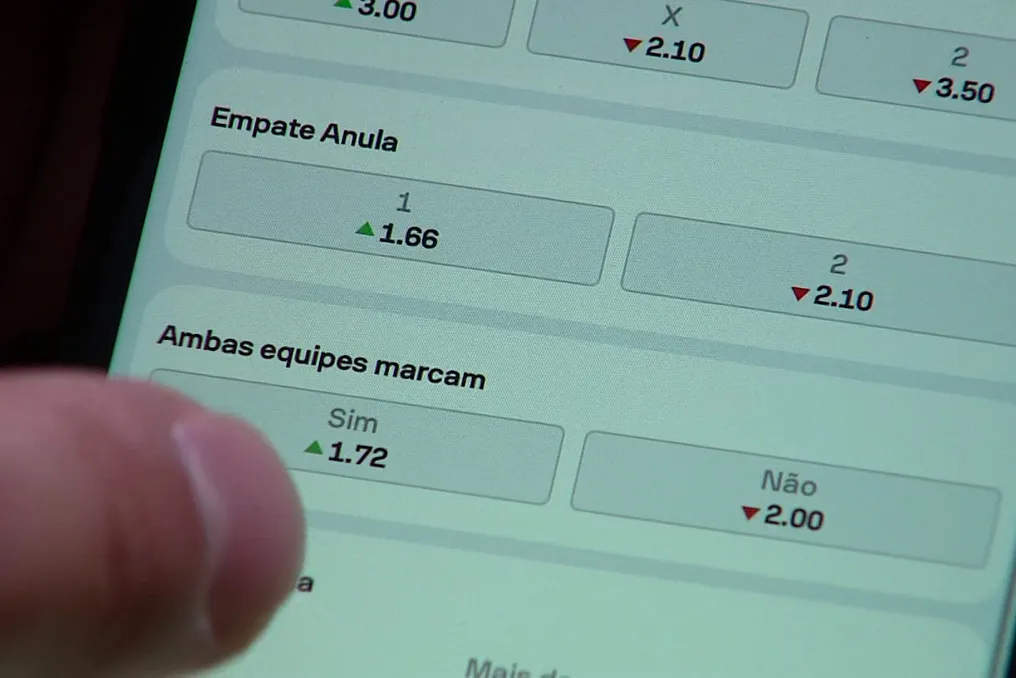
According to a study conducted by Acordo Certo, women constitute the majority among individuals who have debts and gamble in the Ribeirão Preto region (São Paulo state). Furthermore, one in three respondents was aged 55 or older.
The online debt trading platform reported that women account for 50.6% of this audience, which is 8 percentage points higher than the national average. The company surveyed 237 indebted individuals across 21 cities, including Ribeirão Preto, Franca, Barretos, and Sertãozinho.
According to one of the study organizers, Eduardo Cavalheiro, these two groups (women and elderly people) approach gambling through different channels. He notes that among women, they are often low-income female heads of households. Among the elderly, regular income, such as a pension, and feelings of loneliness play a significant role.
The study also revealed that online casinos, such as 'Fortune Tiger', are the preferred choice for 58.1% of those who have already gambled. Nearly half of the respondents (48.1%) feel cheated because they did not receive a prize, their account was blocked, or they became victims of fraud.
The financial burden is noticeable: a third of respondents (32.5%) has a negative credit history, and 43.9% believe their debt exceeds five thousand reais. Approximately one in ten who gambled stopped paying their bills or used credit, overdraft, or a card for betting in the last 12 months.
Women make up the majority
Although the ratio between women (50.6%) and men (49.4%) is balanced, the female presence in the region exceeds the national average by eight percentage points, according to the report.
Eduardo explains this by saying that part of the reason lies with 'mothers at the bottom of the pyramid who earn between two and four minimum wages, many of whom are single mothers, and they need any hope of additional income.'
The data from the study confirms this trend: among those who gamble to increase income, pay bills, or recover losses, 56% are women, and 65% have a family income of up to two minimum wages. These percentages combine responses from the region and the rest of the country.
A national survey titled 'Mulheres & Bets', conducted by Clarice, Estratégia Latina, and Instituto Ideia, indicated that 72% of female gamblers have children.
One in three is 55 years old or older
Players aged 55 and older account for 35.4% of the indebted respondents in the region. In Eduardo's opinion, this is an audience that usually has a regular income, such as a pension or benefit, and sometimes savings accumulated over a lifetime.
He compares this habit to the practice of a decade ago: many who played bingo 20 or 30 years ago now gamble on betting. He points to the emotional factor, stating: 'We are living in an epidemic of loneliness. Elderly people often do not have many options for leisure and relaxation, and they end up giving in to faster entertainment, the dopamine that comes quicker.'
Online casinos, not football
Although betting is often associated with football, betting on sports results is rarely seen among the indebted in the region: less than 1% of responses were dedicated to this. Sports betting is less common in this region.
Games like 'Tiger', 'Dragon', and similar slot machine imitations dominate. Another 3.2% prefer specific games such as 'Airplane' and 'Mines', while 38.7% state they do not gamble with money.
In Eduardo's view, sports betting often serves only as a starting point. He explains: 'When we go to any sports betting website, there is an option link to transition to casino games. Thus, sports betting functions as an entry ticket to casino games, to tigers, to airplanes.' He adds: 'The dynamics of the casino are always profitable for the establishment.'
An indebted player in the region typically started recently and bets small amounts. Six out of ten (61.3%) have been playing for less than six months, slightly more than half (54.8%) play several times a month, and two out of three (67.7%) spend up to 50 reais per month.
According to Eduardo, the small amount does not diminish the problem. He notes: 'It's just a little bit left, 10 reais left, 15 reais left; the platform accepts any amount. Therefore, the smallest amounts, which are often used to cover food expenses, go towards betting, and this causes great concern.'
Players are aware of the risks: for 87.1%, sports, casinos, and other games are gambling activities. Advertising is mentioned little in the responses: 12.9% said they played under the influence of advertising or influencers, and 7.4% follow influencers or prediction groups.
The report itself makes a caveat: respondents tend to underestimate the frequency and amounts of bets compared to the actual figures. The preference for casinos is important because this format has the highest assessed degree of problematic gambling among the analyzed formats in a systematic review published in The Lancet Public Health. This figure reached 15.8% among users of online casinos and virtual slots.
Nearly half felt cheated
The 48.1% who felt cheated include three situations: not receiving a prize, account blocking, or falling victim to scammers, one or more times.
The main concern is losing money that cannot be lost, which worries 25.9%. Fraud concerns 18.5%. However, a third (33.3%) states they are not afraid of the consequences.
Winning to repay debts
If they could earn extra money from betting, 63.6% of respondents would use this amount to repay debts. Another 26.2% would save the money, and 10.3% would pay overdue bills.
Among those in debt, three quarters would direct the money towards debt repayment, both in the region (75.3%) and in the rest of the country (76.5%).
Eduardo argues: 'People often refuse to repay debt so they can bet and earn extra income to cover monthly expenses to get through the month.'
Of those who could not pay their bills due to gambling, about six out of ten used credit for betting. According to Eduardo, since the pandemic, families who were already living 'on a tight budget' have accrued even more debt, often using the only available and most expensive credit—the revolving credit line of a card.
Two out of three respondents (67.1%) have a family income of up to four minimum wages. The most frequently mentioned range is from 2 to 4 minimum wages (32.9%).
Region versus the rest of the country
The study compares the Ribeirão Preto region with 430 indebted individuals surveyed in the rest of the country. In the region, 32.5% of respondents are in debt, whereas outside the region, this figure is 54%.
Betting motives also differ. In the region, the majority of those who gambled (58%) bet mainly for pleasure or emotion. In the rest of the country, this group accounts for 31%. Meanwhile, necessity as a reason for betting accounts for 29% among players in the region and 54% in the rest of the country.
According to the company, respondents from the region have higher incomes and are less indebted, which explains a significant part of the differences. Therefore, the comparison serves as a benchmark, not a ranking.
How the study was conducted
The Acordo Certo study is a quantitative study conducted entirely online. The questionnaire was sent via email to platform users who had registered debt.
237 interviews were conducted in the region across 21 municipalities between July 31 and September 28, 2026. According to the company, the margin of error is 6.4 percentage points, plus or minus, with a 95% confidence level.
Only those who had already gambled answered questions about gambling habits, such as frequency, spending, preferences, and motivation. Therefore, these percentages have a smaller base than the total number of respondents, and the margin of error in these segments is higher.
The results are preliminary because the form remains open, and they reflect the indebted individuals registered on the platform who responded to the survey, not the entire population of the region. The company also points out three limitations: the sample was drawn from a database of people with debts, respondents tend to underestimate the frequency and amount of bets, and data collection was conducted only online during a specific period of the year.
Data collection concluded three days after the publication of a temporary decree banning online betting in the country, on September 25. The cities studied were: Ribeirão Preto, Franca, Barretos, Sertãozinho, Araraquara, Bebedouro, Jaboticabal, Batatais, Taquaritinga, Pontal, São Joaquim da Barra, Monte Alto, Hardinópolis, Serrana, Guaíra, Orlândia, Ituverava, Guarita, Pitangueiras, Cravinhos, and Barrinha.
boolean