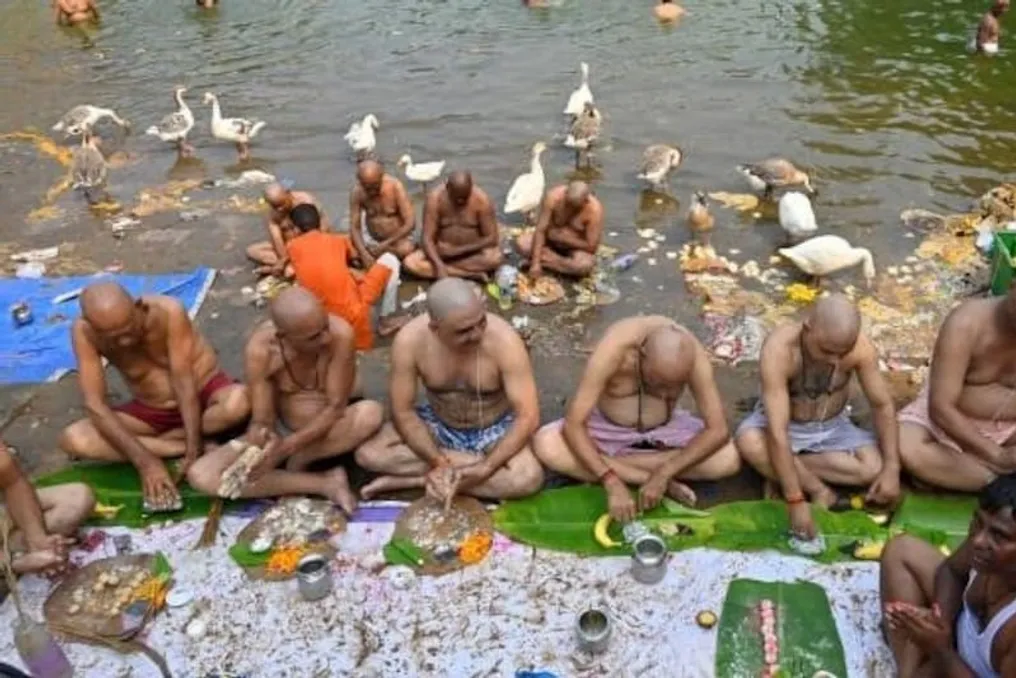
The Significance of Ancestor Visions in Dreams During Pitru Paksha 2026 According to Dream Lore
Read more
Aaj Tak
www.aajtak.in

The Significance of Ancestor Visions in Dreams During Pitru Paksha 2026 According to Dream Lore

The time of Pitru Paksha is considered very significant in Hinduism. During these sixteen days, people perform the rituals of pindadana, shraddha, and tarpana to attain peace for the souls of their ancestors. There is a deep belief that during this special period, our ancestors come to the earth to meet their relatives. Consequently, if your ancestors suddenly appear in a dream, it is not just a coincidence, but holds many deep and significant meanings. According to dream lore, the state, behavior, and facial expressions of ancestors in a dream have a strong influence on our lives. Next, we examine what the appearance of ancestors in various forms during Pitru Paksha signifies.

About Pitru Paksha 2026:

If you see your ancestors smiling or in a state of complete happiness in a dream during Pitru Paksha, it is regarded as an extremely auspicious sign. According to dream lore, such a dream indicates that your ancestors are completely satisfied with you. It also means that their blessings remain fully preserved over the path you are taking or the work you are doing.

Conversely, if your ancestors appear in a dream crying or in a state of deep sorrow, it is not considered a good omen. According to religious beliefs, such a dream points to impending difficulties, problems, or the dissatisfaction of the ancestors. This may mean that some of their last wishes remain unfulfilled, or they are displeased because they were not remembered properly according to the rituals. In such a situation, special worship and charity should be performed to ensure their peace.

If you dream that your ancestors are asking for food or water, this is considered a very important sign. According to dream lore, such a dream means that the ancestors expect you to perform the Shraddha and Tarpana rituals. In this situation, during the days of Pitru Paksha, one must sincerely perform Tarpana in their honor, feed Brahmins, and donate to those in need within one's means.

Sometimes people have dreams in which they talk face-to-face with a deceased relative or ancestor. According to dream lore, such dreams may indicate future entanglement or challenges. Upon receiving such a sign, instead of panicking, it is beneficial to remember the ancestors and perform charity and Tarpana in their memory, which helps remove obstacles in the home.

Similar stories

Pitru Paksha Dates for 2026: Information on Shraddha Rituals
Read more
www.aajtak.in

Pitru Paksha Dates for 2026: Information on Shraddha Rituals

In Hinduism, Pitru Paksha is considered a special period for honoring ancestors and expressing reverence towards them. During this time, various rites such as Shraddha, Tarpan, and Pindadaan are performed for deceased family members. There is a belief that remembering ancestors and performing religious acts for their spiritual peace holds particular significance during these days.

Pitru Paksha 2026

In 2026, Pitru Paksha will begin on September 27th and conclude on October 10th, which is Sarvapitri Amavasya. Additionally, a Pournima Shraddha will be performed on September 26th.

When does Pitru Paksha start?

Pitru Paksha in 2026 starts on September 27th. During this period, ancestor remembrance is conducted according to different dates. Traditionally, Shraddha is performed on the day of a person's death. However, it should be noted that differences may exist across various regions and families based on Panchanga calculations.

The last day of Pitru Paksha will be October 10th, when Sarvapitri Amavasya is observed. This day is also important for ancestors whose dates of death are unknown.

Main Dates of Pitru Paksha in 2026

The main dates include: Pournima Shraddha — September 26th; Pratipada Shraddha — September 27th; Dwitiya Shraddha — September 28th; Tritiya Shraddha — September 29th; Chaturthi Shraddha — September 30th; Panchami Shraddha — October 1st; Shashthi Shraddha — October 2nd; Saptami Shraddha — October 3rd; Ashtami Shraddha — October 3rd; Navami Shraddha — October 4th; Dashami Shraddha — October 5th; Ekadashi Shraddha — October 6th; Dwadashi Shraddha — October 7th; Trayodashi Shraddha — October 8th; Chaturdashi Shraddha — October 9th; and Sarvapitri Amavasya — October 10th.

It is important to remember that Shraddha dates depend on lunar calendars and local Panchanga calculations, so when determining the time for a specific ritual, one should refer to the local Panchanga or family traditions.

What is Shraddha?

Shraddha is related to expressing respect and reverence for ancestors. During Pitru Paksha, family members perform Shraddha rituals according to the date of death of their deceased relatives. These rites involve worship, offering food, and charity, and their performance may vary depending on family and regional traditions.

How is Tarpan performed?

Tarpan also holds great significance during Pitru Paksha. In this ritual, water is offered to the ancestors. According to many traditions, water in a copper vessel, black seeds, milk, and Ganga water are used for Tarpan. Kusha is also considered a sacred plant. Traditionally, when performing Tarpan, one should face south, as the southern direction is associated with the Pitras in Hindu beliefs.

What is the significance of Pindadaan?

Pindadaan is an important part of pitra rituals. During this, pindas are offered to the ancestors. The method of making and offering pindas can vary depending on different religious traditions and family customs. Some families also perform Pindadaan at pilgrimage sites during Pitru Paksha, following methods indicated by local traditions and the priest.

What is included in the food during Shraddha?

Many families have a tradition of preparing sattvic food on Shraddha days. The composition of the dishes may differ depending on the region and family customs. According to several traditions, a portion of the food during Shraddha is given to animals such as cows, dogs, and crows, which is considered part of the religious practice.

What is avoided during Pitru Paksha?

Pitru Paksha is generally viewed as a time for ancestor remembrance and performing religious rites. Therefore, many families try to avoid holding large and auspicious events during this period. Traditionally, auspicious events such as weddings, as well as starting new businesses or important endeavors, are refrained from during these days. It is also recommended to refrain from moving into a new house or purchasing expensive or luxurious items, as well as holding large festivals or celebrations. Nevertheless, adherence to these rules is not universal for all families, as religious traditions can change depending on the region, community, and family customs.

Furthermore, there is a tradition during Pitru Paksha of donating and helping the needy. Many people donate food, clothing, footwear, til, and other necessary items during this period. Charity is seen as a way to express reverence for ancestors and help those in need.

It is important to remember that the methods of performing Shraddha and Tarpan are not uniform everywhere. The correct determination of the date and method of Shraddha should be based on the traditions of one's family and the local Panchanga.

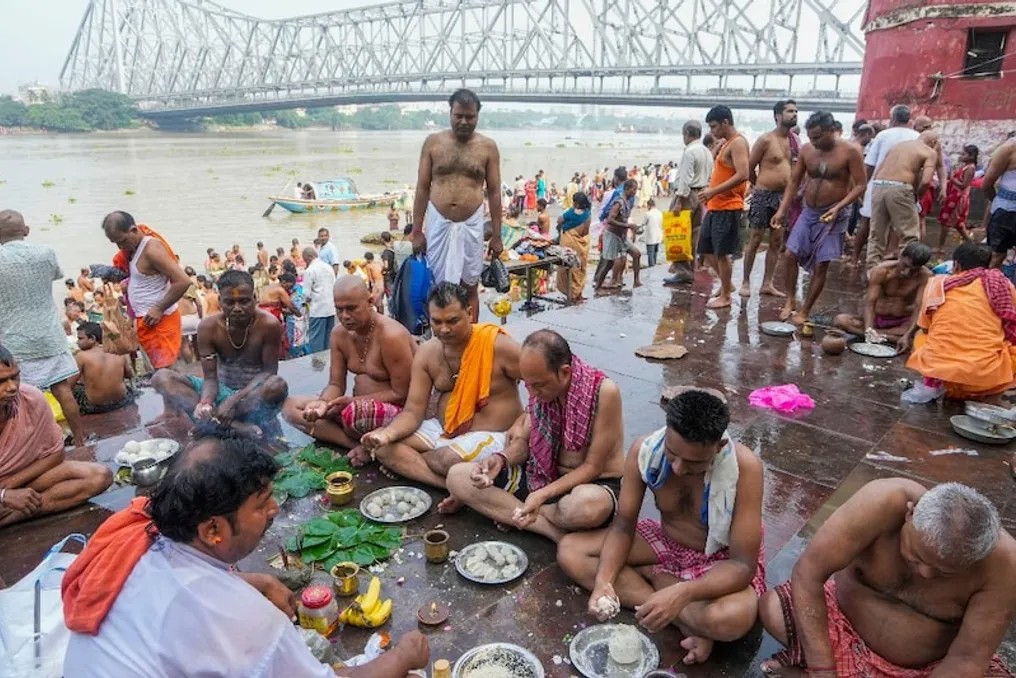
During Pitr Paksha 2026: 4 Actions to Avoid After Performing Shraddha Puja
Read more
www.aajtak.in

During Pitr Paksha 2026: 4 Actions to Avoid After Performing Shraddha Puja

Pitr Paksha 2026 will begin on Sunday, September 27th, and conclude on Saturday, October 10th. In Hinduism, Pitr Paksha (Sharaddha Paksha) holds deep religious and spiritual significance. During these 16 days, which start with Badrapada Purnima and end with Ashwin Amavasya (Sarapitra Amavasya), rituals such as pind dan, tarpan, and sharaddha karma are performed to ensure the peace, satisfaction, and blessings of ancestral souls (pitrus).

According to religious beliefs, during Pitr Paksha, our ancestors appear on Earth in an invisible form and accept water and food offered by relatives. However, sometimes people make certain unconscious mistakes after performing worship and sharaddha rites, which can lead to the loss of the ceremony's benefits and cause pitr dosha.

According to astrological and sacred rules, there are four mistakes made immediately after tarpan or sharaddha puja that can nullify the results of all rituals and become the cause of pitr dosha. It is necessary to know which four actions one should strictly refrain from after worshipping ancestors.

Eating or rushing to eat immediately after tarpan

It is incorrect to sit down at the table and eat immediately after completing sharaddha or tarpan. Before Brahmins are offered food and a portion is allocated for Panchbali (cow, dog, crow, god, and ant), household members should not eat independently. Sattvic food should only be consumed after food has been offered to the pitrus and Panchbali.

Consuming garlic, onions, and tamasic foods

Even after performing tarpan or sharaddha karma, the atmosphere of the home and the food must remain sattvic throughout Pitr Paksha. After sharaddha puja, it is strictly forbidden to consume alcohol, meat, or tamasic food containing garlic and onions. Such actions can anger the pitrus and negatively affect peace and tranquility in the home.

Conflicts, anger, or disrespect in the house

During Pitr Paksha, our ancestors reside in a subtle form near the house. Speaking harsh words or creating disorder in the house after tarpan brings negative energy. One should avoid anger, arrogance, and arguments with family members or elders after sharaddha puja. Furthermore, one must not turn away any poor or helpless person or animal that comes to the door; they must definitely be given food and water.

Cutting hair/beard or buying new clothes/goods

In Hindu tradition, Pitr Paksha is considered a time of abstinence, spiritual practice, and showing respect to ancestors, rather than a time for material celebrations or adornments. During the days of tarpan and sharaddha, one should refrain from cutting hair, nails, or beard. It is also recommended to refrain from purchasing new items, such as clothing, vehicles, or real estate, or starting any new auspicious deeds immediately after the puja.

To achieve the full result of the sharaddha puja during Pitr Paksha, it is essential to offer green grass or rice with gurreta for the cow, as well as a portion of food for the crow and dog from your hands after tarpan and pindan. The crow is considered a messenger of the pitrus, so food passed through it reaches the ancestors directly. After this, one should pray to the pitrus for the happiness, peace, and prosperity of the family with selflessness.

Popular