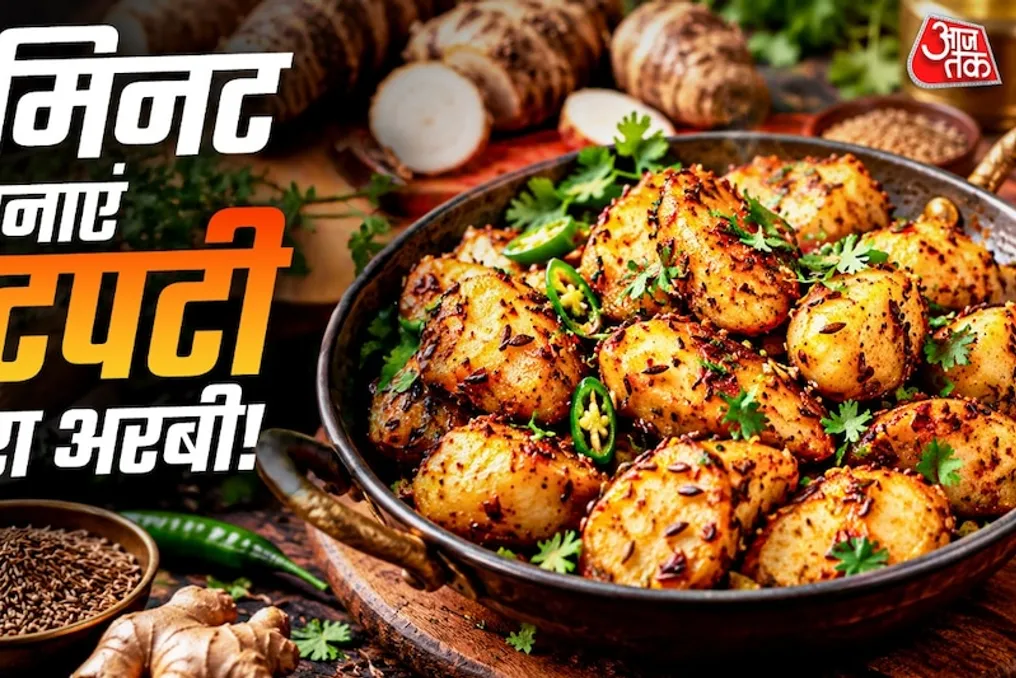
Dry Arbi Recipe with Cumin Seed: 5-Minute Preparation Without Onion and Garlic
Read more
Aaj Tak
www.aajtak.in

Dry Arbi Recipe with Cumin Seed: 5-Minute Preparation Without Onion and Garlic

During Pitru Paksha, Sattvic food is prepared in all homes, excluding the use of onion and garlic. In such conditions, it can be difficult to prepare diverse dishes every day. If you also want to cook a vegetable without onion and garlic during Shradhha days that is aromatic and does not take much time, you can try the cumin arbi recipe.

The specialty of this dish lies not only in its taste but also in its preparation method. First, the arbi is lightly boiled so that its skin can be easily removed and it does not break down. Then, the flavor is enhanced by cumin, fenugreek, and some simple spices. The most important technique is that dry spices are added at the very end, which allows them to adhere well to the arbi, making each piece rich in spice flavor. Next, a guide to quickly preparing cumin arbi during Pitru Paksha is presented.

Ingredients for Cumin Arbi

To prepare cumin arbi, the following steps must be followed:

  1. First, thoroughly wash the arbi. It is advisable to use longer specimens, as long arbi looks better in cumin arbi.
  2. Place the arbi in a multi-cooker and add enough water to completely cover the vegetables. Close the lid and turn on the stove for one siren, then turn off the gas.
  3. Allow the multi-cooker to cool down naturally. Do not try to peel the hot arbi to avoid burns. When the arbi has completely cooled, its skin will come off easily.
  4. Cut the peeled arbi lengthwise. If the arbi is very large, it can be divided into 3-4 pieces. Try to keep the pieces from being too small, as long pieces are preferred in this recipe.
  5. Heat mustard oil in a pan. After heating, turn off the gas and let the oil cool slightly.
  6. Add cumin, lightly crushed coriander, fenugreek, and asafoetida to the oil. It is important not to add the spices to overly hot oil, otherwise, they may burn and give the dish a bitter taste. Then turn the gas back on and lightly fry the spices over medium heat.
  7. Add the cut arbi to the pan along with salt. Instead of frying the arbi over high heat, bake it slowly over medium heat.
  8. After about 2-3 minutes, the arbi will begin to acquire a light golden color. This is the ideal stage, and there is no need to fry it for too long.
  9. Now add the chopped ginger, green pepper, and turmeric, and mix well. Fry for a while to remove the raw taste of ginger and release the aroma of the green pepper.
  10. Red pepper is not required in this recipe; the mild spiciness will be provided by the green pepper.
  11. When the arbi is well baked, add coriander powder, black pepper, and chili flakes over medium heat. Mix these spices well with the arbi and fry for about 1 minute.
  12. This is the most important technique in this recipe: adding dry spices at the end, rather than at the beginning, allows them to adhere evenly to the arbi coated with a thin layer of oil. This makes each piece of arbi infused with spices, significantly improving the taste.
  13. Just before turning off the gas, add amchur powder, black salt, and a little roasted cumin. If you have mint powder at home, you can add it too. Mix all ingredients thoroughly, and your aromatic, tangy cumin arbi is ready.

Thanks to the absence of onion, garlic, and a large amount of spices, this recipe is quick to prepare. Pre-boiling and subsequent baking with spices allow this dish to be prepared promptly. If you want to make a simple yet tasty dry dish without onion and garlic during Pitru Paksha, cumin arbi can be an excellent choice.

Similar stories

Rajasthani Rai-Mitch Recipe: How to Prepare a Popular Side Dish for Simple Meals
Read more
www.aajtak.in

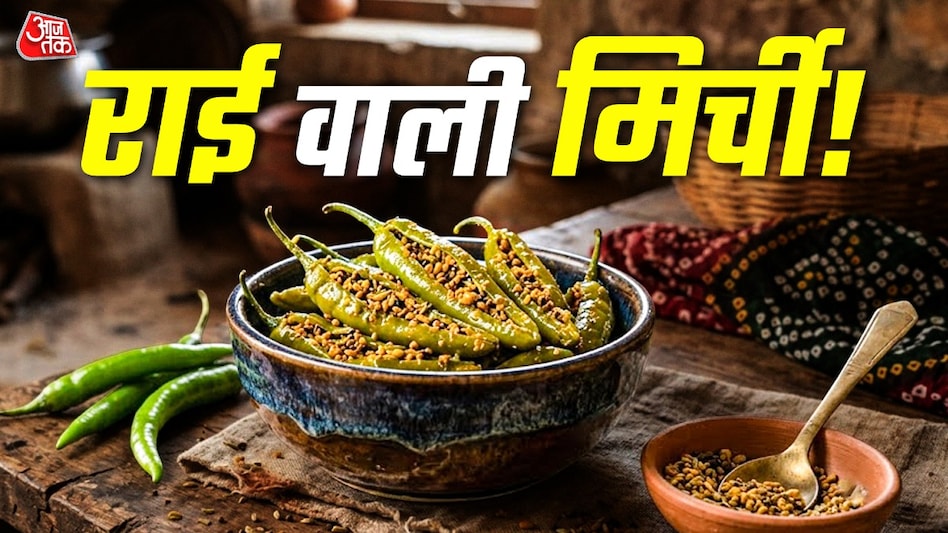
Rajasthani Rai-Mitch Recipe: How to Prepare a Popular Side Dish for Simple Meals

Rajasthani cuisine is not limited to dal-bati or spicy vegetable dishes; there are many small side dishes here that can transform the taste of ordinary food. One such dish is rai-vali michchi, also known as michchi with rai. Its specialty lies in the combination of hot green chili peppers with the aromas of spices such as rai, fennel, and methi. Preparing this dish does not require a large number of ingredients, nor does it need long exposure to the sun like traditional pickles.

Instead of serving chutney or pickles with every meal, you can offer guests this rai-vali michchi. After it has sat for a while, the spices will fully release their aroma in the peppers. Whether you are having dinner or lunch, this small portion easily fits into the main course.

Preparing the Peppers

First, the green chilies must be thoroughly washed and dried with a towel to remove excess moisture. Then, a slit is made along each pepper, ensuring that the pepper does not separate completely but remains attached to the stem.

Preparing the Spice Mixture

Next, rai, fennel, and methi seeds are lightly crushed into a coarse mixture; it is not necessary to make a very fine powder. The coarse grind allows the spices to distribute well inside the pepper and gives a pleasant taste when eaten.

Adding Other Components to the Mixture

The ground rai, fennel, and methi are placed in a bowl. Turmeric, asafoetida, and salt are added to them, and then everything is mixed. Subsequently, sesame oil is introduced, and all components are carefully blended until the mixture becomes slightly moist and suitable for stuffing the peppers.

Stuffing the Peppers with the Mixture

The prepared filling is carefully placed into the prepared peppers. The spices should be lightly packed to secure them firmly inside the pepper. This process is repeated for all peppers.

Final Preparation

The stuffed peppers are placed in a clean, dry, airtight glass jar. After one or two days, the peppers will be completely infused with the aromas of rai and other spices, after which they can be served with food.

Rai-vali michchi pairs excellently with dal-chawal, roti, paratha, puri, or simple vegetable dishes. It is especially recommended to serve it when the main dish does not have a large amount of vegetables or other bright appetizers.

Govind Gatte Recipe: Preparing the Halwai-style Dish According to Ranavir Barar's Recipe
Read more
www.aajtak.in

Govind Gatte Recipe: Preparing the Halwai-style Dish According to Ranavir Barar's Recipe

If you are tired of monotonous dishes like daily lentils, vegetables, and bread, you can try Govind Gatta from Rajasthan. This dish has a special, almost royal taste and is traditionally served at weddings in Jodhpur, Rajasthan.

The renowned chef Ranavir Barar shared his secret recipe, according to which the gatte made from gram flour is stuffed with a filling of dried figs, cashews, almonds, and dry milk.

This dish, which takes about 40–50 minutes to prepare, is perfect for lunch, dinner, or as a treat for guests on a special occasion. Below is a simple preparation method according to Ranavir Barar's technique.

First, you need to prepare the filling for the gatte, the dough for the gatte itself, as well as ingredients for boiling and frying the gatte, and components for the sauce and garnish.

The first step is creating the filling for the Govind Gatte. For this, you need to take 5–6 dried figs, 4–5 sliced almonds, 5–6 sliced cashews, 1–2 green chilies, 1 tablespoon of finely chopped fresh coriander, a quarter cup of dry milk, and salt to taste. All these components should be mixed in one bowl and set aside.

Next, in a large bowl, take one and a half cups of gram flour. Add salt to taste, half a teaspoon of turmeric, 1 teaspoon of Kashmiri red chili powder, 1 teaspoon of coriander powder, half a teaspoon of cumin seeds, 2 tablespoons of ghee, and a quarter cup of whipped yogurt. Mix all ingredients thoroughly to knead a soft dough; it is important that the dough is not too stiff, otherwise the gatte will not turn out properly.

Take a small portion of the dough, lightly roll it with your palm, place the prepared filling of figs, cashews, almonds, and dry milk inside, then completely seal the dough and shape it into a round form. This process is repeated until all the gatte are ready.

In a separate pot, heat water, adding a little salt, 1 dried red chili, 1 teaspoon of sugar, and a quarter teaspoon of cumin seeds. The cooked gatte are dropped into this water and boiled. When the gatte float, they are removed from the water and left for some time.

After this, heat about a quarter cup of ghee in a pan and fry the gatte on all sides until golden brown, performing the semi-frying procedure.

To prepare the sauce, mix 1 cup of whipped yogurt, 1 teaspoon of turmeric, 1 teaspoon of Kashmiri red chili powder, 1¼ teaspoons of coriander powder, a quarter teaspoon of asafoetida, and, if desired, a little cumin powder in a separate bowl. This mixture will give the Govind Gatte sauce its special flavor.

Heat 2 tablespoons of ghee in a pot. Then sauté cardamom, 2–3 dried red chilies, chopped ginger, 2–3 cloves of garlic, green chilies, and a little asafoetida for a few seconds.

After this, pour in the prepared mixture of yogurt and spices. It must be stirred constantly for 5–6 minutes until the yogurt is cooked and the aroma of the spices appears. Then add the required amount of water and bring the sauce to a boil. At this point, add the fried Govind Gatte to the sauce and simmer on low heat for about 5–7 minutes.

When the gatte have fully absorbed the flavor of the sauce, turn off the heat. Sprinkle the dish with finely chopped fresh coriander and serve hot. It can be eaten with roti, paratha, or rice.

Popular