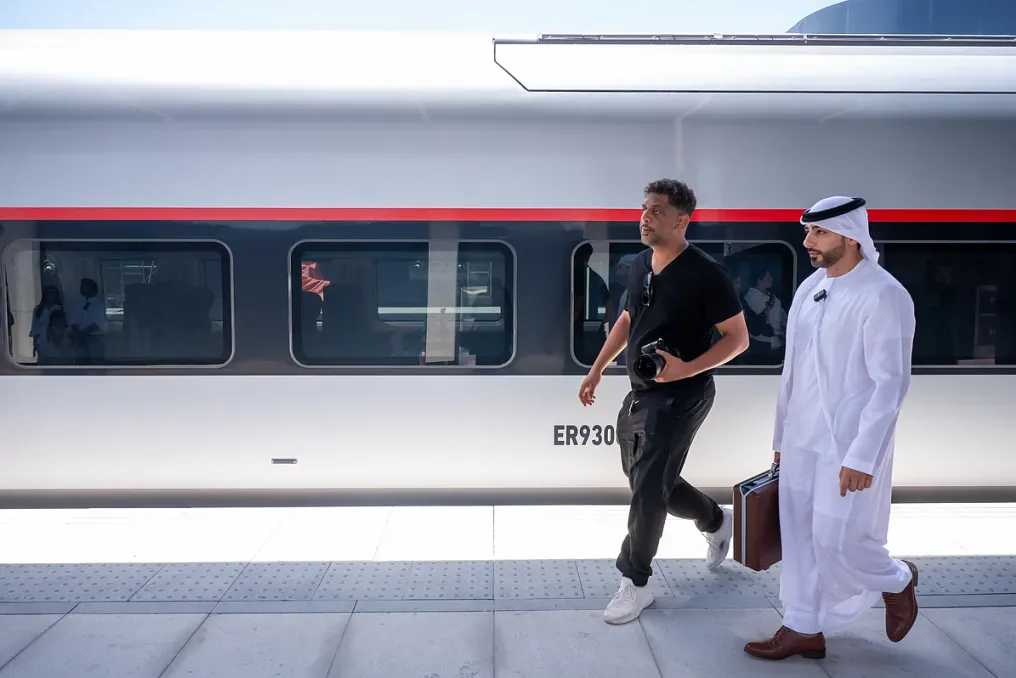
Experts note that while the Etihad Rail network has the potential to transform intercity travel methods across the United Arab Emirates (UAE), its long-term success will hinge on the ease of passenger transfer from the train to their final destination.
Passenger services between Dubai and Abu Dhabi commenced on September 30, offering a new option for journeys previously dominated by private transport. This route connects Al Jalais Station in Dubai with Abu Dhabi, while passenger trains between Fujairah and Abu Dhabi began operations in June.
The Importance of Integration with Existing Systems
Roger Cruikshank, Senior Director of Road and Rail Transport at AtkinsRéalis Middle East, stated that the railway represents a viable alternative to public transport for inter-emirate travel. However, he emphasized that ensuring regular use of this system requires more than just a train connecting cities. He stressed: 'The real opportunity lies in how well the rail network integrates with existing urban transport systems within each city.'
The Al Jalais Station example in Dubai illustrates this point. A pedestrian bridge links the Etihad Rail station to the Jumeirah Golf Estates Metro Station, giving passengers access to the Dubai Metro's Red Line for further city travel. Cruikshank noted that this allows passengers to continue their journey via public transport instead of arranging separate transfers.
Prospects for Transport Network Development
As the national network expands, the ability to seamlessly transfer between trains, metros, and buses will determine whether the railway becomes part of people's daily routine or remains merely an auxiliary link between stations. Cruikshank believes the railway is most effective when it is part of a broader, interconnected mobility system that makes end-to-end journeys simple and convenient.
His long-term vision is a network where various modes of public transport operate in coordination. He added that if achieved, Etihad Rail will not only improve connectivity between cities but also stimulate greater public transport usage, supporting a more connected and sustainable transport future for the UAE.
Belal Deiranikh, Senior Vice President of Transport at AtkinsRéalis Middle East, suggested that improved intercity links could affect people's workplaces, as well as how companies recruit staff and reach markets. He stated that 'Etihad Rail has the potential to strengthen connectivity across the UAE, bringing cities, employment centers, and communities closer together within a more predictable radius.'
Deiranikh also pointed out that this could change people's access to jobs and services, as well as how businesses interact with talent and markets, influencing economic activity development in the Emirates. Nevertheless, he added that these benefits would depend on the transport options surrounding the stations. Connectivity with the metro, buses, and other municipal services can make the railway more accessible and journeys smoother. Deiranikh highlighted that 'the connection between Al Jalais Station and the Dubai Metro is a key example of how integrated networks can enhance the productivity of the entire transport system.'
For experts, the key question is not just the speed of passenger delivery between emirates, but whether the entire network can make the whole journey practical—from start to finish.