Located 150 million kilometers from Earth, the Sun functions as a vast nuclear fusion power plant, releasing approximately 384 trillion trillion Watts of energy. This energy is emitted into space in the form of heat, light, and charged particles, which would be fatal to terrestrial life without the protection of a massive planetary shield.
The Earth's magnetic field offers defense against much of these solar particles, but simultaneously generates a spatial area known as the Van Allen Belt, where the radiation from these particles is concentrated. The discovery of the existence of these belts raised a crucial question: what is the level of danger when passing through these radiation zones, which would help determine the limits and possibilities of the first human journeys outside Earth's orbit.
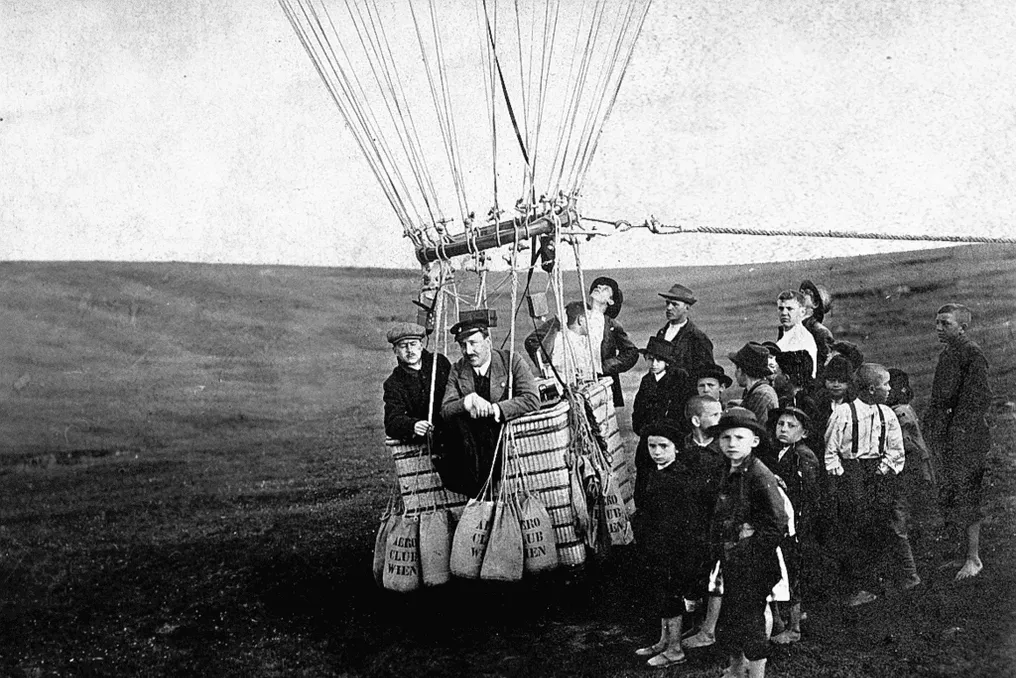
The first indications emerged between 1911 and 1912, when Austro-American physicist Victor Franz Hess conducted balloon flights to measure radiation at different altitudes. He concluded that radiation increased with elevation and that its origin was spatial. Hess discovered cosmic rays—energetic particles originating from the Sun, supernova explosions in the galaxy, and other extreme extragalactic sources—and that these interact with the atmosphere, which earned him the Nobel Prize in Physics in 1936.
This study was improved in early 1958 when the United States launched Explorer 1, its first artificial satellite. One of the onboard instruments, a Geiger counter, aimed to measure cosmic rays at altitudes higher than those reached by Hess's balloons. However, the data showed unusual behavior: at certain altitudes, the device registered such a high amount of radiation that it seemed to saturate.
Astrophysicist James Van Allen, from the University of Iowa, initially suspected instrument malfunctions. However, measurements made by Explorer 3, launched in the same year, confirmed that it was not an error, but rather a new and surprising discovery: the Earth was enveloped by a belt of energetic particles retained by the planet's magnetic field.
Subsequent missions, such as Pioneer 3 and Explorer 4, evidenced the existence of a second, more external region. These structures came to be named the Van Allen Belts in honor of the scientist who led their identification. Conceptually, the magnetic field creates an invisible structure around a magnet, guiding iron dust; in the case of Earth, this structure is much larger and interacts with electrically charged particles, mainly from the Sun, trapping them in large rings.
Unlike iron dust, the energetic particles in the Van Allen belts are not static. The inner belt is relatively stable and composed primarily of high-energy protons, while the outer belt is predominantly formed by electrons and constitutes a highly dynamic environment, with particles moving in all directions, some close to the speed of light.
The intensity and extent of these regions fluctuate according to solar activity, as new particles can be captured or escape. During geomagnetic storms, the belts can change significantly, as observed by the Van Allen probes in 2012. This data indicated the possibility of a third radiation region between the two main ones, although this is not permanent and disappeared after a few weeks of intense solar activity.
Although radiation does not make the Van Allen Belt an insurmountable barrier for crewed flights, concern about risks to human health and equipment function is relevant. Energetic particles can cause failures in electronic components, altering logical values in computer memories or modifying the programming of spacecraft.
In humans, the impact is similar: radiation has the potential to modify the 'bits' of DNA, resulting in damaged cells that can lead to organ dysfunction or cancer. However, the human body has a capacity to tolerate a certain dose of radiation without serious consequences. This tolerance allowed Hess to return unharmed from his balloon experiments, and it depends on the intensity and duration of exposure.
This understanding is vital for understanding how astronauts of the Apollo Missions, and currently Artemis, managed to cross the Van Allen Belt without problems. Although the belts represent a hostile radiation environment, if the spacecraft provide protection and the transit is quick, the dose absorbed by the astronauts is low and considered safe.
During the nine crewed missions of the Apollo Program, routes were planned to minimize radiation exposure. NASA monitored the doses received, whose averages ranged between 0.16 and 1.14 rad, with a large part of this exposure coming from passing through the belts. None of these doses exceeded the recommended annual limits for workers regularly exposed to radiation.
It is important to note that space radiation is not harmless. Outside the protection of the Earth's magnetic field, astronauts are subject to cosmic rays and solar particles. A major solar storm during a lunar or interplanetary mission could pose a much greater risk, constituting a significant challenge for future long-duration travel.
Therefore, studying the space environment is fundamental to identifying risks and charting the best paths for cosmic exploration. The Van Allen belts do not constitute an absolute barrier, but rather something that must be crossed quickly, like a wave breaking on the beach, to continue adventures across the vast cosmic ocean.