Jio files DRHP, receives SEBI approval, bringing IPO launch closer
Read more
YourStory [india, en]
yourstory.com

Jio files DRHP, receives SEBI approval, bringing IPO launch closer

One of the most anticipated Initial Public Offerings (IPOs) in India is the Jio IPO. As early as 2019, Mukesh Ambani, Managing Director of Reliance Industries, mentioned the company's plans to spin off Jio separately within five years at the annual shareholders' meeting. Following significant market share growth and portfolio expansion in recent years, Jio Platforms Limited filed its Draft Red Herring Prospectus (DRHP) with SEBI on June 19, 2026.

The upcoming IPO will provide retail investors with an opportunity to invest in one of the most interesting and modern businesses of the Reliance group. Jio Platforms Limited is the flagship for Reliance's digital services and digital connectivity. Its key operating subsidiary, Reliance Jio Infocomm, provides mobile, broadband, and enterprise communication services across India. The business is also present in digital entertainment, cloud technologies, artificial intelligence, and other digital services.

The Jio IPO will be a fresh issue of up to 270 million shares with a face value of ₹10 each. The final offer price will be determined through the book-building process. Since the offering does not include an Offer for Sale (OFS) component, existing shareholders will not sell their shares, and all proceeds from the issuance will go towards raising capital for the company itself.

According to the submitted data, Jio Platforms Limited has Reliance Industries Limited as its promoter. The IPO type is a 100% fresh issue, involving the issuance of up to 270 million shares with a nominal value of ₹10 per share, with a proposed listing on NSE and BSE. The size of the upcoming IPO, amounting to up to 270 million shares, represents approximately 2.9% of the post-issue equity capital. Market reports estimate the potential offering size at around ₹37,700 crore.

Jio enters the IPO process with a vast customer base and a growing digital business. At the end of the fiscal year 26, Jio Platforms had 524.4 million customers. Operating revenue was approximately ₹1.47 lakh crore, and EBITDA was ₹76,255 crore, while Profit After Tax (PAT) reached about ₹30,049 crore. In addition to traditional telecom offerings, the business is expanding to include fixed broadband access, enterprise connectivity, cloud services, digital entertainment, IoT, and AI-related products.

Investors should note several points. Firstly, valuation; the final price band will determine the entry cost for investors, and the large size of the IPO does not guarantee a high or attractive valuation. Secondly, a significant portion of the IPO funds is planned for the repayment or early repayment of borrowings, allocated up to ₹27,500 crore. Thirdly, business concentration must be considered: telecommunications remains a vital part of Jio's operations, so investors should analyze competition, pricing, subscriber growth, capital expenditure, and regulatory changes alongside the company's new digital ventures.

Finally, investors are advised to wait for the Red Herring Prospectus (RHP) and final IPO details before applying. The price band, lot size, subscription dates, and final issue size will provide a clearer picture of the public offering. The launch of the Jio IPO has approached due to the filing of the DRHP and receipt of observations from SEBI. However, since the final price band, issue size, and subscription dates have not yet been determined, investors should evaluate the company's financial performance, projected use of funds, and business prospects before applying.
Similar stories

NSE Initial Public Offering received nearly fourfold interest on the final trading day
Read more
yourstory.com

NSE Initial Public Offering received nearly fourfold interest on the final trading day

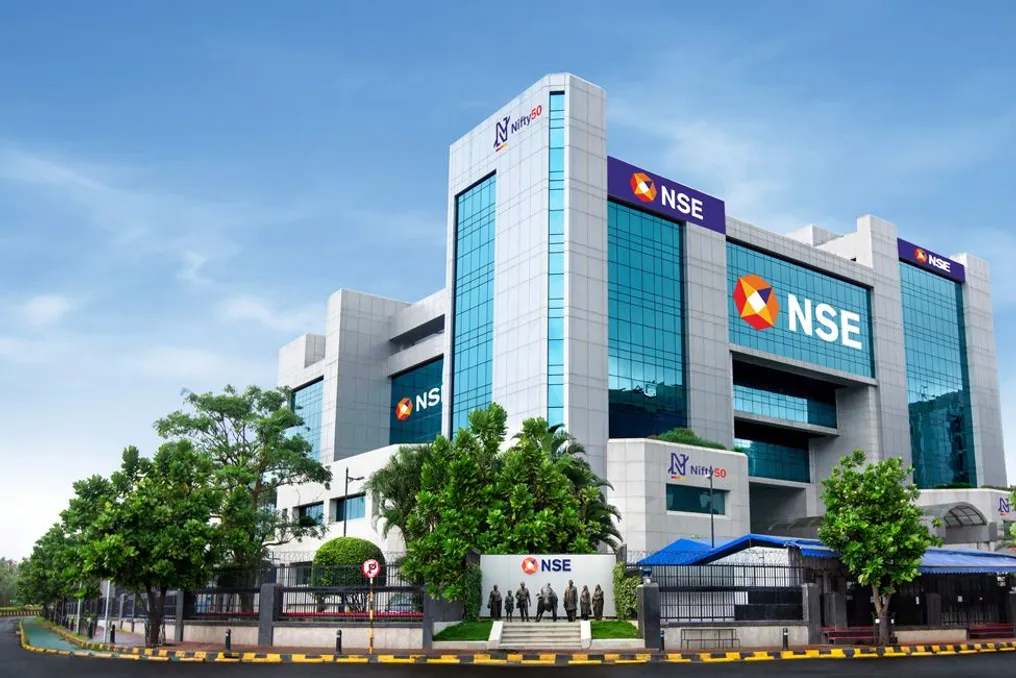
The Initial Public Offering (IPO) of the National Stock Exchange of India (NSE), which is the second-largest public offering in the country, attracted 3.92 times more applications on the final trading day on Monday. The volume of this offering was 22,569 crore rupees.

This IPO is the second largest public offering in India after the Hyundai Motor India IPO in 2024, which reached 27,870 crore rupees. Although the NSE IPO exceeded the LIC offer of 21,000 crore rupees in 2022, it still falls short of the record public offering from Hyundai Motor India.

According to BSE data as of 14:35, 34.78 crore shares (34,78,26,096) were applied for the IPO against 8.86 crore shares (8,86,42,911) that were offered for sale.

Different participant categories showed varying levels of interest: Qualified Institutional Buyers (QIBs) demonstrated a subscription rate of 7.99 times, the non-institutional investor share was subscribed 5.07 times, and the retail investor quota received 1.13 times subscription.

Last Wednesday, NSE attracted 6,746 crore rupees from anchor investors, including the state insurance company Life Insurance Corporation of India (LIC), Goldman Sachs, and Fidelity. Furthermore, sovereign funds such as GIC Singapore, Abu Dhabi Investment Authority (ADIA), and Norges Bank participated in the anchor round, along with Eastspring and HSBC Global Asset Management.

The IPO includes an Offer for Sale (OFS) of up to 12.64 crore equity shares from existing shareholders. The exchange set the price band for the IPO at 1,700–1,785 rupees per share. At the upper limit, this will provide a valuation of up to 4.42 lakh crore rupees.

Since the offering is entirely an OFS, the proceeds from the sale of shares will go to the existing shareholders, not to NSE itself. NSE shares are expected to debut on the market on September 24.

This public offering marks a significant milestone for NSE, whose listing plans were suspended for almost a decade due to regulatory hurdles, including disputes related to co-location. The reduction in the size of the OFS from the initially planned 14.9 crore shares lowered the total offering volume from the initial estimate of around 30,000 crore rupees.

SEMICON India 2026 concludes with 15 announcements from Indian startups and student teams
Read more
yourstory.com

SEMICON India 2026 concludes with 15 announcements from Indian startups and student teams

The Yashobhoomi Convention Centre in New Delhi hosted the conclusion of SEMICON India 2026 on September 19, 2026. The closing session featured 15 significant announcements covering both domestic processor development challenges and partnerships in sovereign computing and upskilling programs, according to a press release from the Ministry of Electronics and Information Technology (MeitY).

Throughout the day, special attention was given to Indian startups and student groups working on chip development using indigenous platforms. A new industry report was also presented, forecasting substantial growth in the country's semiconductor market.

The fifth edition of SEMICON India 2026 ran from September 17 to 19 and was jointly organized by the Indian Semiconductor Mission (ISM) and SEMI under the theme 'From Silicon to Systems: Building an Ecosystem.' Prime Minister Narendra Modi inaugurated the conference on the first day.

The event has become one of the largest semiconductor gatherings in the country, bringing together government bodies, global chip manufacturers, academic institutions, and startups within the broader Semicon India program aimed at developing capabilities in design, manufacturing, and packaging.

A highlight of the entrepreneurial activity during the closing session was the Digital India RISC-V Grand Challenge (DIR-V Grand Challenge), held by Maker Village as part of MeitY's 'Chips in Startup' Program. The competition attracted 1236 teams, involving 5045 participants, and three winning teams shared a total prize pool of 60 lakh rupees.

The team Meevisai Technologies, representing SASTRA University, won first place for an autonomous water surface cleaning robot built on the indigenous SHAKTI processor developed by IIT Madras. This robot is designed for cleaning ponds and temple water bodies. Second place was awarded to Digiscope LLP for the VEGA Chikitsa project—a digital stethoscope capable of real-time heart and lung sound capture and noise screening using machine learning, which utilizes the VEGA processor from CDAC. Third place went to Zetawave Technologies from IISc Bengaluru for a forest environment monitoring system that also operates on the VEGA platform.

Startup engagement continued through other activities. Under the Startup Mitra program, eleven startups presented their projects to over twenty venture capitalists, with Elphins Technologies taking first place, Meukron Technologies second, and Multi Nano Sense Technologies and CraftifAI sharing third place. A parallel SEMICON India hackathon gathered 3808 registered teams from 881 colleges and 1053 ideas, resulting in 10 teams participating in the grand final; the winners were teams from VIT Vellore and IIT Madras.

Additional data for the day was provided by EY and the India Semiconductor and Electronics Association, who released a report titled 'Semicon India 2.0: From Capacity Building to Ecosystem Leadership.' According to this report, India's semiconductor market could grow from nearly $64 billion in 2026 to $200 billion by 2035. The report also outlines a plan to transition domestic demand and design talent toward leadership in manufacturing, advanced packaging, and innovation.

Beyond the startup sector, C-DAC presented PARAM Vidya—a 'plug-and-play' AI laboratory complex for universities and SMEs—and PARAM Shavak-QS—a compact quantum simulation platform during the session. Partnerships were also announced between C-DAC and NLC India, as well as between C-DAC and Bharat Electronics Limited, to establish infrastructure for sovereign data centers and computing.

RISC-V is an open-source processor architecture without licensing fees, allowing any company or research group to develop chips based on it without paying royalties to proprietary chip design firms. For India, which has historically relied on foreign architectures in processor development, this is highly significant as it lowers the barrier for local developers to create their own chips from scratch.

Therefore, platforms like SHAKTI, developed at IIT Madras, and VEGA, developed by CDAC, hold significance beyond the monetary prizes at events like the DIR-V Grand Challenge. Every winning product created on these processors serves as a small testament to the capability of Indian teams to design and implement functional hardware on indigenous semiconductors, rather than merely assembling them around imported chips.

Collectively, the announcements from the closing session, supplemented by 41 memorandums of understanding and initiatives presented over the first two days, indicate that MeitY positions this event as a bridge between political intent and practical execution. With India setting ambitious semiconductor horizons for 2035 in the EY-ISEA report, the next test will be the ability of winners such as Meevisai and Digiscope, along with the announced upskilling partnerships, to scale from hackathon prototypes and Memorandums of Understanding to finished products and a skilled workforce in the coming years.

Popular