Weekly, the program Olhar Espacial presents two notable astronomical images from the previous week. In the most recent edition, an impressive deep-sky photograph and a record of a solar analemma were displayed.
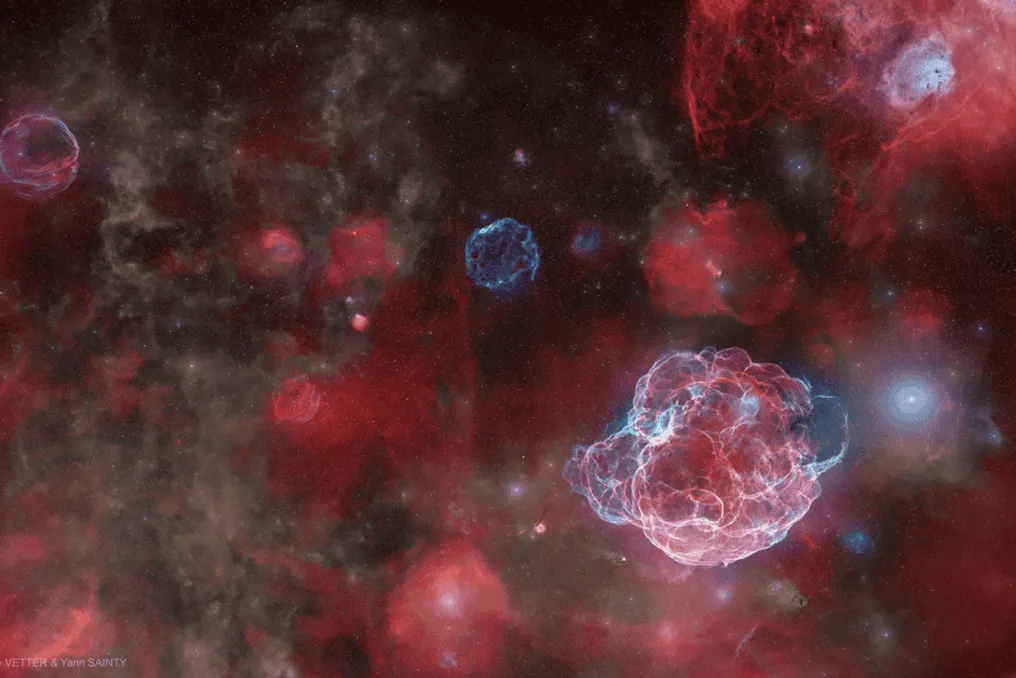
The first image covers a vast portion of the Plough constellation, an area so extensive that it could contain a thousand full moons. Although only a few star points are visible to the naked eye, even on a night without light pollution, this photograph, captured after more than two hundred hours of exposure, reveals clouds of ionized hydrogen (represented in red), oxygen (in blue), and stellar dust (in gray).
In this nebulous setting, bubbles formed by thin filaments, which are remnants of supernovae, can be observed. These elements function as cosmic ghosts, being the remains of stars that exploded tens of thousands of years ago, returning part of their matter to space.
The second image consists of a remarkable record of the solar analemma. This geometric figure in the shape of an '8' was constructed by combining photographs taken at the same time but on different dates throughout the year. When assembled, the composition illustrates the various apparent positions of the Sun during the annual cycle of Earth's orbit.
The geometry of this analemma is primarily determined by two factors: the inclination of the planet's rotation axis and the eccentricity of its orbital path. At the time the main photo was captured, recording the Callanish Stones, this monolithic temple, the Sun showed its lowest elevation relative to the horizon, suggesting that the image was taken during the winter solstice.