
Exchange experiences eighth week of decline; pressure remains on the market
Read more
Aaj Tak
www.aajtak.in

Exchange experiences eighth week of decline; pressure remains on the market

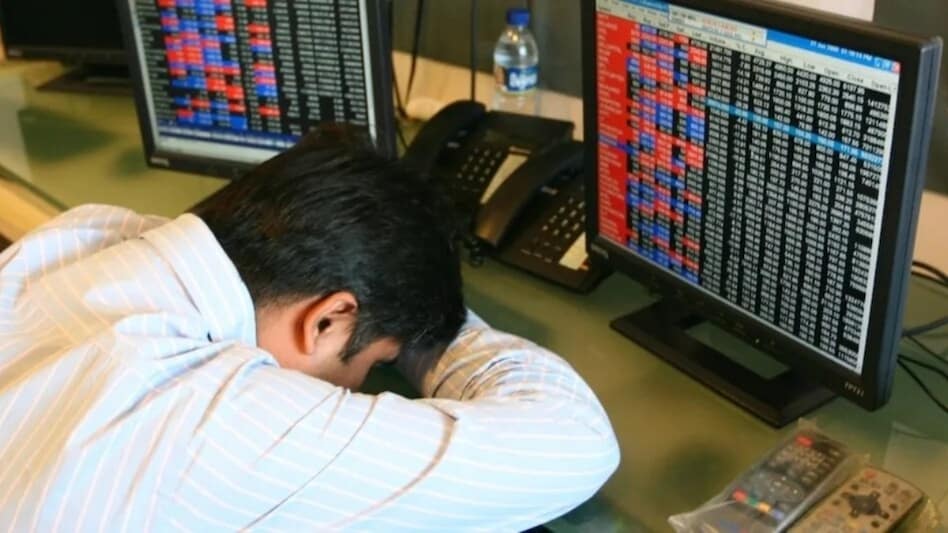
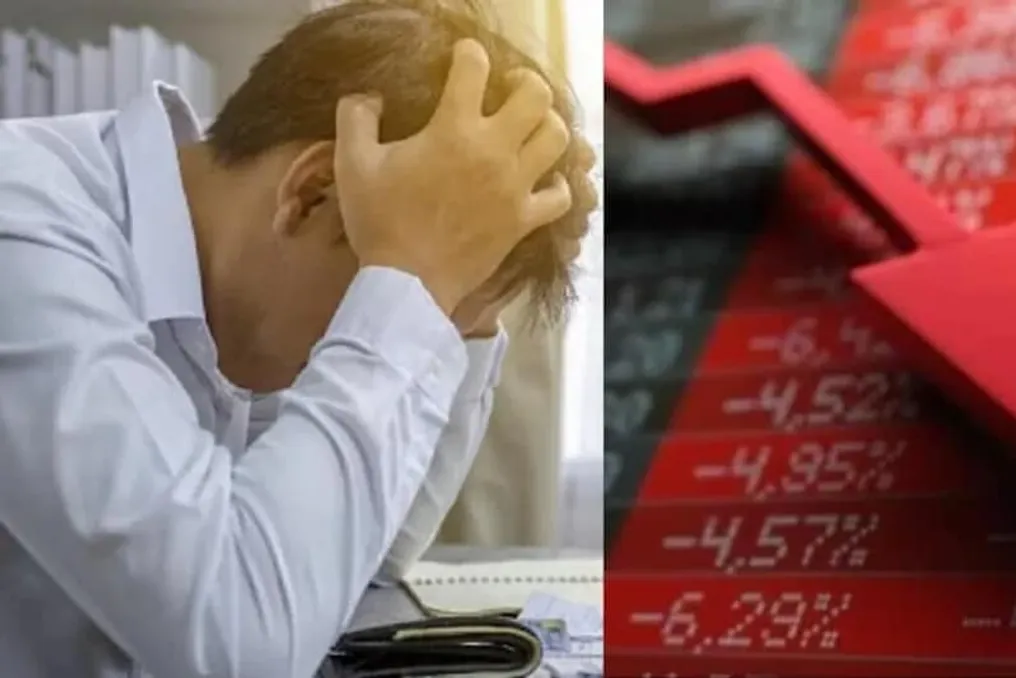
The stock market is currently under significant pressure. During this week, the market showed a decline for two days, and the downward trend is expected to continue. The main reason for the pressure is the ongoing sell-off by foreign funds, and the rise in crude oil prices has once again affected market sentiment.

This is the eighth consecutive week that the Sensex and Nifty indices have fallen. Such a continuous market decline over the last 25 years is unprecedented. However, there is a positive aspect during this downturn: the market will be closed on October 2nd in observance of Gandhi Jayanti.

This week, the NSE Nifty50 index fell by 3.11%, and the total drop over eight weeks reached 8.74%. Among the stocks that performed worst in Nifty was Tata Motors Passenger Vehicles Limited, which lost 19.48%. This was followed by Maruti Suzuki with a drop of 18.89%, Mahindra & Mahindra with a drop of 18.33%, Jio Financial Services with a drop of 17.25%, and TCS with a drop of 15.40%.

On the other hand, Kotak Mahindra Bank demonstrated a growth of 7.06% over 8 weeks, followed by Dr. Reddy's Laboratories with a growth of 2.92%, Adani Ports with a growth of 2.62%, and Coal India with a growth of 1.24%. During this week, Bajaj Auto, Apollo Hospitals Enterprise, and Titan were among the stocks with the largest losses in Nifty, where a fall of up to 10.96% was recorded.

On Thursday, the Sensex index, comprising 30 stocks, closed at 71,909.70 points, corresponding to a fall of 570.59 points or 0.79%. The Nifty index closed at 22,421.95 points, falling by 198.50 points or 0.88%.

Ajit Mishra, Senior Vice President of Religare Broking, noted that the markets faced strong selling pressure again, which intensified the downward trend. After a weak start to trading, when benchmark indices remained in a limited range in the first few hours, an intense period of selling began in the afternoon. Nifty dropped below its support level of 22,400-22,600, and Sensex broke its low level from April 2026 during trading.

Ravi Singh, Chief Researcher at Master Capital Services, stated that the Indian stock market is under pressure, and benchmarks have been moving down for the eighth consecutive week. The reasons cited for this are constant selling by foreign investors, rising global bond yields, and the ongoing tension in the Middle East. Concerns about a possible energy supply disruption through the Strait of Hormuz are supporting high crude oil prices, which increases inflationary and margin pressure.

Singh also added that FII sell-offs are putting pressure on market liquidity, while pressure on the rupee is exacerbating macroeconomic concerns. The rise in US Treasury yields is leading to increased investment by foreign investors in the US.
Similar stories

PB Fintech shares fell 43% in four days amid concerns over insurance regulatory changes
Read more
www.aajtak.in

PB Fintech shares fell 43% in four days amid concerns over insurance regulatory changes

Shares of PB Fintech Limited, the parent company of Policybazaar and Paisabazaar, continued their sharp decline during trading on Tuesday. The stock dropped by 6.24%, reaching a new 52-week low of 1080 rupees. Over four trading days, the shares lost 42.85% of their value.

The listing of PB Fintech shares took place in November 2021 at a price of 1150 rupees per share, but the price has now fallen below that level. This situation has led to significant losses for investors, and there is concern that the decline may continue.

The drop occurred after the Insurance Regulatory and Development Authority of India (IRDAI) published its consultation documents regarding commissions, operating expenses (EOM), and distribution improvements. According to the proposed changes, it is expected that commissions for product manufacturers may be reduced, which has had the greatest impact on PB Fintech.

The company issued a clarification regarding the stock price fluctuations, stating that the document is in the consultation stage and includes proposed policy changes open to feedback from the public and stakeholders. The company emphasized that this is not a final regulatory order or directive.

Furthermore, the company reported that the proposals presented in the consultation document include structural changes concerning the structure of distribution expenses and commission limits. Its main subsidiary, Policybazaar, functions as an insurance intermediary in India, promoting financial independence and social security. Over the past 18 years, the platform has invested significantly in supporting claims for various products such as education, digital registration, pre-sale consultations, as well as less common products like health and endowment insurance.

Even if the IRDAI proposals are implemented at this level, the company believes it will not lead to the complete cessation of operations.

The company added that while it assesses the impact of these proposed changes jointly with other stakeholders and is negotiating with IRDAI, it will submit a detailed response to IRDAI and relevant authorities during the stipulated consultation period.

The BSE and NSE exchanges have placed PB Fintech under short-term observation. Exchanges use short-term and long-term ASM structures to notify investors about unusual price movements and increased volatility.

Ravi Singh, Chief Research Director at Master Capital Services, suggested that the stock looks weak on the chart.

Investors lose 200 billion rupees due to sharp fall in Indian market
Read more
www.aajtak.in

Investors lose 200 billion rupees due to sharp fall in Indian market

Despite strong growth in the American stock market on Monday, the Indian market showed a decline on Tuesday. Following trading, the 30-stock Sensex index closed at 74,529.08 points, falling by 329.91 points, or 0.44%. Meanwhile, the Nifty 50 decreased by approximately 85 points, amounting to 0.36%, and finished at 23,329.00.

On Tuesday, the trading session of the Indian stock market started promisingly, but then a gradual decline was observed. At one point, Nifty dropped to 23,285.75. Nifty opened at 23,454.05 and reached a high of 23,489 points during trading.

The unexpected change in investor sentiment in the Indian market, despite positive signals from global markets, surprised them. Even with falling crude oil prices, on September 22, selling pressure was observed in the Indian stock market. On the second day of the week's trading, the market closed in negative territory due to sell-offs in the IT, banking, and consumer goods sectors.

On the day of the weekly expiry, Nifty Sensex fell by approximately 600 points from its daily high, causing Nifty to drop below 23,300. The Nifty Midcap 100 and Nifty Smallcap 100 indices also closed in the red, with most key sector indices remaining negative on Tuesday. The total market capitalization of companies listed on BSE fell by more than 200 billion rupees, which means investors lost 200 billion rupees.

Nevertheless, some stocks showed good growth. Among them were a rise of Kol India by approximately 3.2%, an increase in Indigo by 1.8%, an increase in Eternal by 1.8%, and a strengthening of Titan shares by approximately 1%.

Speaking of the main falling stocks, financial and consumer stocks exerted the greatest pressure on the market. Bajaj Finserv fell by 1.4%, Tata Consumer dropped by 1.6%, Trent fell by 1.2%, and Bajaj Finance shares showed a decrease of 1.2%.

The index declined due to a broad sell-off in the IT, banking, financial services, and capital goods sectors. Despite the price of Brent Crude falling to approximately $100 per barrel for four consecutive sessions, the market could not recover.

The main reasons cited for the market decline are the withdrawal of funds by foreign investors and geopolitical uncertainty, which continue to affect market sentiment. Additionally, concerns remain regarding inflation and import costs.

Popular