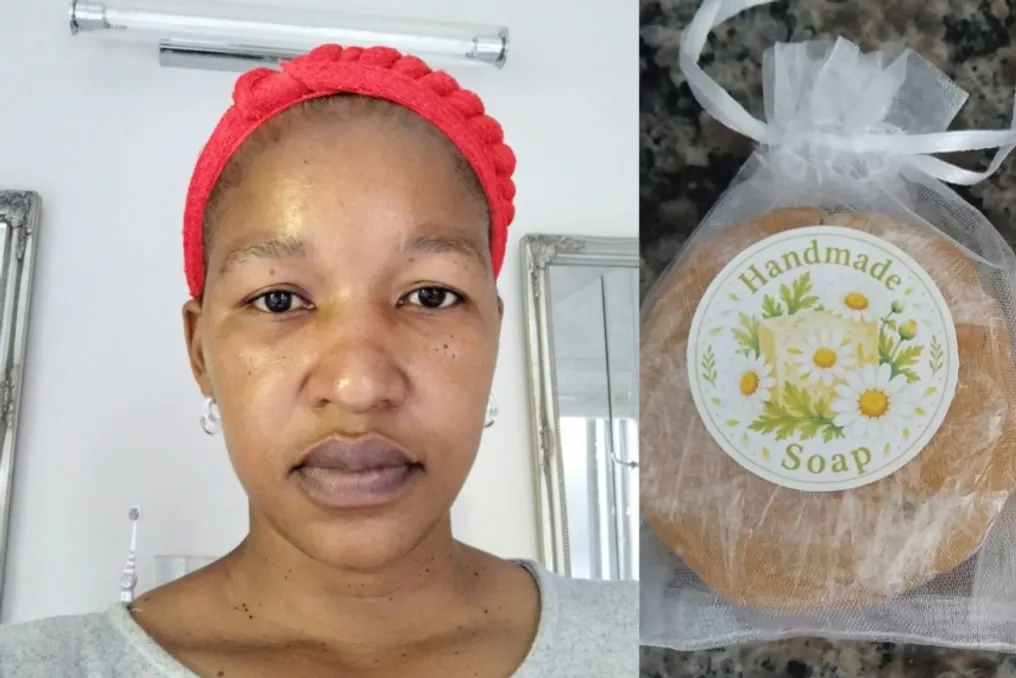
Growing up in KwaZulu-Natal, Nkokuhanya Dlamini witnessed chamomile from childhood, which her grandmother used as a universal remedy for skin rashes and digestive issues, passing down this knowledge within the family.
Years later, when Dlamini faced difficulties finding an affordable treatment for her child's rash, she recalled the traditional use of chamomile. This episode became the starting point for creating the Dandelion Glow brand.
Dlamini states that her grandmother, Maria Magubane, instilled in her from an early age the idea that 'the earth is a pharmacy.' Despite lacking formal education, her grandmother possessed extensive knowledge of medicinal plants and their traditional use in treating common ailments.
She recalls: 'When our stomach hurt or rashes appeared, she would go outside, gather leaves, and brew us tea.' Today, Dlamini grows chamomile at her home in Ntshongweni, Hammarsdale, as part of her Dandelion Glow business. She cultivates the perennial plant from seeds, and the climate of KwaZulu-Natal allows her to grow it year-round.
'It doesn't need a special season. It is perennial, so when I cut the leaves, it regrows itself,' she explains. Dlamini regularly waters the plants and does not use chemical fertilizers. She collects the leaves and flowers, leaving the roots in the soil for further growth. When she needs roots for tea, she extracts them and sows new seeds to maintain stock.
Dlamini started her business in early 2026 without seed capital but with an abundant supply of chamomile already growing on her plot. Working as domestic help, she studied plant care and secretly developed her products. Dlamini aimed to create accessible organic products from plants that people often overlook. She spent time researching, practicing, and testing her ideas before putting the products on sale earlier this year.
The assortment includes chamomile root herbal tea with honey, consisting of 20 natural caffeine-free sachets, chamomile golden juice made with raw honey, lemon, and chamomile, and chamomile and honey soap. The soap is handmade in rose shapes using a natural glycerin base, chamomile, and honey, along with coconut oil, shea butter, and a little lemon for fragrance.
Dlamini produces everything in small batches at home. She notes that customers have responded positively to the products, although small-scale production makes meeting demand difficult. Her mission is to help people naturally glow from within while promoting sustainable gardening in their communities.
The operation runs from a small space of about 3x2 meters, with production taking place in the home kitchen. Dlamini says that search engines helped her learn more about chamomile and develop her products. She also considered testing her products and obtaining necessary SAHPRA documentation but feels that costs remain a problem. 'I am still developing the business to afford that. That is my next big goal,' she shares.
Her experience working as domestic help also influenced her approach to business. Dlamini asserts that this work taught her discipline, care, and the value of manual labor. 'These are values that I now put into my own brand.' She has built a customer base through her community and primarily through social media. She wants to expand the business to a level that can meet demand while maintaining the small-batch approach.
Dlamini hopes to eventually have her own chamomile farm and learn to create more processed products for her community and surrounding areas. She believes that access to land, training in herb production and agro-processing, and consultation on product blending and safety will help her move forward. 'To achieve this goal, I need support in the form of funding for proper equipment and affordable packaging, as well as for testing my products for certification. I also need mentorship on how to transition from a kitchen business to a real farming enterprise.'