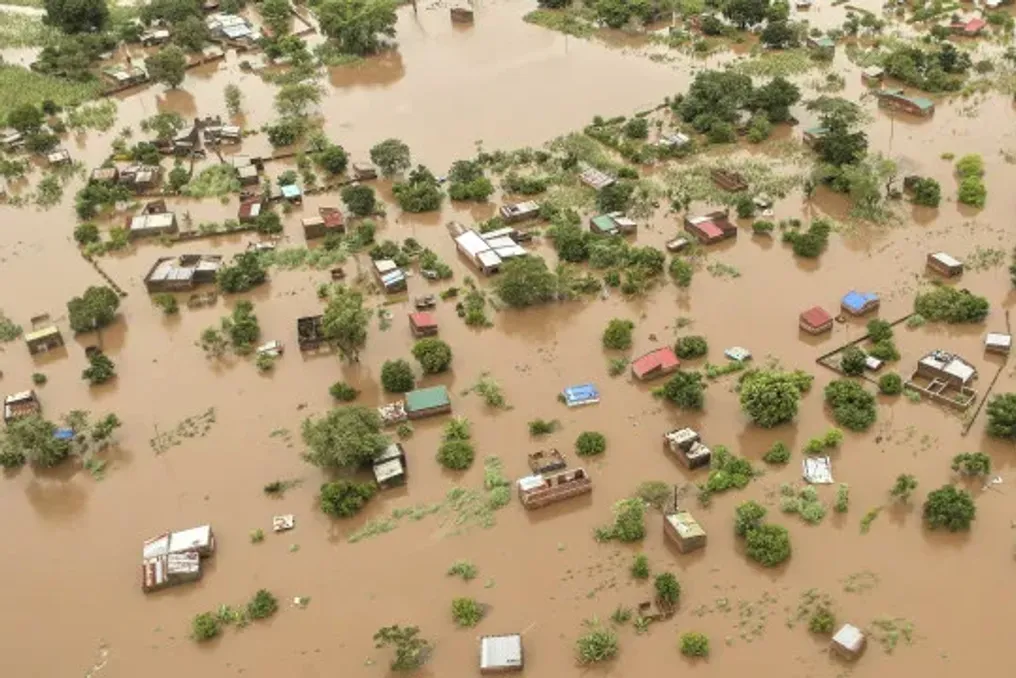
Minister Carla Loveira, speaking at the opening of the II Financial Ministry Coordination Council, presented a report on the main challenges facing public finances this year. She noted that the floods that struck the country in December 2025 and January 2026 were among the most severe in the last decade.
These natural disasters resulted in the death of over 100 people and affected approximately 724,000 people, of whom 691,000 were directly impacted. Furthermore, thousands of homes were destroyed, and according to estimates during the rainy season, over 1.078 million Mozambicans were in the affected zone, putting pressure on state accounts with damages estimated at about 2% of GDP.
According to Carla Loveira, extreme weather events continue to pose a significant threat to the country's economic and social development, requiring the mobilization of additional resources for response and recovery.
The provinces of Gaza and Maputo suffered the most damage, where schools were destroyed, roads were cut off, and the livelihoods of more than 700,000 farmers were threatened. This phenomenon dictates a new reality: every climate event becomes a fiscal shock that requires reconstruction, social protection, and budgetary resilience.
Loveira emphasized that this situation forces everyone, especially the financial sector, to abandon the post-disaster response approach and adopt a culture of proactive prevention. This means the necessity of incorporating climate risks into budget planning, protecting vital allocations, creating rapid response tools, and assessing state projects for their ability to withstand shocks.
She insisted that recovery must mean not just a declaration, but the creation of safer schools, more resilient roads, functioning drainage systems, and social protection mechanisms capable of reaching families before vulnerability turns into permanent poverty.
The pressure on state accounts caused by the floods also prompted the Government to adjust its priorities and strengthen internal resource mobilization. In this regard, when revising the Economic and Social Plan and State Budget (PESOE) for 2026, the forecast for domestic resources was increased by 3.6 billion meticals (49 million euros), rising from 442.9 billion meticals (six billion euros) to 446.5 billion meticals (6.1 billion euros).
This increase is due to the inclusion of additional revenues from liquefied natural gas projects in the Rovuma basin. Loveira added that strengthening domestic collection is particularly important during a period when the country faces increased pressure on state expenditures related to infrastructure recovery and enhancing climate resilience.
The Minister also argued that revenues from natural resources should be used strategically to support investments that promote the economy's resilience to climate shocks and reduce structural vulnerability. She stated that the country's strategic resources must contribute to the structural transformation of the economy and the well-being of current and future generations.
Loveira noted that the increasing frequency of extreme weather events heightens the need to align development policy with climate change adaptation measures, especially in a country frequently affected by floods, tropical cyclones, and drought. According to the data presented, climate impacts are one of the main risks to economic performance and the implementation of state policy, requiring regular allocation of funds to support affected populations and restore damaged infrastructure.
The Government believes that the increasing frequency of extreme events requires greater integration between economic, budgetary policy, and climate adaptation policy to reduce future costs from natural disasters on public finances.