Crossing an international border usually implies a long journey, passport checks, and a noticeable change in scenery. However, in some corners of the world, two countries are located so close to each other that travelers can experience both in a single day.
These destinations range from villages where the border runs through homes and streets to European cities connected by bridges, historical fortresses facing each other, and an impressive waterfall divided between Argentina and Brazil. These locations make international travel part of the experience itself.
The contrast can happen surprisingly quickly: just minutes after crossing the border, you might notice a change in language, cuisine, architecture, or currency.
The border running through Baarle is one of the most unusual. The Belgian municipality of Baarle-Hertog and the Dutch municipality of Baarle-Nassau are intertwined in a complex system of enclaves. There are only 30 enclaves in total: 22 Belgian enclaves surrounded by Dutch territory, and eight enclaves belonging to the Netherlands. In some places, the international border runs directly through roads, gardens, and buildings.
In the village, the border is clearly marked with special cobblestones and metal plates indicating where Belgium ends and the Netherlands begins. Some buildings even have different national license plates depending on which side of the border their entrance door is on.
The easiest way to explore Baarle is on foot. A four-kilometer walk takes visitors through the center of the village and crosses the border several times. Longer routes for hiking and cycling are also available, including a cycle route that crosses the border more than 25 times. During the walk, you can try Belgian and Dutch food, explore the village, and look for border markers underfoot. It feels more like observing how two nations can share a small piece of land rather than just ticking off two countries on a list.
Gorizia, located in northeastern Italy, and Nova Gorica in Slovenia are side-by-side, offering one of the most accessible cross-border urban experiences in Europe. Despite the complex history of the 20th century, the border looks much less imposing today. One of the most recognizable spots demonstrating this connection is the Transalpina square, a public space linked to both cities and their shared European identity.
A walking tour program, created as part of the European Capital of Culture program, connects attractions on both sides. Routes run from the castle of Gorizia to the Transalpina square and into Nova Gorica. You can spend the morning exploring the historic center and castle of Gorizia, then head toward the border. Next is the crossing into Nova Gorica, where the atmosphere and architecture change. The tour focuses on both the history of the border and the act of crossing it.
This area is particularly interesting for travelers who love places where history, architecture, and modern culture intertwine. The cross-border program will continue after the year of the European Capital of Culture in 2025, offering self-guided walking tours until 2027.
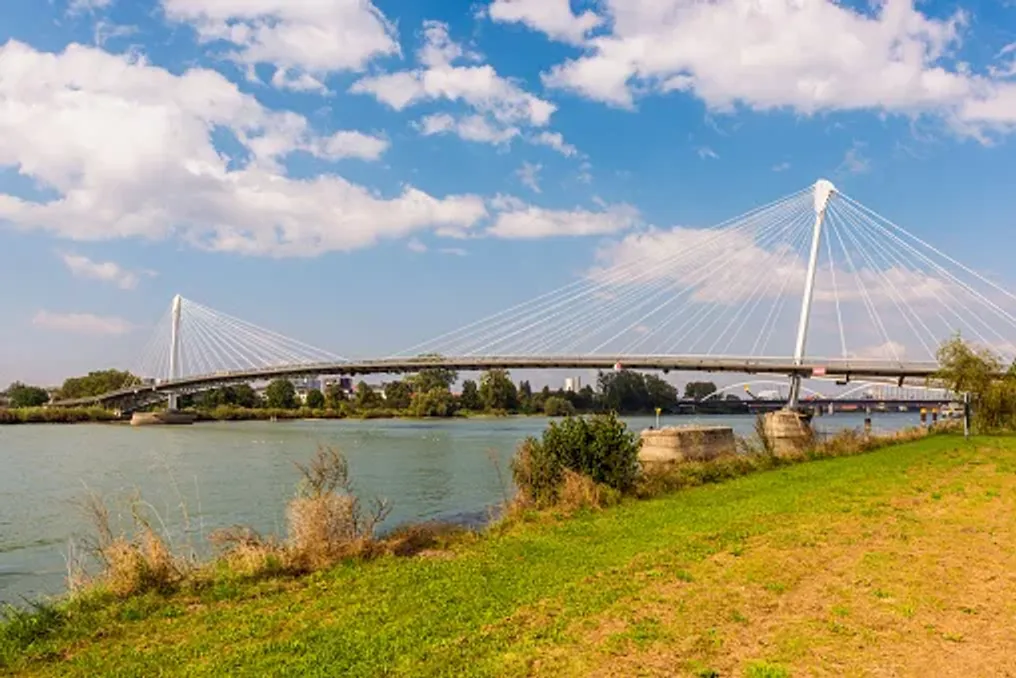
The Rhine River separates Strasbourg in France and Cologne in Germany, but the crossing between them is exceptionally easy. The Strasbourg Tourist Office describes Cologne as an easy trip from the city, and the Rhine serves as a natural dividing line. Travelers can cross the border by tram, on foot, or by bicycle across the De-Riv park and its pedestrian bridge.
The 'Two Shores' pedestrian bridge is especially appealing to hikers and cyclists, as it offers views of the Rhine and symbolizes the close relationship between France and Germany. The day can start by exploring the old streets, canals, and characteristic architecture of Strasbourg, then heading to the river. After crossing into Cologne, you can spend the second half of the day on the German side, where the atmosphere changes, but the landscapes remain connected. The wider area allows continuing towards the Black Forest, where villages, vineyards, and mountain landscapes are within easy reach of the border. This is a perfect example of how a European border can be part of a day's sightseeing, rather than an obstacle.
The border between Portugal and Spain offers a completely different experience of being in two countries. Elvas is near Spain and has guarded one of the main routes between these two nations for centuries. Its vast fortifications are now a UNESCO World Heritage site and include the historic center, the Amoreira aqueduct, Fort Santa Luzia, and Fort Grasa. The military appearance of the city speaks to a time when the border was an object of defense, not just a place to cross.
One can start the journey in Elvas by strolling through the historic center and admiring the massive defensive walls and fortifications. Then, one can cross into Spain and continue to Badajoz, another historic city connected to this border. These two cities form part of the long Portuguese-Spanish border landscape, where Elvas and Badajoz historically functioned as opposing fortified citadels. The contrast makes this option particularly valuable for history lovers: one side offers Portuguese architecture, cuisine, and fortified landscapes, while the other presents a distinctly Spanish atmosphere. Elvas itself deserves attention, even if the purpose of the visit is the dual-country element. UNESCO describes its fortifications as the largest surviving dry moat system with bastions in the world.
Few borders compare to Iguazu. Puerto Iguazú in Argentina and Foz do Iguaçu in Brazil are located on opposite sides of the international border, and the mighty Iguazu Falls form the central part of this region. Instead of simply crossing between two cities, travelers can feel in one day how the same natural wonder looks from two national perspectives.
The Argentine side is known for its extensive network of trails and viewpoints that allow visitors to get close to the cascades, while the Brazilian side provides wide panoramic views of the waterfall. A practical plan could involve starting early on one side, crossing the border, and continuing on the other. This experience will be more rewarding if enough time is allocated for immigration procedures, keeping in mind that both national parks are significant attractions in themselves. The result is one of the most dramatic examples of a border landscape: the scenery does not stop at the line, but the impression of it changes depending on which country you are in.
The US-Mexico border represents one of the most vivid cultural transitions on this list. San Diego is less than 32 kilometers from the center of Tijuana, and the San Ysidro crossing connects these two urban areas. The San Diego Tourism Authority emphasizes the close connection between the region's art, cuisine, and cultural traditions.
You can spend the morning in San Diego and then head south to the border. Once in Tijuana, you can explore the city's cuisine, art, and neighborhoods before returning to the US. The changes can be striking: language, food, architecture, and the rhythm of daily life noticeably shift despite the relatively short distance between the cities. It is important to approach this crossing differently from the open European borders on this list. Travelers require proper documentation, and current entry and re-entry requirements must be checked in advance. The San Diego Tourism Authority notes that requirements vary by nationality, and pedestrians entering Mexico through San Ysidro must have appropriate documentation, including a passport. Since the border can be busy, sufficient time should be allocated instead of planning a strictly scheduled itinerary.
Seeing two countries in one day is not so much about collecting stamps in your passport. It is about noticing how quickly geography can change the feeling of a place. In Baarle, the border may run through a house; in Strasbourg, a bridge spans the Rhine; in Gorizia and Nova Gorica, two cities reveal a shared history; around Elvas and Badajoz, fortifications tell stories of an old border; in Iguazu, the natural wonder belongs to two countries simultaneously, and San Diego and Tijuana offer one of the most striking cultural transitions in the world. Regardless of the chosen border, always check current entry requirements before traveling. Visa rules, passports, insurance, vehicle requirements, and border procedures vary significantly between countries and can change. However, the most interesting part is what happens after crossing: the landscape may seem familiar, but the language, food, history, and daily life can suddenly feel completely different.