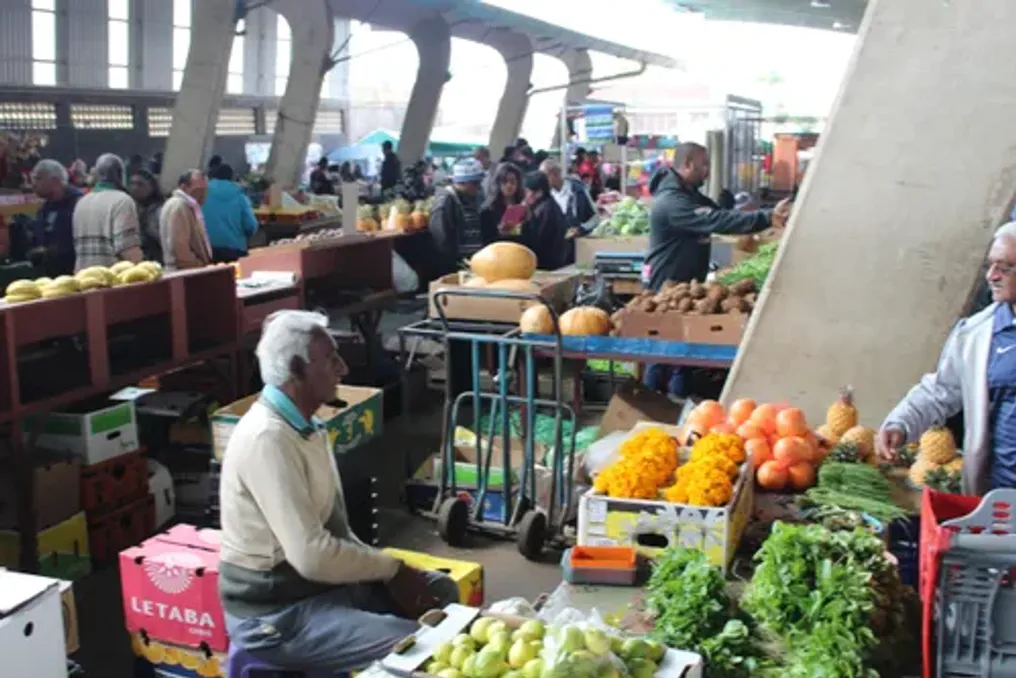
Agricultural workers who cultivated either their own or rented land formed the backbone of the province's food supply. Many of their descendants today sell their produce in markets such as Bangladesh, Verulam, and Tongaat.
Phillis Naidoo exclaimed, 'Invade the land!' when a colleague approached her with a problem regarding obtaining permission to plant on an open plot in Chatsworth. At first glance, in the context of illegal land occupation in the country, this sounds like an extremely irresponsible instruction from a hero involved in the struggle for South African freedom. However, the motivation was to grow food crops to supply the voluntary kitchen for school lunches.
The state feeding program, while nobly saving millions of children from hunger, is rife with corruption and waste. One teacher once recounted how she was shocked that one or two of her colleagues could take porridge before their hungry students even managed to sit down for breakfast.
The Natal Railway Company and the Durban Corporation managed worker barracks for over 80 years in railway and warehouse dormitories near Somsteu Road. Despite meager rations, malnutrition was a common ailment, and community members actively helped provide milk for the children.
Land is a powerful resource from many perspectives. Descendants of Indian indentured laborers vividly remember the aspiration of people freed from plantations to save money to purchase a piece of land. Even a small plot, which could be called one's own, was sufficient. The banking system assumed that the matriarch of the extended family would collect all unused earnings of all members before distributing necessary allowances. No disputes arose; everyone received a travel pass and even a little money for cigarettes.
Everyone understood that the mother at home bore responsibility for the general welfare. If you ask among people who owned land in Umgeni Road, Riverside, Clairwood, Cato Manor, Farm Chatsworth, or Sy View, there is usually a common thread—collective savings to purchase that property. These people were eventually dispossessed of their land due to the Group Areas Act of 1950 or other legislation, followed by subsequent forced evictions.
The history of land dispossession runs deep. Among the 'push factors' that led to indentured labor from the Indian subcontinent in the 19th century was the loss of ancestral lands. This occurred either due to invasion by the British with superior weaponry or due to moneylenders issuing loans during droughts or other calamities using land as collateral.
Shakespeare readers know about the moneylender Shylock demanding 'a pound of flesh.' Poor Indians were forced into the hands of 'arkatis,' who recruited workers for slave conditions in distant colonies of Natal, Fiji, Mauritius, Reunion, Guyana, Suriname, the Caribbean, and others.
For indigenous populations across the African continent, the experience proved even more devastating. Poet John Samuel writes with epic fervor about the Chimurenga uprising in 1915 in Nyasaland (now Malawi). The fight against colonialism and land dispossession there led to the martyrdom of its leader, John Chiume, who popularized the inspiring slogan: '...strike and die...'
In South Africa, whether through endless wars of conquest or simply the order of a pen, as happened in the Native Land Acts of 1913 and 1936, Africans were instantly dispossessed of their land and became strangers in their own country.
Journalist and intellectual Sol Plaatje lamented: 'A native's cattle can be driven off grazing lands, and widows can be evicted from their homes with their belongings on their heads because of this act... I saw the small children tremble... and when their mothers told me about the homes they left, and the deprivations and the impact they suffered after eviction, I could barely hold back tears.'
It is no surprise that land ownership and access remain one of the most emotional topics in South Africa. Over the last 32 years of democracy, the government has actively addressed issues of land restitution and redistribution. This task remains unfinished. One tragic consequence has been the unwillingness or inability of people to work the land. Despite huge grants in KwaZulu-Natal for establishing cooperatives, reports show very little success. There is a clear reluctance to get one's hands dirty in the soil.
There is a compelling story told by another freedom fighter veteran, Professor Ben Turock, who emigrated to newly liberated Tanzania in the early 1960s with the South African Communist Party. He recalled how the socialist 'Ujamaa,' with the village at the center of socio-economic transformation, led by Mwalimu Julius Nyerere, required everyone to engage in tilling, planting, or harvesting at certain times of the day.
Turock taught at the University of Dar es Salaam. When the bell rang, they rolled up their sleeves and took up hoes and shovels. Between classes, there were no beautiful flowers. Food crops grew everywhere, supplying university kitchens and the wider community. Ujamaa became a revolutionary grain that never truly blossomed in the capitalist world that Tanzania was supposed to function within.
It can be confidently assumed that this model was successfully replicated closer to home in Newlands West high school, where the foresight of the principal, his team, and energetic community leaders created a successful vegetable garden on abandoned land. They not only implemented sustainable farming methods but also cared about water usage, collecting it from groundwater. As in Tanzania, surpluses supported the surrounding community and were sent to market. Our country has plenty of land; we do not need to own it to work on it.