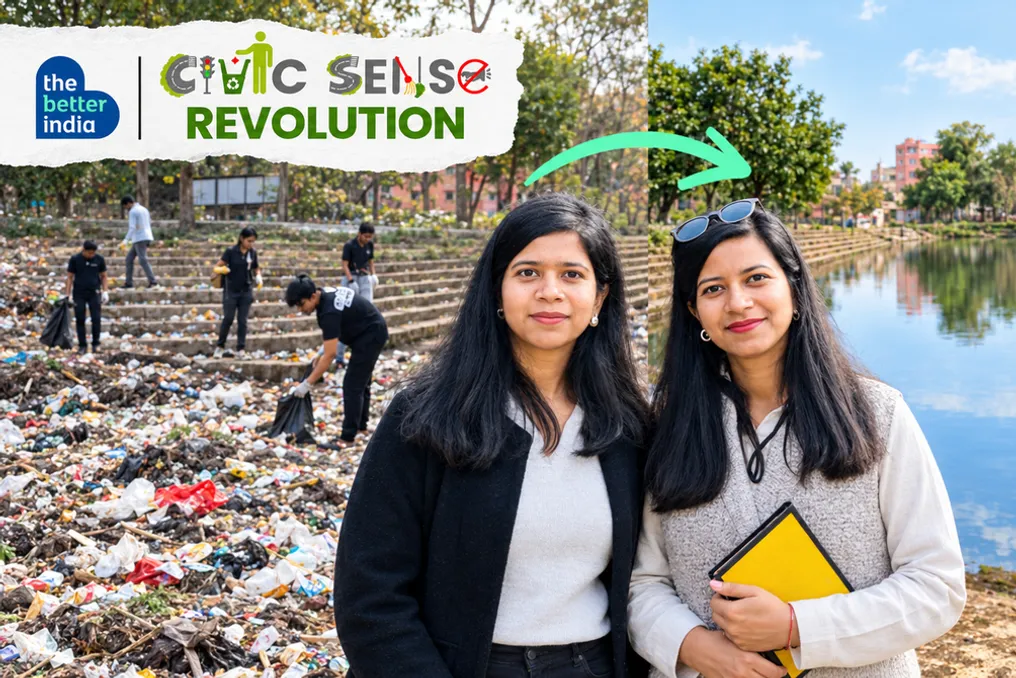
After Anjali Niraj noticed a heavily polluted picnic area, she and her sister Ruchi decided to take action. Local residents had loved the spot for years for its clean water and dense shade, but it was gradually being buried by bottles, wrappers, and plastic bags left every weekend.
Anjali Niraj shared her indignation in an Instagram video, which spurred the sisters' actions. In 2023, they founded the 'Vasudha Kalyan United' Foundation in Hazaribagh, initiating one of the longest community-led campaigns against plastic waste in Jharkhand's water bodies.
By mid-2025, reports indicated a total collected waste volume of 50,000 kg. However, the latest figure published by the foundation as part of The Better India's 'Heroes of Civic Consciousness' campaign exceeds 80,000 kg. This waste was extracted from rivers, lakes, ponds, and waterfalls across the state.
This figure is the result of hundreds of clean-up drives conducted by volunteers, not a single event. The sisters started their work where the problem was most apparent—at reservoirs and water bodies around Hazaribagh. Their approach was simple: invite residents, provide tools, remove trash, and show people how much had accumulated in places they considered their own.
In 2025, it was noted that the foundation mobilized local communities for direct participation instead of waiting for municipal services or government agencies to act. This method allowed them to go beyond their hometown. Recent clean-up drives covered the Tamasin waterfall, Tilaiya dam, and Hazaribagh lake—sites included in the Jharkhand Tourism Department's list of the state's water attractions. These are precisely the scenic spots that attract the most visitors and, consequently, leave behind the most trash.
The Tamasin waterfall with its multi-tiered cascade through the forest and the Tilaiya dam, whose reservoir and surrounding hills are described by the tourism department as a popular picnic spot, present a particular irony: landscapes people visit for beauty become accumulation points for what they leave behind.
Every location where the sisters work demands the same thing: return. A body of water cleaned on Sunday is not untouched by the next weekend. Anjali and Ruchi emphasized this issue from the beginning, so their work proceeds along two parallel tracks. The first is the cleanup itself—physical, visible, and measured in tons. The second direction is awareness raising: lectures in schools, talks at village meetings, and presence at picnic spots where illegal dumping most frequently occurs.
The logic of this approach is similar to what enabled the success of analogous initiatives elsewhere. The Better India highlighted projects like Chinu Kwatra's 'Beach Warriors' in Mumbai, where nine years of weekly cleanups on four beaches changed not only the volume of collected waste but also the perception of volunteers and passersby regarding who is responsible for public space. As Kwatra noted, changes happen slowly, but they do manifest.
For the 'Vasudha Kalyan United' Foundation, the awareness-raising component aims to bridge the gap between the cleanup itself and the following weekend. Schools and tourist sites are places where the conversation can reach people before their habits become entrenched during a day trip, rather than after it.
In India, certain types of single-use plastic with high potential for waste generation have been banned since July 1, 2022, according to Plastic Waste Management Rules. According to data from the Ministry of Environment, Forest and Climate Change, the country produced about 4.14 million tons of plastic waste in 2022–23. The Jharkhand State Pollution Control Board named plastic waste management in the state as an issue requiring coordinated efforts from communities, agencies, and local law enforcement.
The rules create the framework, but what fills the gap between the rule and behavioral change is usually a group of people willing to constantly make the problem visible until it cannot be ignored. This is what Anjali and Ruchi did for two years.
Over 80,000 kg is an astonishing figure, but it also serves as a reminder that waste continues to accumulate. Every bottle, every wrapper, every discarded bag on the riverbank represents a choice made by a person in public space, and the work of two sisters who felt this was not enough.
The clean-up drives and awareness sessions will continue. The rivers and waterfalls of Jharkhand that were cleaned once will require repeated cleaning. What Anjali and Ruchi are truly building by cleaning water bodies and holding conversations is the understanding that responsibility for public space does not end when the picnic does.
The kilograms removed are a measure of the work done. The measure of how well it worked will be how little needs to be cleaned next time.