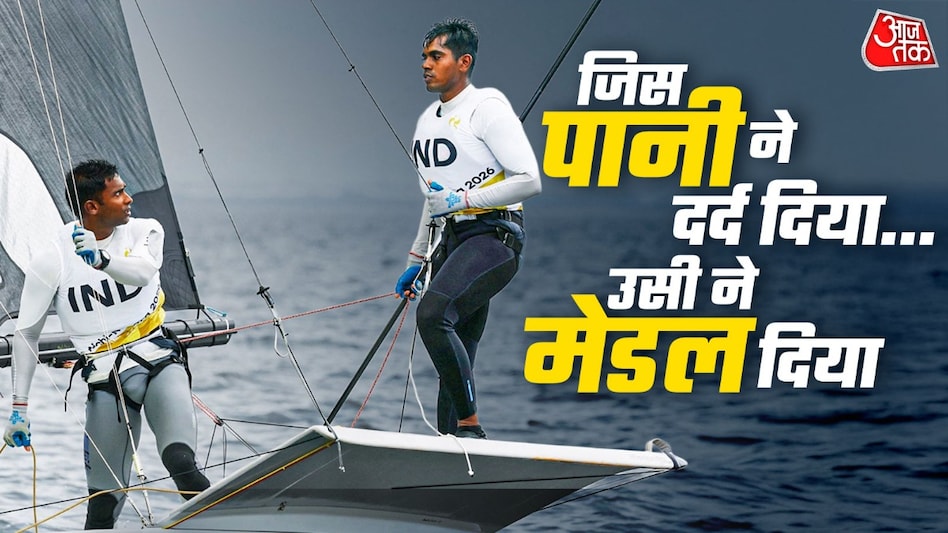
Two brothers from Kerala won a silver medal in rowing at the Asian Games
Read more
Aaj Tak
www.aajtak.in

Two brothers from Kerala won a silver medal in rowing at the Asian Games

After a flood claimed one of his father's sons, the sea helped him find a new path in life. Prince Kurisinkal Noble from Ernakulam, Kerala, along with his cousin Manu Francis, achieved a historic feat at the Asian Games. They won a silver medal in men's sweep rowing, becoming the first team in Indian history to win a medal in this discipline.

For Noble, this silver medal is not just an athletic achievement; it is connected to painful memories from 2018 when his fisherman father died during a devastating flood in Kerala. The sea was near their home, and Noble's connection to water was deep from childhood, much like his father's. This connection later led him to rowing.

Noble started rowing at the age of 13, in 2009, while in seventh grade. His cousin Manu Francis took up the sport at 14. Both began training in the swamps of Kerala and have been rowing together for about ten years.

Noble noted: 'My father was a fisherman, and our house was very close to the sea. So we had a connection with the sea. That's why it was easy for us to start rowing.'

However, a turning point occurred on this journey that changed Noble's life. During the 2018 flood in Kerala, he lost his father. Today, the Asian Games silver medal is akin to fulfilling an unfulfilled dream for him. He said: 'My father is no longer alive. He died during the Kerala floods in 2018. With this silver medal, I achieved more than my father wanted. After his passing, my mother became my biggest support.'

Noble dedicated this medal to his father, mother, coach, supporters, and the people of the country.

Prince and Manu are not just relatives; they are partners for a decade. Both trained at the Mumbai Yacht Club and won a bronze medal at the Asian Championships in 2023. This long-term collaboration has been their main strength at the Asian Games.

Manu shared his thoughts: 'We are cousins and grew up together. We have been rowing together for the last 10 years. We don't need to talk much. We understand each other and handle bad days easily.'

This was their first participation in the Asian Games, and they immediately won silver. Noble admitted that strong winds affected hopes for gold, but he did not use it as an excuse. He added: 'Winning silver at the Asian Games is very important to us. It could have been gold, but there was the situation with the strong wind. Although it is not an excuse.'

Now, after this silver, their dream is not limited only to medals. Manu wants their success to draw new attention to rowing in India. Their next goal is the National Championship, which will take place in November. However, this Asian Games silver will forever remain the brightest chapter of their story—a story where a flood took away a father, the sea showed the way, and two brothers wrote a story for India on the water.
Similar stories

Despite 10 Gold Medals at Asian Games 2026, India Is Not Yet Satisfied with the Results
Read more
www.aajtak.in

Despite 10 Gold Medals at Asian Games 2026, India Is Not Yet Satisfied with the Results

Although achieving ten gold medals at the 2026 Asian Games seems like a reason to celebrate, the joy is not yet complete within the Indian sports community. The reason lies not only in the current medal table but also in the benchmark of 28 gold medals achieved in Hangzhou, which has changed the standards of expectation for Indian sports.

As of the 11th day of the 2026 Asian Games, India has secured 10 gold medals, but the question remains whether this pace is sufficient to match the results of 2022. Although the number of gold medals has reached double digits, the ultimate goal is still far off.

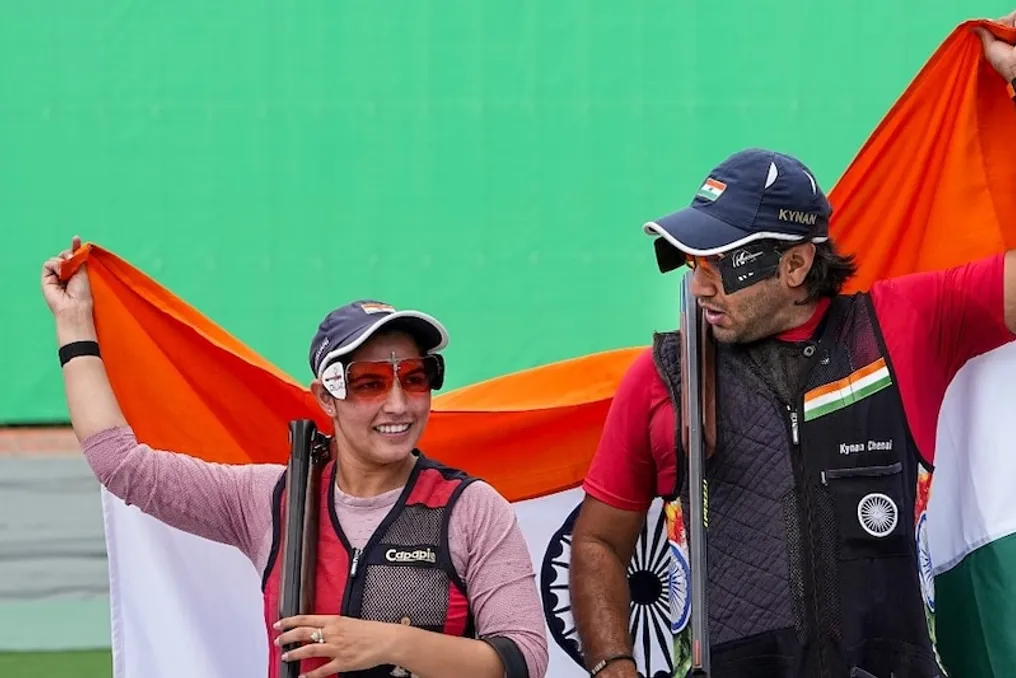
In Nagoya on September 30th, India began gaining momentum in winning gold. The women's compound shooting team, the mixed team, and the men's team each won three gold medals. Additionally, India secured gold in the mixed team trap shooting discipline. Thus, four gold medals were won in a single day, bringing India's total gold count to 10. India now has 60 medals in total (10 gold, 21 silver, and 29 bronze).

Even before that day, on September 29th, India added 6 gold medals thanks to Niru Dande in shooting and the women's 4x400m relay team. Niru became the first Indian woman to win individual trap gold. Consequently, six gold medals were added to India's tally over two days. Nevertheless, despite the rapid increase in gold medals, a serious question arises: has the Indian 'gold machine' truly performed, or was it due to sudden success in several individual sports?

The most significant benchmark for India is Hangzhou. Three years ago, India first surpassed the mark of 100 medals at the Asian Games. At that time, the country ranked fourth with a total of 106 medals and 28 gold. Now, with 10 golds in Nagoya, India still needs 18 more gold medals to match the 2022 performance.

Therefore, one cannot be satisfied with the overall medal count; it is only half the picture. At the Asian Games, the gold medal is the most important criterion.

India has indeed won 60 medals, but among them are 21 silver and 29 bronze compared to 10 gold. This means that Indian athletes consistently reach the podium, but they lack the final step to convert silver and bronze into gold.

This is an important characteristic of the campaign. Indian athletes win medals, but to increase the number of golds, they need to dominate the final competitions.

The medal table further emphasizes the challenges for India. As of the update on September 30th, China leads with 150 gold and 274 total medals. Japan is in second place with 49 gold, and South Korea is third with 24 gold. India, with 10 golds, ranks eighth.

Thus, India has strengthened its presence among major Asian sporting powers, but it is still far from China, Japan, and South Korea when it comes to gold.

However, the story of Nagoya is not over. In the remaining days of the Asian Games, India has several competitions where hope for gold remains. Sports such as hockey, boxing, wrestling, squash, and cricket could significantly increase India's gold medal count.

On September 30th, the women's hockey team defeated South Korea 2-0 in the semi-finals and advanced to the final. Now they have a chance not only to win gold but also to secure a ticket to the Los Angeles 2028 Olympics.

That is, the coming days will determine whether the 10 gold medals will remain just an intermediate stop, or if India can raise its gold medal count to a new level.

In Nagoya, India certainly has a reason to celebrate: 60 medals is a great achievement. But due to the new standard set by Hangzhou, the story does not end at 10 gold medals. The goal of 28 gold medals is still far away, but the narrative continues in Nagoya. In upcoming matches, India has the opportunity not just to increase its medal count but also to turn silver and bronze into gold. Now every final matters, and every gold medal is priceless. India, having reached 10 golds, now faces the main question of Nagoya: at what level will it stop?

India shows low results at Asian Games despite past successes
Read more
www.aajtak.in

India shows low results at Asian Games despite past successes

The first ten days of the 20th Asian Games in Nagoya, Japan, concluded with extremely negative news for India. India, which won 106 medals, including 28 gold, at the previous Games in Hangzhou, China, has significantly dropped in the medal tally.

Despite the Indian delegation heading to the 2026 Asian Cup numbering 495 people and receiving about 80 billion rupees for preparation, the current results look disappointing. The sports system's claims of creating a 'new India' capable of winning a hundred medals in Japan have proven unsubstantiated on the sporting arenas.

Currently, India has won only six gold medals. Of these, three golds were obtained in sports rarely practiced by other countries and where India is traditionally strong: two golds in wrestling (women's and men's teams) and one gold in women's cricket. Two more golds were won in shooting, which is considered an encouraging moment, and one gold was secured in athletics, although more was expected from India.

The main reason for this decline was a significant failure in athletics. Historically, athletics was India's strongest suit at the Asian Games, bringing the country the largest number of gold medals. However, in Japan, athletics remained almost empty in terms of gold awards. Athletes who were expected to guarantee gold in running and field events either faltered under pressure or could not find their form.

The biggest blow to India came from the teams of Japan, South Korea, Qatar, Bahrain, Iran, and Uzbekistan, who strategically bypassed Indian athletes and excluded them from the fight for the podium. Only four days of competition remain, and hopes are placed on wrestling, shooting, and boxing. One gold is also expected in men's cricket and partial gold in hockey.

An analysis of the entire history of the Asian Games shows that the success of 2022 was more of a pleasant exception than a reflection of the real situation. Over the 70-year history of the Asian Games, India's average ranking fluctuated between sixth and eighth, and the average number of medals was in the range of 35–50. After taking second place at the first Asian Games in 1951, India has never been able to repeat that level.

Although India set a new benchmark in 2023 by winning 106 medals, including 28 gold, in 2026 the country returned to its old and weak performance, indicating a lack of a sustainable system to replicate great achievements.

The most shocking and bitter fact of these Asian Games is that India is competing not so much against giants like China or host Japan, but at the level of a small region of China—Hong Kong. India's helplessness against a territory the size of a small city, despite a huge budget and population, has become one of the biggest failures in Indian sports history.

Moreover, North Korea, isolated from the world, ranks higher in the medal table than India. Iran, which has been involved in conflicts for the last six months, has already won nine gold medals. To get out of this difficult situation, India needs to learn lessons from China's experience.

At the Asian Games in Bangkok in 1978, China took second place, yielding to Japan, which marked a turning point in China's sports policy. After this, China radically changed its approach and never looked back. From the Asian Games in Delhi in 1982 to the Asian Games in Japan in 2026, China has consistently held first place in the table. Currently, China has over 138 gold medals, while the host Japan, in second place, has about 42 gold.

China has demonstrated that success in sports is achieved not by chance, but by a clearly defined goal and scientific preparation.

Instead of blaming cricket, the true problem must be sought. When India experiences a drop in the medal count at the Asian Games or Olympic Games, the easiest path is to blame cricket. The argument is often put forward that cricket diverts all resources, sponsors, and media attention, leaving other sports unsupported. However, this argument is completely unfounded when looking at countries like England and Australia, where cricket is also extremely popular and rich.

Popular