Club examples (Juventus, Marseille, Rangers) demonstrate risks for Manchester City in light of financial misconduct allegations
Read more
IOL
iol.co.za

Club examples (Juventus, Marseille, Rangers) demonstrate risks for Manchester City in light of financial misconduct allegations

The question of whether any club is too big to fail is being raised against the backdrop of the investigation into Manchester City. When the Premier League's independent commission ruled the club guilty, confirming systematic breaches of financial rules over nine seasons and the use of 'fictitious' contracts to artificially inflate revenues by more than £900 million (approximately 19.5 billion rubles), it shattered the long-held myth in English football that superclubs possess enough power to avoid serious sporting sanctions.

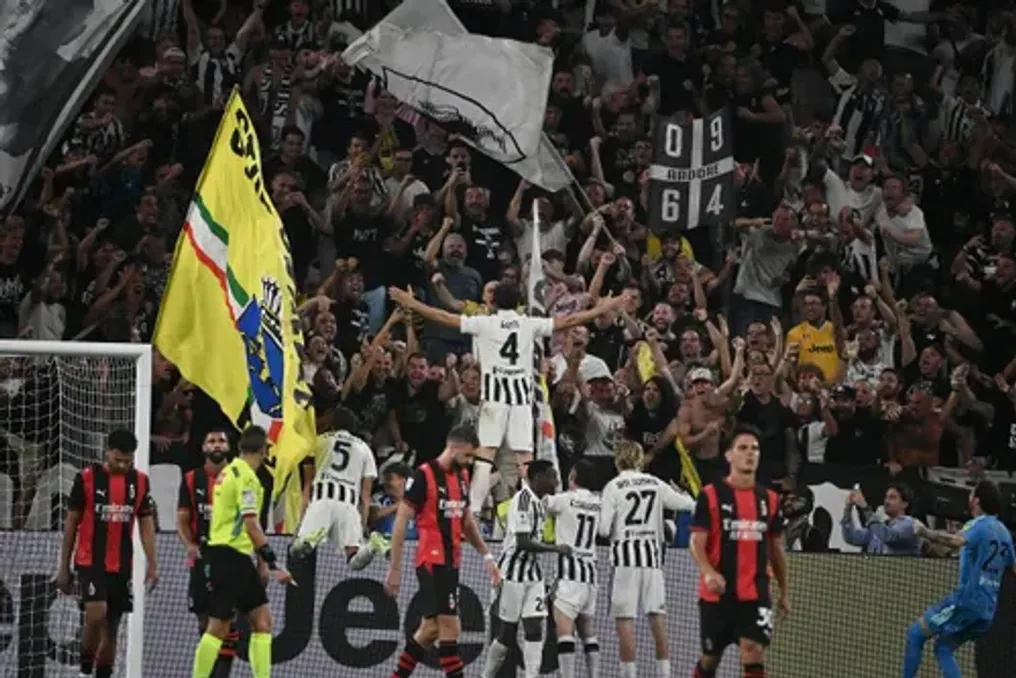
While the Premier League considers various penalties, ranging from significant point deductions to outright exclusion, precedents set by Juventus in 2006, Rangers in 2012, and Olympique Marseille in 1993 provide a clear roadmap of how modern giants can collapse under regulatory pressure and how long the road to recovery might be.

Fraud Schemes

Juventus was stripped of two Serie A titles (in the 2004/05 and 2005/06 seasons) and relegated to Serie B due to a nine-point penalty; however, they managed to overcome the crisis related to match-fixing and re-enter European elite status.

How Juventus Navigated Hardship

The closest parallel to Manchester City's current crisis was the 2006 Calciopoli match-fixing scandal, which led to Juventus losing two Serie A titles (2004/05 and 2005/06) and being relegated to Serie B with a nine-point deduction. At the time, the 'Old Lady' was the undisputed leader of Italian football, boasting a squad composed of World Cup winners and Ballon d'Or contenders. The immediate consequences were catastrophic: stars such as Zlatan Ibrahimović, Patrick Vieira, Fabio Cannavaro, and Liliane Thuram left Turin, wiping out tens of millions in squad value overnight.

Nevertheless, Juventus's recovery demonstrated institutional resilience. With the support of a dedicated core of players—Gianluigi Buffon, Alessandro Del Piero, Pavel Nedvěd, and David Trezeguet—who remained to fight in the second division, Juve managed to win Serie B in their first season (2006/07). Although five years of structural rebuilding were required before they won another Scudetto title in the 2011/12 season under Antonio Conte, this comeback ushered in an unprecedented era of nine consecutive Serie A titles. The financial blow was colossal—commercial revenues plummeted immediately after the scandal—but the organization survived. In Manchester City's case, 115 charges were established, and the club could face relegation or exclusion from the Premier League.

Darker Precedents

If Juventus serves as a model for recovery after relegation, Marseille and Rangers illustrate the catastrophic risks of administrative violations. In 1993, Marseille was at the peak of European football, having just won its debut UEFA Champions League. However, within months, a financial and corruption scandal led to the club being stripped of the French league championship title for the 1992/93 season and relegated to Division 2. Marseille spent two years in the second division, suffering from financial instability, and it took over a decade to recover domestically.

Regarding Rangers in 2012, systemic financial insolvency and tax irregularities led to the club's liquidation. The team was forced to start playing in the fourth tier of Scottish football (League Two). Although Rangers managed three promotions in four seasons to return to the top flight, the financial trauma severely undermined their ability to compete for nearly a decade.

Closer to Home

One does not need to look across continents to see the Premier League's growing commitment to enforcing strict regulatory compliance. Everton became the first high-profile victim of the league's Profit and Sustainability Rules (PSR), receiving a 10-point deduction—later reduced to six upon appeal—and then another two-point deduction in the same season. The 'Toffees' were penalized for exceeding allowable losses by less than £20 million (about 435 million rubles), a breach that dragged one of England's most famous top-division institutions into a grueling battle for survival throughout the entire season.

This was followed by Nottingham Forest, which received a four-point deduction after exceeding the loss threshold by £34.5 million. The commission noted that despite Forest's cooperation, the violation of financial limits directly undermined the sporting integrity of the competition. If relatively modest PSR limit breaches result in point deductions that threaten a club's Premier League status, the regulatory precedent set by Everton and Forest leaves the Premier League with little choice but to apply much harsher sanctions for Manchester City's decade-long systemic inflation.

City Vows 'Relentless' Appeal

In response to the commission's decision, Manchester City published an uncompromising official statement, rejecting the panel's findings and signaling a protracted legal battle. The statement read: 'The club is innocent of the allegations brought by the Premier League, and there exists a comprehensive array of irrefutable evidence supporting all its positions on this matter. Therefore, the club will be relentless and, if necessary, proactive in all relevant regulatory and legal forums.' It also noted: 'The Premier League process is ongoing, and significant elements have yet to be concluded. Manchester City FC will now pursue the avenues of appeal available to it on the basis that the opinion contains manifest material errors in law, principle, and fact, and is unsafe.'
Similar stories

Manchester City found guilty of massive financial irregularities; further consequences being discussed
Read more
www.egyptindependent.com

Manchester City found guilty of massive financial irregularities; further consequences being discussed

Manchester City has been accused of 'industrial-scale fraud,' marking one of the most significant events in Premier League history and threatening the integrity of football in England.

The club, one of the world's most successful in recent years, was found guilty of systematic fraud and financial doping that allowed it to dominate for nearly a decade. This story, which began with a leak of emails in 2018, has now surfaced, and its outcome could be devastating for the club.

On Tuesday, the Premier League, City's home league, issued a strong statement revealing the findings of an independent commission. It was established that the club seriously violated the league's financial rules more than '100 times' between 2009 and 2018. These violations were committed through a series of 'fictitious' contracts and commercial agreements designed to conceal the true financial state by masking secret funding from UAE owners.

The league also reported that the club overstated its revenue by approximately $1.18 billion (£900 million) and understated expenses by tens of millions while attempting to hide its actions during the investigation. Nevertheless, Manchester City claims to possess 'irrefutable evidence' of its innocence and intends to appeal the decision.

The club's main sponsor, Etihad Airways, named after the team's stadium, also defended City and its relationship, threatening lawsuits against the Premier League. Although Etihad Airways was not mentioned in the report, part of which is classified, the company told CNN Sports that the lack of 'clarity and transparency, as well as selective disclosure created detrimental consequences for Etihad' and that 'Etihad will seek appropriate legal counsel regarding available options and remedies to protect its interests.'

To understand the full gravity of the situation, one must consider the context of the club's operations. In 2008, Manchester City was acquired by Sheikh Mansour bin Zayed Al Nahyan through Abu Dhabi United Group. Under new management, the club underwent a complete transformation: billions were spent on modernizing the stadium, training complex, and, more importantly, the playing squad. Some of the best players and coaches in the world began joining the club, which had previously been in a period of mediocrity.

The result was City's transformation into one of the strongest forces in sports, winning three Premier League titles, three League Cups, and one FA Cup during the period under review. This new era generated many iconic moments in the league's history and gave fans unforgettable memories. This period also laid the foundation for City's current position among global football leaders, including the UEFA Champions League victory in 2023 and winning four consecutive Premier League titles from 2021 to 2024.

However, the independent commission ruled that all of this was done illegally—'fictitiously,' as it mentioned eight times in its classified findings. It should be noted that this is not the first time City has faced accusations of financial misconduct. In 2020, the club was initially banned from European football for two seasons by the continental governing body UEFA due to 'serious breaches' of financial rules. This ban was later overturned by the Court of Arbitration for Sport (CAS), which also reduced the associated fine of $34 million to $11.3 million, ruling that City had not cooperated with UEFA.

The consequences of this recent Premier League case could severely undermine the club's future. According to official league guidelines, potential punishments could include significant point deductions, unlimited fines, or even outright expulsion from the league. While clubs have previously breached Premier League rules and received point deductions, this case is unprecedented.

Former England international and current expert Ian Wright called it 'industrial-scale fraud,' noting that 'it is quite surreal to see it recorded like this' and that 'an unprecedented punishment is required.' Such a penalty could be unlimited. For example, point deductions could be so large as to effectively drop City into the Championship—the second tier of English football, or, as suggested by British media and experts, stretched over several years to seriously limit the club's future prospects.

The possibility of stripping the club of all titles and trophies won during the specified period was also discussed. However, this opens up a new problem: if three league titles are taken away from City, what happens to the teams that finished second that year? If these mid-table sides are awarded the titles, are they entitled to the corresponding prize money? Furthermore, what happens to the teams that earned points against City over these nine years? City's results could have contributed to the relegation of top-division teams or the loss of their favorable spots in the Champions League. The question of potential compensation claims from all clubs for lost revenue arises, which would likely take years.

Despite creating a logistical headache for executives, the duration of this case continues to negatively affect on-field events. Even with the upcoming appeal, this nine-year period of the league is now marked with a asterisk. All titles won, goals scored, and memories created are overshadowed for players and fans. Former Manchester United and Ireland player Roy Keane told ITV: '(City) knew it would deeply offend people, but they did it anyway. If I were a player, I would throw those medals away 100%. It is fraud.'

Former Liverpool player Jamie Carragher expressed similar sentiments to Sky Sports, stating he would be 'furious' if he played for City at the time. He added: 'I actually feel sorry for the Man City players. I mean, as a team, they did wrong. The Premier League called it fictitious five times in this statement.'

All of this has dealt a huge blow to the Premier League's reputation. Ideally, the league would want City to be found innocent, as the situation could quickly return to normal, even if opposing fans objected. The strength of the league's statement indicates how serious the fraud and blatant disregard for rules were, in the league's view, behind closed doors.

Future steps remain unclear. City plans to appeal, and we know this, while the Premier League seeks to conclude this matter as quickly as possible and issue a penalty commensurate with the allegations. However, the longer City resists, the more damage it will cause to all participants.

The club shows no signs of giving up the fight: CEO Pep Guardiola called the case a 'Premier League conspiracy theory' in an internal video message sent to club staff after the verdict announcement. Without knowing the outcome or the possible penalty, which the league says will be announced later by the independent commission, the pure essence of the Premier League is lost. If all of City's results are annulled this season, next season, or within the next four seasons, then everything that happened in between becomes irrelevant. The nature of sport, based on an 'all or nothing' principle, gets entangled in asterisks and various scenarios.

It is a sad state of affairs that could take weeks, months, or even years, given that City shows no signs of yielding and can afford, ironically, the best legal team in the world. Manchester City plays next on October 11th against Liverpool—one of the teams that failed to win the league title during the period of accusation. City's current manager Enzo Maresca must focus on his roster of star players, such as forward Erling Haaland, after what should have been a busy week for everyone connected to the club. Suddenly, their future becomes very uncertain.

Manchester City's Alleged Financial Breach in Premier League Sparks Debate Over Future Steps and Sanctions
Read more
iol.co.za

Manchester City's Alleged Financial Breach in Premier League Sparks Debate Over Future Steps and Sanctions

The future of Manchester City in the legal proceedings with the Premier League remains undecided, but reports of the club being found guilty of widespread financial irregularities have led to speculation about potential consequences. As a dominant force in the Premier League for over a decade, severe sanctions against City could cause upheaval in English football.

Rival clubs plan to file their own lawsuits, demanding hundreds of millions of pounds in compensation, and there is also discussion about the possibility of stripping City of several titles and trophies from the last fifteen years.

Sanctioning and Appeals Process

The first report on this came from The Athletic on Friday: City was found guilty of all but one of the 115 charges brought against it. However, no punitive measures have been confirmed yet.

Even after a penalty decision is made, if the club is found guilty, it will almost certainly appeal. In a letter to club fans on Saturday, chairman Khaldoon Al Mubarak stated: 'Our confidence and intention to prove the club's innocence are as strong as when this case began.'

The case, which began after the German publication Der Spiegel published leaks of documents from City executives in 2018, may take a significant amount of time to fully resolve. According to Premier League rules, sanctions can range from point deductions and fines to relegation.

In the 2023/24 season, Everton and Nottingham Forest received point deductions for separate breaches of financial sustainability rules. Based on this precedent, City faces almost certain relegation if found guilty of more than 100 charges.

Another contentious issue is the question of applying sanctions before an appeal is heard. If this happens, City could find itself in the relegation zone before refuting any verdict of guilt. On the other hand, if City, currently sitting top of the table, is not penalized before the appeal concludes, it could deprive other clubs of a spot in the top division or favorable European qualification.

Even after the Premier League process, there is a possibility that City's owners, backed by Abu Dhabi, could approach the High Court of England if they dispute the legal matter regarding the arbitration process.

Who Stands to Gain?

City's rivals reacted quickly to the news of the potential club collapse. Former Manchester United defender Rio Ferdinand posted: 'Another Premier League medal to add to the cabinet.'

However, the reality is that the process of overturning and retroactively awarding titles is complex. City's allegations cover the period from 2009 to 2018, when they won four championship titles, while United and Liverpool finished second twice in those seasons.

Nevertheless, City has won four more titles since then, which some believe were built on fraudulently obtained foundations. Furthermore, between 2009 and 2018, the club won four League Cups and one FA Cup, marking the club's first trophy in 35 years.

Tony Pulis, whose club Stoke lost the 2011 FA Cup final to City, told the BBC: 'I seriously do not believe that any other trophies and titles will be returned. But I still feel cheated.'

A more likely source of compensation for the clubs left out is financial compensation. Everton was informed in June that it must pay Burnley £35 million ($46 million) after they overtook Leicester for Premier League survival in the same season they breached financial sustainability rules.

What About City's Stars?

Less than a month ago, City made the largest transfer spending in one window, spending around £460 million on players such as Enzo Fernandez, Elliott Anderson, and Ayub Buaddi. The upcoming verdict on the charges has so far not significantly affected City's ability to attract and retain its stars.

Traditional striker Erling Haaland signed a nine-year contract in 2025, which could tie him until age 34. It remains unclear how many, if any, players could agree to exit clauses in the event of serious sanctions against City.

Popular