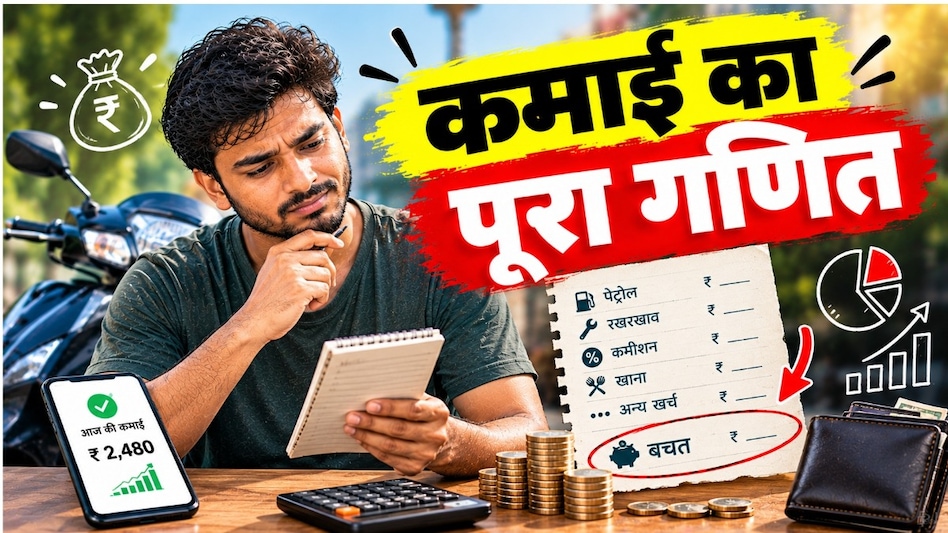
Courier Income Calculation: How a Delivery Partner's Earnings Are Formed from Base Pay, Bonuses, and Tips
Read more
Aaj Tak
www.aajtak.in

Courier Income Calculation: How a Delivery Partner's Earnings Are Formed from Base Pay, Bonuses, and Tips

Discussions about the income of gig economy workers, such as delivery couriers or taxi drivers, are often held on social media. However, the situation is not always simple; the amount a client pays may differ significantly from what actually goes into the worker's account.

The total earnings of partners on gig work platforms, including Jipto, Swiggy, and Uber, consist of several components. The income structure is based on base pay, incentive payments, tips, bonuses, and applicable deductions.

The main income calculation looks like this: various types of incentives, customer tips, and bonuses are added to the base pay for each order. Then, corresponding withholdings may be deducted from this amount, which determines the final payment.

Base Pay: This is the minimum amount received for completing any order. Its size is determined by the distance traveled and the time spent from the pickup point to the store or restaurant, and then to the client. Road conditions, weather conditions, and current demand are taken into account in the calculation.

Incentives: These payments are provided to partners for achieving certain goals or for working during peak hours. This includes a bonus for completing a specific number of orders within a set period (day or week). Additionally, an extra amount is charged for working during peak hours or in adverse conditions, such as rain, for each order.

Tips: Tips left by the client through the application go entirely to the courier. Platforms do not make any deductions from the tip amount, and they are directly included in the partner's income.

Registration and Referral Bonuses: A referral bonus is awarded when a new colleague or friend joins the application and completes a specified number of orders. New partners are provided with a guaranteed amount or promotional reward for completing their first trips as part of guarantee offers or starter packages.

The total income formula can be represented as follows: total income equals the sum of base pay, incentives or peak time surcharge, customer tips, and bonuses, minus applicable taxes or deductions. It is important to note that expenses such as registration fees, the cost of a T-shirt or bag, and applicable taxes may be deducted from the total income. Thus, the courier's final earnings are formed from many parts and may include various deductions.
Similar stories

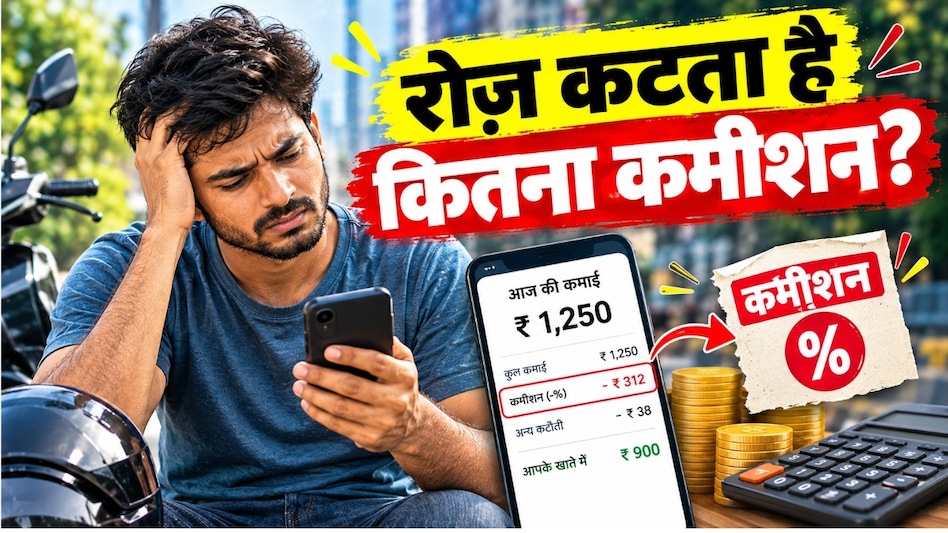
Courier Income Calculation: How Much Remains After Deducting Commissions with a Daily Earnings of 1500 Rupees
Read more
www.aajtak.in

Courier Income Calculation: How Much Remains After Deducting Commissions with a Daily Earnings of 1500 Rupees

Couriers and riders work in many large cities, moving daily to deliver orders on time. However, the question often arises about how much money they keep after all expenses and what commissions are deducted for each order.

Details of platforms such as Zepto, Blinkit, Rapido, and Uber have been studied. According to information provided on their websites, if a rider earns 1500 rupees per day as gross income, they ultimately retain approximately 1000 to 1150 rupees. This final amount depends on the city, state, type of transport, and the day of work.

It is important to consider that expenses related to gasoline, onboarding fees, or equipment kits, as well as vehicle maintenance, are deducted from any gross income.

For example, to earn 1500 rupees per day, one may need to travel about 100–130 kilometers. With this calculation, the net saving is between 1070 and 1200 rupees, which averages around 1100 rupees per day. If the goal is to keep 1500 rupees in hand daily, the gross income target must be set at 2000–2100 rupees.

The main expense when earning 1500 rupees is fuel, accounting for 250 to 350 rupees daily. Depending on fuel consumption, covering more than 100 km per day requires 2.5 to 3.5 liters of gasoline.

Additionally, monthly deductions for onboarding or installment payments for equipment kits can amount to 30 to 50 rupees daily. Such charges, like joining fees, training, or bags, are levied by companies like Swiggy and Zepto in the first weeks of payment.

There are also estimated costs for vehicle maintenance and other needs ranging from 30 to 50 rupees daily, including engine oil changes, tire repairs, brake pad replacement, and parts wear. Based on this data, the net saving when earning 1500 rupees is between 1070 and 1190 rupees.

Notably, if an electric vehicle (EV) is used, fuel consumption drops to 80–120 rupees, and up to 1300 rupees may remain in hand.

Payment and deduction rules differ across companies. In Swiggy, payments are made weekly and deposited directly into a bank account. The joining or onboarding fee at Swiggy is estimated at about 1500 rupees, although this amount can vary depending on the city, and it is deducted by the company in installments from weekly payments.

In Zepto, payments are made weekly or over a set period. At Zepto, the onboarding fee, training, and branded merchandise, such as T-shirts or bags, may be withheld from payments over one or several periods.

If an order is lost or stolen on the way, or damaged due to the rider's fault, compensation is made from the payments, or the rider does not receive a service charge for that order. Delivery fees may also be suspended for delivering the wrong order.

In Rapido, riders, called captains, receive payment directly from the customer for parcel transportation services in Karnataka state and across India. When collecting cash in other states, the company adjusts or deducts its commission from the rider's final settlement. A subscription fee for platform access may also be charged.

In Snabbit, funds are transferred directly to experts or workers through the application, while the company regulates the technology commission, demand commission, or convenience fee.

Overall, the figures presented show that the entire gross income of 1500 rupees per day is not kept by the courier. After accounting for fuel, equipment, onboarding, maintenance, and company policies, the savings amount to about 1100 rupees. If the goal is to keep 1500 rupees in net income daily, a gross earnings of 2000–2100 rupees must be achieved.

Popular