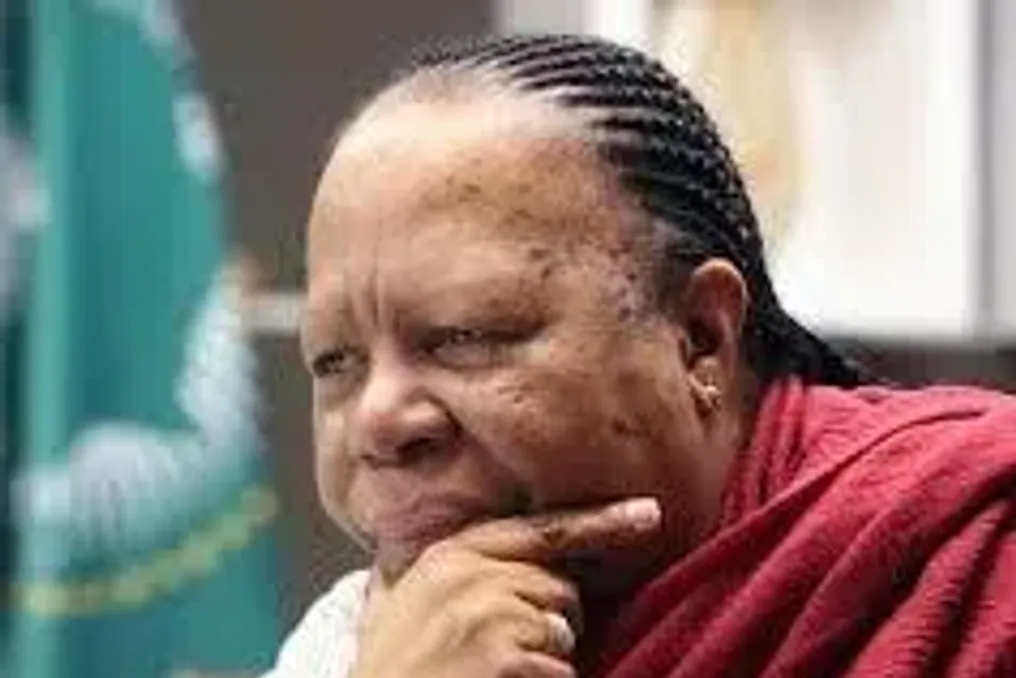
The article poses complex questions regarding the legacy of the former Minister of Education, criticizing new educational developments. It examines what past admissions by Naledi Pandor mean for her current position in the education sector, and whether a broader dialogue about the role of private universities in South Africa's education system is necessary.
The author expresses bewilderment at observing how a state minister discovers systemic flaws only after leaving a post that gave her the authority to make changes. Dr. Naledi Pandor held several senior positions in democratic South Africa: Minister of Education, Minister of Higher Education and Training, Minister of Science and Technology, Minister of International Relations and Cooperation, and is now the Chancellor of Nelson Mandela University. Her career spans three decades in Parliament, two decades in Cabinet, and her current role in academic leadership.
This is why her recent comments warrant close examination. In August 2026, during an interview on the African Renaissance Podcast, Pandor expressed concern over the establishment of the new Akademia campus in Pretoria East. This project involves private investment of 3.2 billion rand and will accommodate five thousand students, as well as fifteen hundred people in residential accommodation. Construction formally began on November 28, 2025, with the first phase planned for completion in 2028.
Pandor labeled this development unacceptable, stating that South Africans are too complacent and civic engagement is insufficient. However, the author notes the irony that the private community is mobilizing its own capital to build a higher education institution, while the construction of lecture halls, laboratories, and libraries falls under ministerial oversight.
The situation is complicated when considering Pandor's own educational record. Mathematical literacy was introduced in 2006, and Pandor served as Minister of Education from 2004 to 2009, approving this program and bearing institutional responsibility for it. In August 2026, decades after leaving office, Pandor publicly reflected on her decision, calling it a catastrophe. She admitted: 'I did not support Mathematical Literacy because I knew it would be a disaster, but I allowed officials to convince me.'
She noted that students were transitioning from pure mathematics to Mathematical Literacy, which reduced the overall number of math students in the country. The author highlights the virtue of admitting mistakes, which politicians rarely demonstrate. Nevertheless, admissions have consequences: when a former Minister of Education calls a major curriculum decision made under her leadership a catastrophe, the public has the right to scrutinize her current educational judgments more closely.
The essence of the Mathematical Literacy debate is more complex than Pandor's admission suggests. She did not deny the value of practical literacy, but merely argued that it should not displace pure mathematics. The Department of Basic Education defends the continued role of Mathematical Literacy, insisting that curriculum reform must account for diverse student needs. This discussion is valid, but it shows that educational policy is complex, and mistakes can be made by ministers, officials, universities, or private institutions.
A question arises: is Akademia unacceptable because it teaches predominantly in Afrikaans? If so, South Africa needs a broader discussion on higher education in indigenous languages. Afrikaans is an official language of South Africa, and constitutional protection extends to it and other official languages such as isiZulu, isiXhosa, Sesotho, Setswana, Tshivenda.
The author welcomes more universities capable of conducting serious scholarly work in African languages, citing examples where isiZulu develops scientific vocabulary and isiXhosa develops engineering science. The answer to the question of an Afrikaans university is not to reduce the number of such institutions, but to create superior institutions in a greater number of South African languages.
If the objection relates to the fact that the development is privately funded, South Africa must consider a troubling national reflex: when the government cannot provide something, citizens do it themselves—whether it is solar panels instead of unreliable electricity or private security instead of deteriorating safety. The author believes the political class's reaction to such decisions is often flawed.
Pandor has every right to criticize Akademia, just as others have the right to defend it. However, criticism gains credibility through evidence, not political origin. When a former Minister of Education declares a catastrophe caused by a curriculum decision made under her leadership in 2026, while simultaneously expressing concern over a private entity building another educational institution, the public is entitled to note this contradiction.
If Akademia achieves academic success, if it complies with the law and creates educational potential through voluntary community contributions, then South Africa faces an opportunity: the problem is not the construction itself. Perhaps the problem lies in our mindset about who has the right to build.
In conclusion, the author questions whether Pandor's statement justifies the demand for complacency regarding Akademia, and urges her to consider whether her own history aligns with establishing such demands.