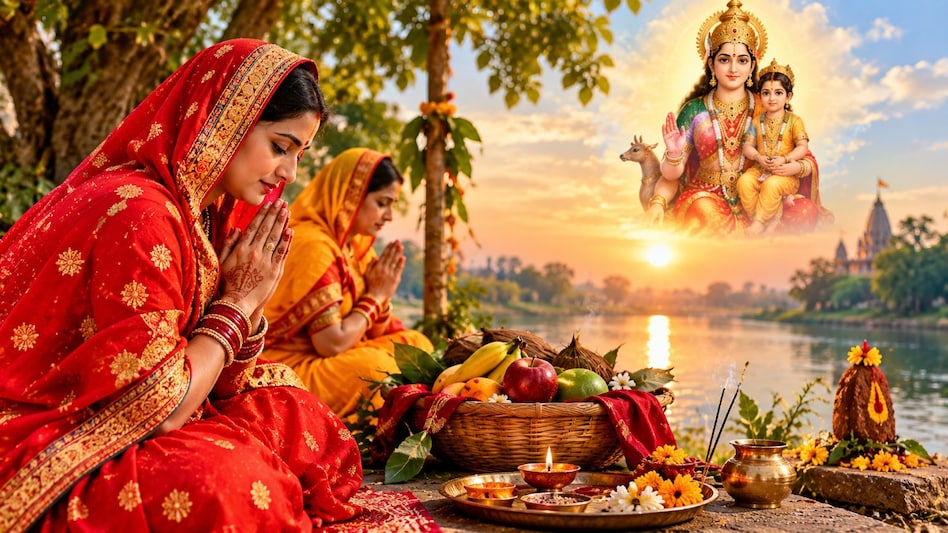
In Hinduism, mothers observe numerous complex fasts for the longevity, health, and bright future of their children, among which the Jit Jiya Vrat fast holds a special place, also known as Jivitputrika Vrat or Jiyutiya Vrat. This festival is celebrated with great reverence and according to strict rules primarily in the states of Uttar Pradesh, Bihar, Jharkhand, and in some parts of Nepal. During the three days of this great festival, mothers observe a complete fast without food or water.
Residents are awaiting the exact dates for celebrating Jiyutiya Vrat in 2026 according to the Dik Panchang. Below is information on the precise timing of the start, the main fast, and the conclusion of this festival.
Dates and Duration of Jit Jiya Vrat
This sacred fast is observed on Ashwini Masa, Krishna Paksha, Ashtami Tithi. The festival lasts for three days, and each day has its own unique religious rules and significance. According to the Panchang, the date for Jit Jiya Vrat this time will begin on October 3rd at 7:59 AM and conclude on October 4th at 5:51 AM. Consequently, the fast itself will be observed on October 3rd, Saturday.
Key Dates of Jit Jiya Vrat
The first day, Nahai-Khai, falls on October 2nd, Friday, Saptami Tithi. The second day, which is the day of the complete fast and worship, is October 3rd, Saturday, Ashtami Tithi. The conclusion of the fast, Paranan, takes place on Navami Tithi.
Rules for Observing Jit Jiya Vrat
On this day, consuming garlic and onions is prohibited. According to several traditions, there is a special custom of consuming noni pulp and bread made from madua, which is prepared with exceptional purity.
Auspicious Times for Worship
The time for performing worship (Jit Jiya/Jivitputrika Vrat) includes the following auspicious periods: Brahma Muhurt—from 04:38 to 05:26 AM; Pratah Sandhya—from 05:02 to 06:15 AM; Abhijit Muhurt—from 11:46 to 12:34 PM; Goduli Muhurt—from 06:05 to 06:29 PM; and Sayahan Sandhya—from 06:05 to 07:18 PM.
Religious Significance of Jit Jiya Vrat
According to religious beliefs, this tradition originates from the time of the Mahabharata era, when the pregnant woman Uttara was saved by the blessings of Lord Krishna, and her dying child came back to life. Since then, this fast has served as a protective shield for children, preventing all kinds of suffering and the threat of premature death.