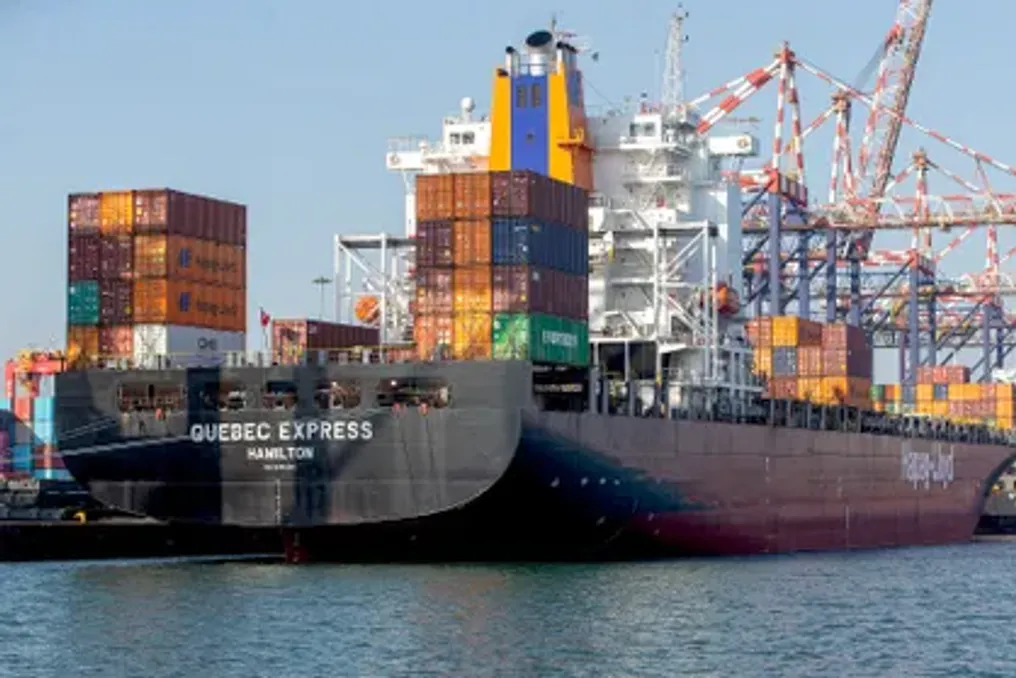
South Africa's trade surplus increased by 2.5 billion rand in August
Read more
IOL
iol.co.za

South Africa's trade surplus increased by 2.5 billion rand in August

South Africa's trade surplus expanded to 20.5 billion rand in August as imports decreased faster than exports. However, it is noted that rising oil prices may put pressure on the trade balance in the coming months.

According to trade data published by the South African Revenue Service (SARS), South Africa's goods trade surplus reached 20.5 billion rand in August, compared to revised 18.0 billion rand in July. This result exceeded forecasts made by Bloomberg.

The SA Economics division of Investec reported that the improvement was due to a sharper decline in imports than in exports. Imports fell by 13.7 billion rand, or 7.8% compared to the previous month, while exports decreased by 11.3 billion rand, or 5.8%, which led to an increase in the goods trade surplus.

SARS explained the reduction in export flows largely due to smaller volumes of platinum group metals, gold, and zinc ores and concentrates. Vegetable product exports also dropped by 9.0% month-on-month, and machinery and electronics exports fell by 3.0%.

Platinum group metals remain an important part of South Africa's mining portfolio, accounting for just over 27% of this portfolio. According to Statistics South Africa, platinum group metal production decreased by 13.5% year-on-year in July.

On the import side, the reduction is partly linked to decreased purchases of petroleum products, excluding crude oil. Purchases of original equipment components and automated data processing machines also declined. These drops largely offset growth in other categories, leading to a larger monthly decrease in the import bill.

Investec warned that the easing from imports may be temporary. The bank expects an increase in import values in the near future as higher energy prices will affect the trade balance. In September, the price of Brent crude averaged over $100 per barrel, returning to May levels amid heightened tensions in the Middle East. Higher oil prices typically increase the cost of refined petroleum products and related resources, which constitute a significant portion of South Africa's import basket.

The August figures demonstrate competing factors influencing South Africa's external trade position: the weakening of volumes of some key mineral exports is balanced by a sharp drop in imports. Investec believes that the prospects for the trade balance will depend on global demand for South African exports, commodity prices, and the cost of energy imports. With high oil prices and persistent weakness in platinum group metal production, the trade balance trajectory in the last quarter will depend on the ability of export revenues to continue offsetting the pressure caused by rising energy costs and other import expenses.


Similar stories

Trade turnover between Uzbekistan and the Timan region increased by 52%
Read more
uzdaily.uz

Trade turnover between Uzbekistan and the Timan region increased by 52%

The Governor of the Timan region, Alexander Muur, reported that in the first six months of 2026, trade turnover between Uzbekistan and Russia, specifically the Timan region, increased by 52%.

According to the governor, Uzbekistan is one of the most important foreign economic partners of the Timan region. Exports from the Timan region to Uzbekistan mainly include chemical industry products, polymer materials, as well as glass, paper, cardboard, and wood products. In return, the region receives food products, ferrous metals, and rubber from Uzbekistan.

Economic ties between the two sides are strengthening due to direct air connections between Timan and Tashkent, as well as humanitarian cooperation. Furthermore, students from Uzbekistan study at higher educational institutions in the Timan region and participate in its cultural and social life.

The authorities of the Timan region also intend to expand scientific and educational cooperation with Uzbekistan. Muur noted that the region is considering the possibility of involving Uzbek universities and research organizations in activities conducted at the regional Interuniversity Campus. The proposed cooperation could include joint research projects, master's programs, and dual degree programs.

Interest rate hike increases pressure on South Africans, economist warns of recession risk
Read more
iol.co.za

Interest rate hike increases pressure on South Africans, economist warns of recession risk

South African households have faced increased debt repayments after the Reserve Bank raised the repo rate to 7.25%. The organization Debt Rescue warned that consumers have very little left in their budgets.

South Africans, who were already struggling with high costs of living and loan repayments, received another financial blow following the interest rate hike by the South African Reserve Bank (SARB). The Monetary Policy Committee of the Reserve Bank unanimously increased the repo rate by 25 basis points, bringing it to 7.25% as of September 25th, to curb renewed inflationary pressures.

This increase means higher borrowing costs for consumers with variable-rate debt, including mortgages, car loans, overdrafts, and credit cards.

What does the repo rate hike mean for borrowers

Economist Douwe Rudd warned that the country may already be moving towards a recession. Rudd noted that this increase will be particularly difficult for indebted residents of South Africa during a period of extremely weak economic growth.

Rudd stated: 'This interest rate hike will be quite hard for the average citizen in South Africa, especially if you owe money.' He added: 'Since the economy is barely growing. In fact, we might be in a recession, and this will create additional financial pressure on people, mainly.'

Economists warn of slowing growth

He also suggested that the rate hike itself could contribute to further economic slowdown. Economist Ulrich Jobert believes that the impact of this decision will vary for each household depending on their level of indebtedness.

Jobert explained: 'It depends on whether you have a mortgage, a car loan, an overdraft, a credit card that you owe on.' He continued: 'If you have these loans, a car, housing, any loans, overdrafts, then you will pay more.' He specified that the increase could require extra expenses ranging from 100 to 500 or even 1000 rand monthly, depending on the size of the loan.

Sandra Dixon, founder of Stop City of Cape Town, noted that working families were already experiencing serious financial difficulties. According to her, 'for working families paying mortgages, higher interest rates mean higher monthly mortgage payments, while car loans, overdrafts, and other variable-rate debts also become more expensive.' She concluded that 'this adds to the overall financial pressure that working-class families are already facing.'

Pressure on households from fuel and municipal utility prices

'Combined with the increase in municipal bills for July, working-class families are now pushed to the limit,' Dixon noted. The rate hike also comes amid growing concerns about fuel prices.

Jobert warned that drivers could face significant price increases in October, as petrol recently showed a shortfall of about 2.88 rand per liter, and diesel was under pressure around 3 rand per liter. He predicted: 'In October you will pay at least 2.88 rand more for petrol, and I think it could be closer to 3.' He also reported that 'if you look at the price of better quality diesel, it already has a shortfall of 3 rand, so from October you will pay at least 3 rand more per liter of diesel.'

He emphasized that the impact would not be limited to gas stations, as higher transport costs would likely affect food and other commodity prices. Dixon stated that the combination of higher interest rates, utility bills, and expected fuel price increases will leave households with even less disposable income.

She added: 'This is happening at a particularly difficult time when households are already under pressure, and a sharp rise in fuel prices is expected, which will increase transport costs and add pressure to the cost of food and other necessities.' In her view, 'for many working households, this means less money at the end of the month and even tighter household budgets.'

Popular