
Traders divided over 'No UPI Day' campaign; CTI is ready, while CAIT refuses to participate
Read more
Aaj Tak
www.aajtak.in

Traders divided over 'No UPI Day' campaign; CTI is ready, while CAIT refuses to participate

Traders have split into two camps regarding the 'No UPI Day' campaign. This campaign was initiated as a protest against the introduction of Merchant Discount Rate (MDR) for UPI payments exceeding 2000 rupees. Consequently, some sellers may request cash instead of accepting UPI payments on Ganesh Chaturthi, which falls on October 2nd.

The 'Chamber of Trade and Industry' (CTI) has called on traders to cover their QR codes, scanners, and sound boxes and accept only cash on Ganesh Chaturthi. However, the Confederation of All India Traders (CAIT) has distanced itself from this initiative.

The Confederation of All India Traders (CAIT), led by BJP MP Parin Khandelwal, stated that it would not observe 'No UPI Day' on October 2nd and had made no calls for traders to participate. CAIT emphasized that the organization had not made any decisions, proposals, or official statements regarding this matter.

While CAIT maintains its distance, the Chamber of Trade and Industry (CTI) has announced the observance of 'No UPI Day' on October 2nd in protest against the introduction of MDR for UPI payments. CTI asserts that traders have not revoked their decision, and that this campaign will be conducted by members across the country, including Delhi. More than one hundred large trade organizations will participate in this event.

CTI hopes that 'No UPI Day' will be observed in over 2000 locations nationwide. The organization has appealed to all sellers and traders in Delhi and across the country to cover their UPI terminals with black cloth and conduct transactions exclusively in cash.

The Chamber of Trade and Industry has demanded that Finance Minister Nirmala Sitharaman repeal the MDR applied to UPI transactions exceeding 2000 rupees. CTI argues that this will burden 60 million sellers and traders. Furthermore, the organization warned that the introduction of a charge for UPI payments over 2000 rupees starting October 15th could lead to a 50% decrease in UPI usage, potentially increasing the circulation of physical currency in the country.

It should be noted that the MDR for UPI payments is set at 0.4% for amounts over 2000 rupees, but the system is not uniform for all payments. It also includes a fixed-rate category applicable to all UPI payments, including transactions at petrol pumps, where a fixed MDR of 5 rupees is set. Additionally, traders with payments up to 100,000 rupees are provided with a concession as they fall under the zero MDR category.
Similar stories

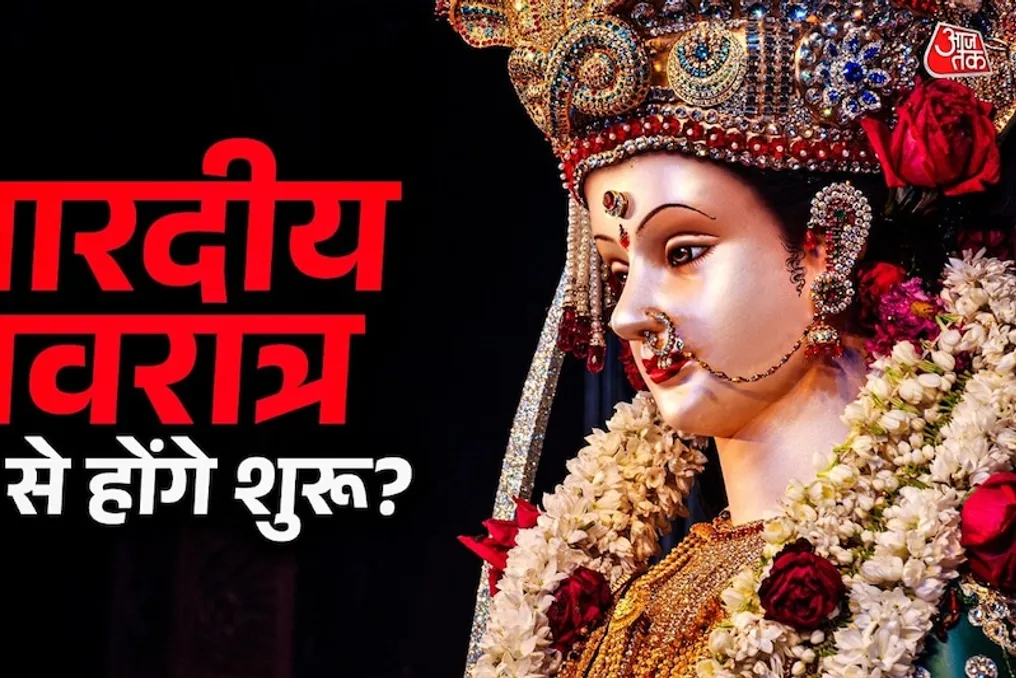
Dates and Auspicious Time to Begin Sharadiya Navratri 2026
Read more
www.aajtak.in

Dates and Auspicious Time to Begin Sharadiya Navratri 2026

Sharadiya Navratri begins annually on the first lunar date of the Ashvin month. In 2026, this festival will start on October 11 and conclude on October 19. According to tradition, during these sacred days, worship is offered to nine different forms of Mother Durga. It is believed that the wishes of all devotees who observe the fast and worship the goddess with complete faith will be fulfilled.

According to the Hindu Panchang, the Ashvin Shukla Pratipada date will begin on the evening of October 10 around 21:19 and last until 21:30 on October 11. However, according to the rising date, the first day of Navratri will be recognized as October 11. Following this, nine days will be dedicated to worshipping the nine different aspects of Mother Durga.

The auspicious time for installing the pot (Kalash Sthapana) on October 11 will be from 06:19 AM to 10:12 AM, providing approximately three hours and 52 minutes. Additionally, the installation of the pot is also possible during Abhijit Muhurta, from 11:44 AM to 12:31 PM.

The festival calendar is as follows: October 11 — Maa Shailputri; October 12 — Maa Brahmacharini; October 13 — Maa Chandraganta; October 14 — Maa Kushmanda; October 15 — Maa Skandmata; October 16 — Maa Katyayani; October 17 — Maa Kalratri; October 18 — Maa Mahagauri; October 19 — Maa Siddhidatri.

The festival dedicated to Mother Durga begins with the installation of the pot on the Pratipada day. During the auspicious time, a statue or image of Mother Durga is placed on a platform, next to which the pot is placed. Water from the Ganges, a coin, incense (supari), and turmeric root are added to the pot, and it is covered with a coconut. The coconut is wrapped in a red scarf and then tied with a ritual thread (kalava).

The mouth of the pot is tied with Ashoka leaves and placed next to the goddess's altar. Then, a continuous fire (Akhand Jyoti) is lit before the goddess's altar, striving to keep it burning throughout the Navratri period. Daily, devotees take a bath, wear clean clothes, and perform ritual worship of the various forms of the goddess. Only sattvic food is consumed on these days, and the devotee may observe a fast by eating fruits or only water.

Popular