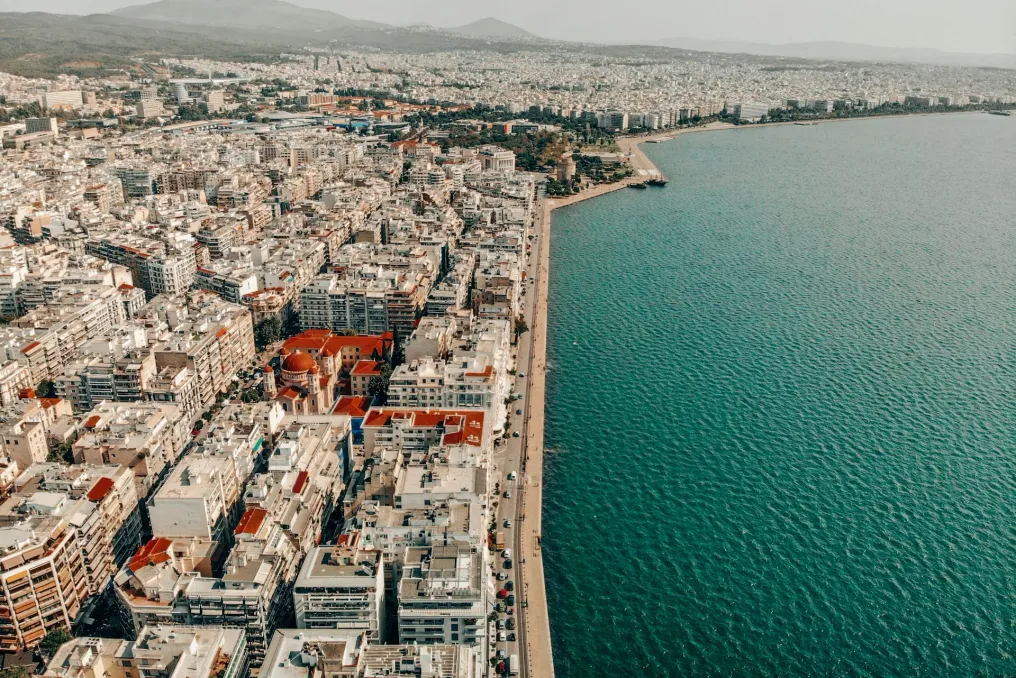
Thessaloniki, Greece's second-largest city, offers numerous attractions that extend beyond the famous waterfront and White Tower. In three days, one can explore bustling food markets, Roman and Byzantine monuments, atmospheric quarters, street art, and flavors that have made Thessaloniki one of Greece's great gastronomic centers.
This city is best explored on foot, as layers of history emerge between cafes, shops, and residential buildings. Roman ruins neighbor Byzantine churches, Ottoman-era buildings, and modern street art, while traditional markets remain an integral part of daily life. The urban landscape features 15 UNESCO World Heritage sites, many of which are Byzantine churches.
A good starting point is the center, visiting the Kapani market, also known as Agora Vlali. This ancient market is one of the oldest surviving in Thessaloniki and continues to function in the city's daily life. It hosts rows of fresh produce, spices, olives, fish, meat, and sweets, alongside bakeries, coffee shops, tavernas, and meze restaurants.
Many of these stalls have been owned by families for two or three generations. A walk through the narrow streets allows one to experience the full range of sensations—sounds, smells, and sights. Nearby is Athos Square, where one can view small food stalls and relax with a cup of coffee or a meal. The surrounding streets are abundant with traditional shops and small businesses.
Next is the Modiano Market, a covered market whose construction began in 1922 and was completed in 1930 by architect Eli Modiano. This historic market is designed with a glass roof in the style of European market halls. Today, it combines grocery stores, traditional goods, restaurants, and bars.
Modiano is particularly interesting due to its connection with Thessaloniki's Sephardic Jewish culture. Its architect, Eli Modiano, came from one of the city's well-known Jewish families. The market also reflects the city's evolving gastronomic culture, offering a chance to taste local flavors while observing the intersection of traditional and modern Thessaloniki.
From the markets, one should move towards the Roman Forum and the Galeria complex, where the city's ancient history is undeniable. The Rotunda is one of Thessaloniki's most outstanding monuments. This monumental structure, built during the Roman period, served various purposes over centuries and is considered one of the city's most important historical landmarks today.
Near the Galeria Arch and the remains of the Galeria complex, another glimpse into the Roman city is provided. Instead of rushing between monuments, it is recommended to stroll through the surrounding streets. This is where the contrast begins to emerge, making Thessaloniki so appealing: ancient ruins stand next to modern cafes, university buildings, shops, and lively streets.
No gastronomic journey in Thessaloniki is complete without bougatsa, the city's famous layered pastry. This pastry is made from thin, crispy filo and can be sweet or savory. The classic sweet version is filled with cream and dusted with powdered sugar and cinnamon, while other versions contain cheese, spinach, or minced meat.
Bougatsa became especially associated with Thessaloniki after the arrival of Greek refugees from Constantinople and other parts of Asia Minor in the early 20th century. It is traditionally served with Greek coffee, forming one of the city's classic breakfasts.
In the evening, one should head to Ladika, a former commercial district located near the center. Its cobbled streets and preserved facades now house restaurants, bars, and tavernas. This historic area survived the great fire of 1917 and was subsequently transformed into one of Thessaloniki's most famous gastronomic and nightlife zones.
Instead of ordering one large dish, it is better to order several small portions. The meze dining style is ideal for Thessaloniki, allowing one to try more local flavors. Furthermore, the UNESCO monuments include churches, monasteries, fortifications, and the Rotunda. These monuments span centuries and contain important examples of Byzantine art and architecture.
Visit the Church of St. Demetrius, dedicated to the city's patron saint, and the Church of the Holy Wisdom before heading to Ano Poli. On a short trip, it is not necessary to visit all Byzantine monuments; one should choose a few of interest and leave enough time to explore the quarters between them.
The upper city, or Ano Poli, feels distinctly different from the bustling center. This area has retained its narrow streets, traditional houses, and older architectural details, offering a look at the quieter side of Thessaloniki. The elevated position of the area also provides panoramic views of the entire city.
Time should be set aside to wander without a strict itinerary. Stop at a traditional cafe, look for old houses, and follow the alleys toward the city walls. From there, one can proceed to the Vlatadon Monastery, a Byzantine monastery in Ano Poli. Its elevated location makes it a tranquil place for relaxation with a view of Thessaloniki and part of the city's broader Byzantine heritage.
From Ano Poli, one can follow the preserved city walls to Eptapirgio and the Trigonion tower. These fortifications are among the most picturesque places for walks, especially closer to evening, when Thessaloniki spreads out below. The walls form an important part of the city's Byzantine heritage and offer a different perspective on Thessaloniki's long history. Tourist authorities describe Ano Poli and the walls as places where the city's historical layers are most evident.
It is recommended to have dinner in the Upper City rather than returning immediately to the center. Traditional tavernas hidden in the neighborhood's alleys offer a chance to experience the quieter side of Thessaloniki. One should look for local dishes, grilled meats, meze, and seasonal vegetables.
The cuisine of Thessaloniki has been shaped by local traditions, as well as recipes brought by Greek refugees from Asia Minor, Pontus, and Eastern Phrygia. Thessaloniki's history is also inextricably linked to its historic Jewish community. After the expulsion of Jews from Spain in 1492, a large number of Sephardic Jews settled in Ottoman Thessaloniki, becoming an important part of the city's commercial and cultural life.
The Thessaloniki Jewish Museum provides an introduction to this history. Its building is one of the few structures in the city center to have survived the devastating fire of 1917. It currently houses collections dedicated to the Jewish community and the heritage of Thessaloniki. It is worth visiting, even if historical museums are usually not on a traveler's list, as it adds another vital layer of understanding of the city.
The history of Thessaloniki is not limited to archaeological sites. Modern street art has become another layer of the urban landscape, with frescoes and small works appearing throughout the city. Time should be spent exploring the side streets around the center and university district, instead of sticking to main tourist routes. The contrast between historic buildings, archaeological remains, and contemporary art is part of Thessaloniki's appeal.
Head to Navarin Square, where the remains of the Galeria Palace neighbor a vibrant modern district. The square is known for its youthful and alternative atmosphere, with cafes, bars, restaurants, and shops. It is particularly popular among students and remains lively throughout the day and evening. Nearby is Dimitrios Gounaris pedestrian street, which is also worth exploring, featuring shops, cafes, and quick bite spots. Scattered Roman ruins in this area serve as a reminder of the close relationship between Thessaloniki's ancient and modern identities.
Reserve part of the last day for gastronomy. Thessaloniki is part of the UNESCO Creative Cities Network for Gastronomy, and its food culture reflects the numerous communities and migratory movements that have shaped the city. Beyond obvious gyros and souvlaki, one should try koulouri, a sesame-coated bread ring sold throughout the city, or look for local sweets such as trigaona—crispy dough cones filled with cream. Bougatsa is also a must-try, regardless of whether one chooses the sweet version with custard cream or the savory filling.
The gastronomic culture of Thessaloniki also includes meze restaurants, ouzeries, tavernas, and confectioneries. Seafood, mussels, meatballs, stuffed vegetables, and other dishes shaped by the city's multicultural past are found everywhere in the local culinary landscape. The essence is not just about ticking off dishes on a list, but about understanding how food tells the story of the city.
The Thessaloniki waterfront may be its most recognizable feature, but that is only the beginning. By spending 72 hours exploring beyond it, another city is revealed: a city of markets and Byzantine churches, Roman ruins and Ottoman influence, traditional bakeries and modern cafes, street art, and old quarters. It is a city where history is not locked behind museum doors. It is woven into the streets, the food, and daily life, making Thessaloniki a particularly valuable destination for travelers who prefer to explore by walking, eating, and observing, rather than simply moving from one famous landmark to another.